Office carpet cleaning in sections can keep part of the floor open if staff have a safe, accessible route around the work. Agree which zones will close, how the carpet will be cleaned and who will check it before reopening. If there’s no safe detour, plan an after-hours clean or closure.
Staged office carpet cleaning means treating agreed zones in sequence, rather than taking the whole floor out of use. Your plan should map foot traffic, assign preparation tasks and reserve other rooms while staff need them. Drying time belongs in that plan, not just the time spent with machines on the carpet. A small section still needs a proper handover.
Key Takeaways
Your floor plan sets the limits. Staff need clear instructions. These checks guide the decision.
- Keep safe routes and exits clear. Check access needs. Change any unsafe detour.
- Book rooms in sequence. Keep a spare available. Avoid clashes with staff and visitors.
- Assign preparation roles early. Name each zone’s contact. Agree who moves chairs and belongings.
- Match the method to carpet needs. Agree dry and reopen checks. Check edges too.
- Consider after-hours alternatives. Allow enough drying time. Check before staff return.
How Can You Clean Office Carpets in Sections While Staff Keep Working?
To clean office carpets in sections, keep staff in separate work areas and maintain safe routes around every active or drying zone. Agree on a suitable method and site-specific reopening checks, because sectional work does not guarantee that the entire floor can stay open. Treat each zone as a separate booking with a clear boundary, preparation deadline and handover point, rather than letting staff decide when to walk through. Your nominated workplace contact should approve any changes with the technician, including a later separate visit if an essential room or route cannot safely close during working hours.
What Should an Office Carpet Cleaning Zone Map Include?
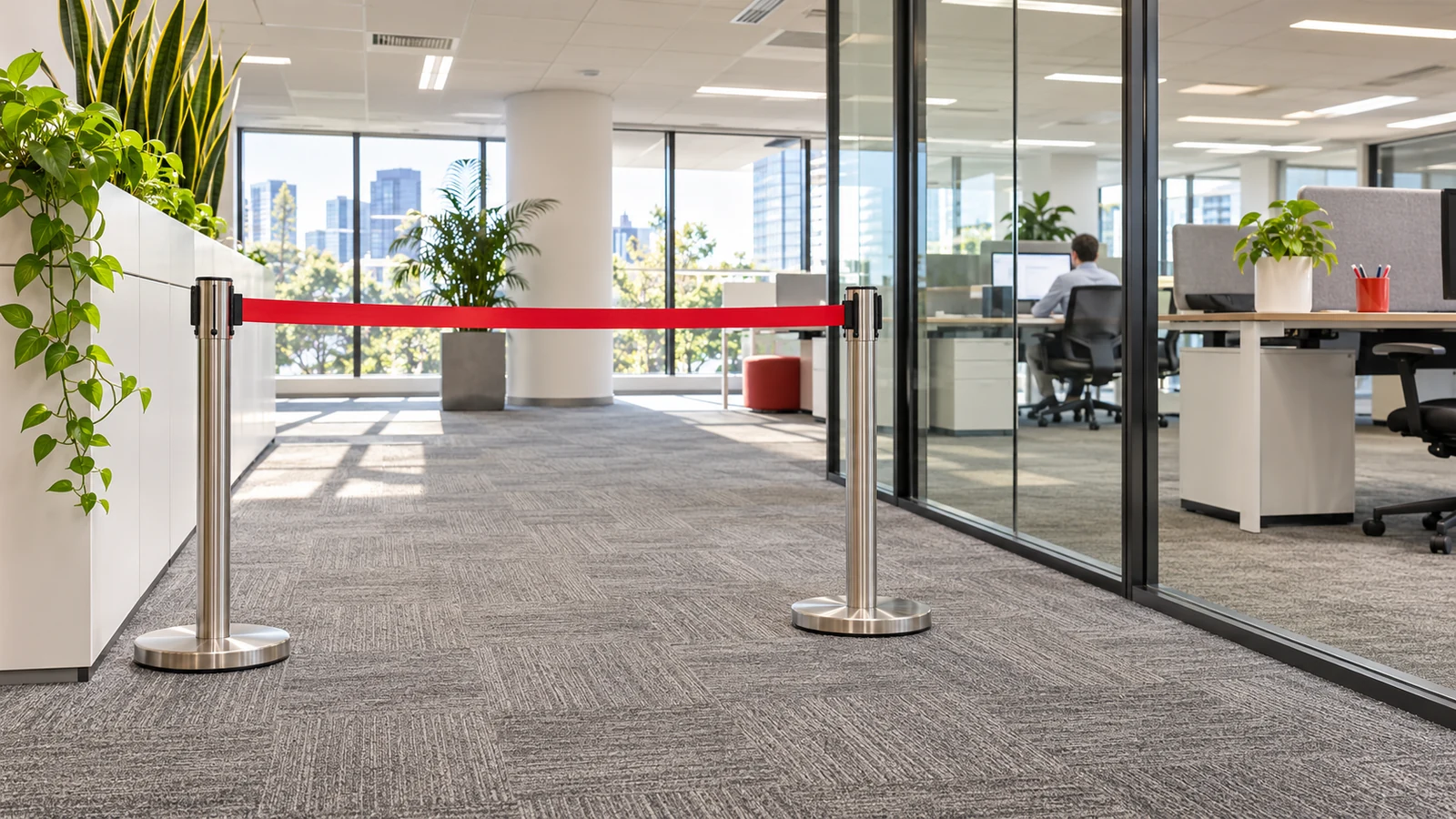
Your office carpet cleaning zones need a simple floor plan that shows reception, desks, meeting rooms, corridors and essential facilities. Mark occupied spaces, active work, drying areas and the cleaner’s equipment path clearly. Trace daily staff and visitor routes to exits, toilets and essential work areas. Check that each detour stays accessible for all the people who need it.
Flag hoses, leads, stored furniture and carpet-to-tile edges where damp shoes could reach a slippery surface. Use Safe Work Australia’s slips, trips and falls guidance to help check route hazards. Agree on suitable barriers and access controls before work begins, since signs alone cannot make an unsafe route acceptable. If safe access fails, change the sequence or move that section outside occupied hours.
A Two-Zone Plan With Clear Owners and Handover Points
In this hypothetical office, Zone A and Zone B share an agreed route that avoids both work areas and stays open throughout each stage. Staff use Zone B while Zone A is cleaned and dries. Move staff only after Zone A passes the agreed reopening checks. Book meeting rooms individually, keeping a spare available where business needs require it.
Appoint a workplace contact to approve changes and a team contact to clear each zone, and brief reception before staff move. Staff remove bags, boxes and loose papers before their deadline. Agree who moves chairs and small furniture, leaving heavy cabinets alone unless safe movement is arranged. Authorised staff secure equipment and cables; cleaners should not unplug sensitive equipment without prior agreement.
| Stage | Work Plan | Condition Before Moving On |
|---|---|---|
| Before Work | Clear Zone A and confirm the alternate route. Send staff an advance notice with affected rooms, preparation tasks, visitor directions and a contact person. | Workplace contact and technician agree that access is ready and staff know where to go. |
| First Cleaning Window | Clean Zone A while staff use Zone B. Send a reminder before the closure and keep the route free of chairs, bags and equipment. | Zone A remains restricted throughout the clean and drying period. Staff and visitors follow the agreed path. |
| Handover | Technician checks Zone A against the agreed reopening rules. Restore chairs and cables safely, then notify staff and reception that the space is open. | Move staff only once checks pass. Keep notices in place wherever restrictions still apply. |
| Next Agreed Window | Clear and clean Zone B once staff have moved. Tell affected staff about the closure and any changes to their route or room access. | Staff have safe access through the reopened area. Zone B may need a later visit; no clock times are promised. |
Which Cleaning Method and Schedule Suit an Occupied Office?
For an occupied office, hot water extraction applies water and extracts it with loosened soil, while low-moisture cleaning uses less moisture. Low-moisture methods may suit interim care and quicker reuse, but they may not replace a deeper clean where soil has built up. Ask the provider to check fibre type, stains, soil, airflow and the manufacturer’s care instructions before recommending a method or work window. Use the Carpet Institute of Australia’s commercial carpet maintenance guidance alongside those instructions, and include drying and safe reopening in the booking rather than choosing on speed alone.
How Long Before a Cleaned Office Carpet Zone Can Reopen?
Office carpet drying time is separate from cleaning time and the point when normal office use can resume. Method, moisture left behind, carpet construction, airflow and site conditions all affect drying. A small zone is not always a quick-drying zone. Ask the technician to define reopening checks before work starts, including rules for foot traffic, chairs and other furniture.
Check carpet-to-hard-floor edges for slip risks, especially where shoes may carry moisture onto smooth floors. Confirm that routes are clear and restore cables and furniture safely before staff return. Remove barriers and notices only after the agreed checks are complete for that zone. If the carpet is not ready, keep it closed and update staff rather than rushing the handover.
When Is After-Hours Cleaning or One Full Closure Better?
After-hours carpet cleaning is a better option when a sole entrance or corridor cannot stay safely accessible during daytime work. Noise, visitor traffic, meetings and staff needs may also rule out a daytime clean. Heavy soil, crowded furniture layouts or poor drying conditions may favour a planned closure. Compare those limits with the extra moves and repeat visits that staged work can require.
One uninterrupted clean can be simpler than moving staff and resetting work areas several times. Even after-hours work needs enough drying time and a reopening check before staff arrive. Keep water damage, persistent dampness and suspected contamination outside the routine occupied-office plan until checked. Do not treat a leak or recurring wet patch as ordinary tracked-in dirt.
Putting It All Together
Sectional carpet cleaning can keep parts of your office working when safe routes, suitable methods and reopening checks support it. It does not suit every floor plan. Map access, assign preparation tasks, book rooms and notify staff before work starts. Then keep each zone closed through the clean, drying period and agreed checks before reopening.
Share your floor plan, carpet details, stains and operating needs before agreeing on a schedule. Ask the provider to explain any limits on furniture movement, reuse or the proposed sequence, and who approves each handover. Allow a later visit or closure if site conditions make the original plan unsuitable. If you have a floor plan and preferred cleaning windows, contact us about an office carpet cleaning quote to discuss what can work at your site.
Frequently Asked Questions
Office carpet cleaning quotes, tile care and stain results depend on the agreed scope and the carpet’s condition. The questions below cover details worth checking before your booking, along with spill response and care between visits. Use the carpet maker’s instructions and your workplace rules whenever staff need to act, rather than trying an untested treatment.
Does Cleaning an Office in Sections Cost More Than One Visit?
Sectional cleaning may cost more if repeat visits, setup, furniture work or access limits add to the job. That is not always the case. Compare quotes for the same area, method and scope to judge which plan offers better value.
Do Office Carpet Tiles Need to Be Lifted for Cleaning?
Office carpet tiles can often be cleaned in place, subject to their care instructions. Not all tiles are washable or safe to lift. Have loose tiles, adhesive concerns or moisture beneath the tiles checked before any routine carpet clean starts.
Will Professional Cleaning Remove Every Office Carpet Mark?
Professional cleaning cannot remove every mark, because bleach damage, fading, burns and worn pile are not ordinary soil. Stain age and past treatment affect results. Contamination below the surface may need further work, so request a check before treatment starts.
What Should Staff Do If They Spill a Drink Before Their Zone Is Cleaned?
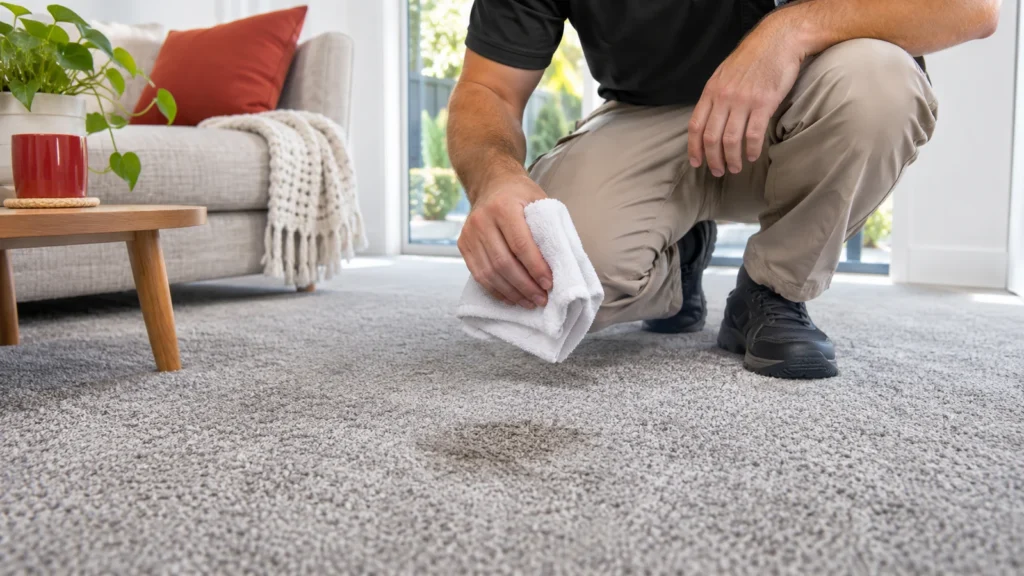
Blot the spill promptly with a clean white absorbent cloth; do not scrub or soak it. Follow workplace procedures and the carpet’s care instructions. Report the spill and any product already used, and avoid bleach or improvised household cleaning mixtures.
How Often Should High-Traffic Office Carpet Zones Be Cleaned?
Set your cleaning frequency by traffic, soil, carpet condition and manufacturer guidance, not a universal interval. Entrances and corridors may need attention sooner than quiet offices. Use regular vacuuming and clean entry mats between professional cleans to help limit new dirt.