A glass scratch record starts with a numbered pane, dated photos and a note of what you could see before cleaning. Repeat the same photos after the clean. If a mark becomes visible later, record the change without assuming when it happened or who caused it.
- Assign each pane a distinct ID before work and keep it unchanged.
- Take safe overview and close comparison photos before and after cleaning, from the same approved positions where practical.
- Record visible marks, residue, known film or coatings, and inspection limits.
- Note lighting or obstruction changes that affect the comparison.
- Alert the site manager to concerns and agree who will ask the supplier or glazier to assess marks before treatment.
For Australian site managers and builders, recording glass scratches before a builders’ clean and handover provides a shared baseline. Record each pane before work, then repeat the same views after cleaning. A scratch noticed afterwards does not prove when it formed or who caused it. Record inaccessible views as limits, rather than attempting to reach them.
Key Takeaways
A useful handover record has five linked parts. Keep them together. Each part answers a different site question.
- Use distinct pane IDs. Label each pane separately. Keep IDs unchanged across later records.
- Take matched before-and-after views. Show location and detail. Keep the camera position consistent where practical.
- Note lighting and inspection limits. Record blocked views. Flag changes between inspections.
- Keep evidence separate from diagnosis. Describe visible marks. Leave uncertain causes for expert review.
- Agree assessment and follow-up. Name the contact. Set the next action and review date.
How Do You Record Glass Scratches Before a Builders’ Clean and Handover?
Record glass scratches before a builders’ clean and handover with dated pane-level notes and matched before-and-after photos. This builder glass handover checklist supports clear communication, not a technical defect finding. Give each pane a clear status throughout the process.
Before cleaning, the site manager and cleaning lead should walk through the agreed glass areas and confirm which panes can be viewed safely. Give each pane its own ID, including separate panes within one window, so later notes identify the same glass. Mark each pane as observed, partly obscured or not inspected, recording where dust, film or site conditions prevent a full view. Agree who maintains the record, where files are kept and who receives concerns, so updates stay linked to the same pane through handover.
Keep inspection status separate from work status: a photographed pane may remain uncleaned, excluded or awaiting review. Use cleaned only for work completed within the agreed scope, and note areas left untouched rather than treating a partial view as complete. The written scope should identify included glass and related frames or tracks, with access limits and residue requiring separate advice listed. Record who agreed each exclusion and the next action, without treating that agreement as confirmation that the glass is sound or free of defects.
Keep baseline files unchanged when adding observations, and date updates to show the order of inspections and site visits. If trades return after the final clean, note work near the glass and arrange another check where fresh dust or contact may affect comparisons. Share relevant pane records with the cleaning lead and site manager before handover, so unresolved items are not lost among general notes. Ask both contacts to check that photos open, pane IDs match and each outstanding action has a named follow-up contact.
What Belongs in a Glass Pane Photo Log?
A glass pane photo log links each pane to what an observer could see. Record the observer, date and time. Elevation means the building side or facing direction. Separate residue, chips, haze and uncertain marks.
| Field | Example Entry |
|---|---|
| Pane ID | EXAMPLE-P01 |
| Date/Time | Before [date/time]; after [date/time] |
| Elevation | Example east-facing wall, ground level |
| Views and Lighting | Overview and close detail; daylight; after-view shaded |
| Visible Marks | Fine line near lower corner; surface dust |
| Glass Product, Coated Side and Film | Product and coated side to be confirmed by glazier; protective label to stay until site manager approves removal |
| Approval/Contact | Site manager [name]; assessment request awaiting agreement |
| Follow-Up | [Contact] to request glazier assessment; review [date] |
Link the pane ID to its images and inspection notes. Record frame, track and seal concerns separately from the glass. These entries are illustrative, not real job identifiers; an approval records an action, not proof of condition or cause.
How Do You Take Useful Before-and-After Glass Photos?
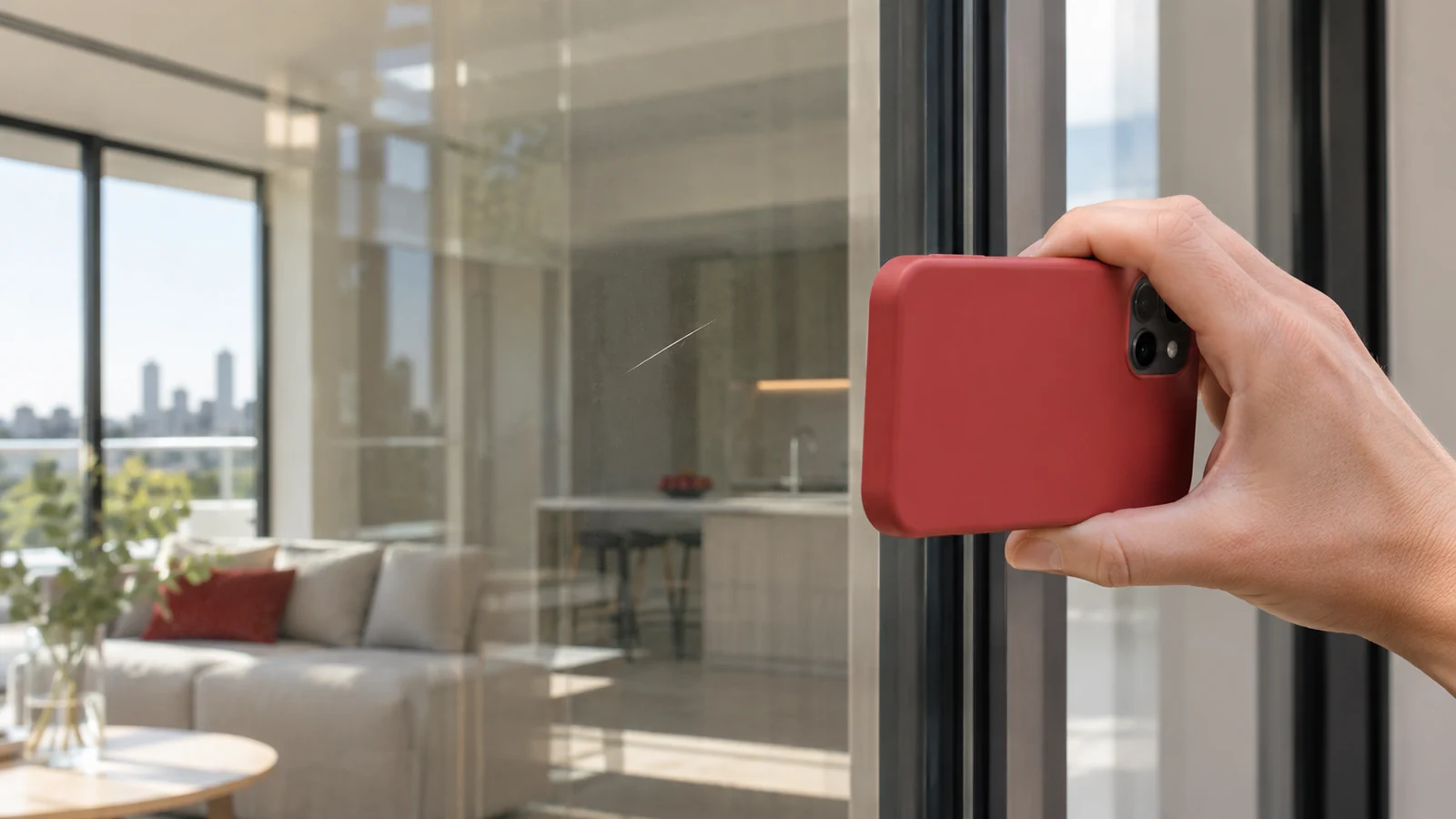
Useful before-and-after glass photos start with an overview that locates the pane, followed by close views of marks. Use the same camera position, direction and framing before and after cleaning wherever practical. Only use approved, safe access; record inaccessible views as inspection limits rather than trying to reach them. Note daylight, glare, internal lights, reflections and viewing angles, plus changes in coverings or other obstructions. If approved access does not give you a safe view, record the gap instead of moving barriers or improvising. See Safe Work Australia’s advice on construction site access hazards.
Film removal or changed light can reveal construction glass scratches that were previously hard to see. A missing mark in a single photo does not prove that the surface was clear. Use file names such as EXAMPLE-P01_before_overview, retain originals, and put labels on separate copies. Repeat checks after later site work, and add comparison limits wherever matched views differ.
What Should Happen When a Glass Mark Needs Assessment?
A glass mark that needs assessment should trigger a pause, a factual record and advice before further treatment. Cleaning is not glass repair. Nor is it a technical defect inspection.
Keep evidence with the affected pane, not only in a general defect list. Note the first observation time and whether the pane had been cleaned, partly cleaned or left untouched. Add images and visible changes to the same record. Keep the next action open until the site manager confirms who will seek written specialist advice.
Agree a named contact for the supplier or glazier, plus a date for the next update. Keep written supplier advice alongside the record so later work follows instructions for that installed glass. When advice arrives, record what was agreed and who will arrange the work. Do not close the item merely because someone acknowledged the initial message.
Why Can’t Appearance Alone Establish When Glass Was Scratched?
Appearance alone cannot date a scratch or identify its cause, even when the mark is first noticed after cleaning. An apparent scratch may be residue; actual damage may pre-date cleaning or arise during cleaning or later site work. Dust, protective film and changed light can hide or reveal fine lines. Record when the mark was first observed, without claiming when it formed.
Site particles and unsuitable products or methods can damage glass or coatings. Viridian’s guidance on glass scratches and surface damage on construction sites explains these site risks. Do not diagnose a mark from its shape or direction. Matched photos support a sequence of observations, not a finding of timing or fault; a qualified specialist must consider the glass and records.
Pause, Notify and Follow Product-Specific Care
Pause work on the affected pane, and do not keep treating the mark to see whether it disappears. Log products, methods, visible changes and the time work stopped. Alert the site manager; agree who asks the supplier or glazier for assessment before treatment. Check with the builder or glazier for the exact glass product and which side is coated; agree who may remove each label or film. Leave hard residue and suspect damage untouched until the site manager and supplier or glazier have agreed what to do. Viridian’s guidance excludes metal scrapers and razor blades for its glass. Follow the instructions for the installed product, and consult the Viridian Glass Cleaning Guide where applicable.
Record the advice, agreed work, responsible contact and review date, with unresolved panes marked in the post-construction glass inspection. A specialist must assess what further action suits the pane; no outcome is promised. For a Gold Coast project, contact us about a builders’ clean and share your pane list. A builders’ clean is separate from specialist glass assessment.
Putting It All Together
A useful handover record starts with a pane ID, a factual condition note and matched overview and close photos. Record anything that limits the comparison, including film, dust, blocked views or changed light. Ask the site manager and cleaning lead to check the log together before work starts and confirm who will follow up unresolved marks.
Keep the photo log, written cleaning scope and supplier advice together so each pane has a trail through to handover. Update the record after the clean and any later site activity that could change what is visible. Clear records reduce guesswork, but they do not establish when a scratch formed or who caused it. Leave uncertain panes open for the agreed review.
Frequently Asked Questions
Glass handover records can use ordinary files, provided the links and follow-up notes stay clear. The practical questions below cover access and storage. Keep project rules in view.
Do We Need a Special App for a Glass Handover Record?
No special app is required; a spreadsheet or written form with linked image files can support the record. Use consistent pane IDs and accessible files. Keep everything in a shared project location that the relevant contacts can use.
How Long Should We Keep the Glass Photos and Inspection Log?
Keep records under the project’s document-retention policy and any contract requirements, rather than choosing a universal period. Retain unresolved issue records during assessment and follow-up. Confirm project-specific requirements with the person responsible for records before files are removed.
Can an Owner or Renter Ask for a Copy of the Record?
Owners and renters can request pane records through the builder or property manager, subject to project arrangements. Ask for linked photos, inspection dates and outstanding actions. Check sharing arrangements and remove unrelated personal or site information before release.
What If Handover Is Due Before the Glazier Can Attend?
Keep the pane listed as awaiting assessment if the glazier cannot attend before handover. Record the booking status, responsible contact and next update date. Refer handover decisions through the agreed process; do not label unresolved glass repaired or approved.
How Should We Share Site Photos Without Exposing Private Details?
Frame photos around the pane, away from people, personal papers and unrelated screens. Use the project’s approved channel and share only with relevant contacts. Keep originals intact, and make clearly labelled redacted copies where private details need removal.