Knowing how often you should professionally clean carpets in Australia can make a significant difference to carpet lifespan, indoor air quality and the overall cleanliness of your home. While most Australian households benefit from professional carpet cleaning every 6 to 12 months, factors such as pets, children, allergies, foot traffic, carpet type and local environmental conditions can mean some carpets need attention much sooner.
Carpets quietly collect dust, dirt, allergens, pet dander, bacteria and microscopic debris long before they appear dirty on the surface. Regular professional carpet cleaning helps remove this hidden build-up, protects carpet fibres from premature wear and keeps living spaces fresher and healthier. This guide explains the ideal carpet cleaning schedule for different Australian homes, how carpet type affects cleaning frequency, the warning signs your carpets need attention sooner, and how AustClean helps homeowners, landlords and businesses maintain cleaner carpets year-round.
Jump to section
- How Often Should You Professionally Clean Carpets In Australia?
- How Often Should You Get Carpet Cleaning In Australia?
- What Factors Decide How Often Carpets Should Be Professionally Cleaned?
- Recommended Carpet Cleaning Schedules For Different Australian Homes And Properties
- What Are The Signs Your Carpet Needs Professional Cleaning Sooner?
- Steam Cleaning Vs Dry Cleaning What Is The Best Carpet Cleaning Method In Australia?
- How To Maintain Carpets Between Professional Cleans (And Extend Carpet Lifespan)
- Ready To Refresh Your Carpets?
How Often Should You Professionally Clean Carpets In Australia?
Working out how often you should get carpet cleaning in Australia, and whether carpet type changes the answer, can feel confusing. In most Australian homes, carpets need a professional deep clean roughly every 6 to 12 months, with wool, plush and light-coloured carpets usually needing attention sooner and tougher synthetic carpets sometimes coping a little longer.
Add kids, pets, beach sand, red dirt or asthma into the mix and that timetable can shrink quickly. Leave carpets too long and hidden grit and allergens start to shorten carpet life and affect indoor air quality.
This guide sets out clear schedules for Australian homes and properties based on lifestyle, carpet material, traffic levels and local conditions. You will see the best times for steam cleaning, how carpet type affects timing, the warning signs carpets need attention early, and easy ways to keep floors fresher between visits with AustClean or any professional carpet cleaner in Australia.
Ready for simple, practical answers you can use to plan your next clean? Keep reading.
Key Takeaways
Short on time? Here are the main points about carpet cleaning frequency in Australia, in plain language you can act on.
Baseline professional carpet cleaning frequency in Australia sits at around once a year for most owner-occupied homes using hot water extraction, often called steam cleaning. Industry guidance from the Institute of Inspection Cleaning and Restoration Certification supports at least yearly cleaning for normal homes. Very quiet, low-traffic spaces can sometimes stretch to about 18 months, but going longer than that is rarely wise.
Lifestyle factors change your carpet cleaning schedule more than many people realise. Household size, kids, pets, shoes indoors and how often you entertain all shift your timetable. Bigger, busier homes load carpets with soil far faster than a single-person apartment. Good vacuuming and quick spill care help you stay closer to the longer end of each range.
Homes with crawling babies, toddlers, multiple pets or asthma usually need main areas cleaned every 3 to 6 months, because more time is spent at floor level and there is more dust, hair and food debris. Bedrooms in these homes often sit at 6 to 12 months. HEPA vacuuming several times a week and fast action on spills make a big difference between visits.
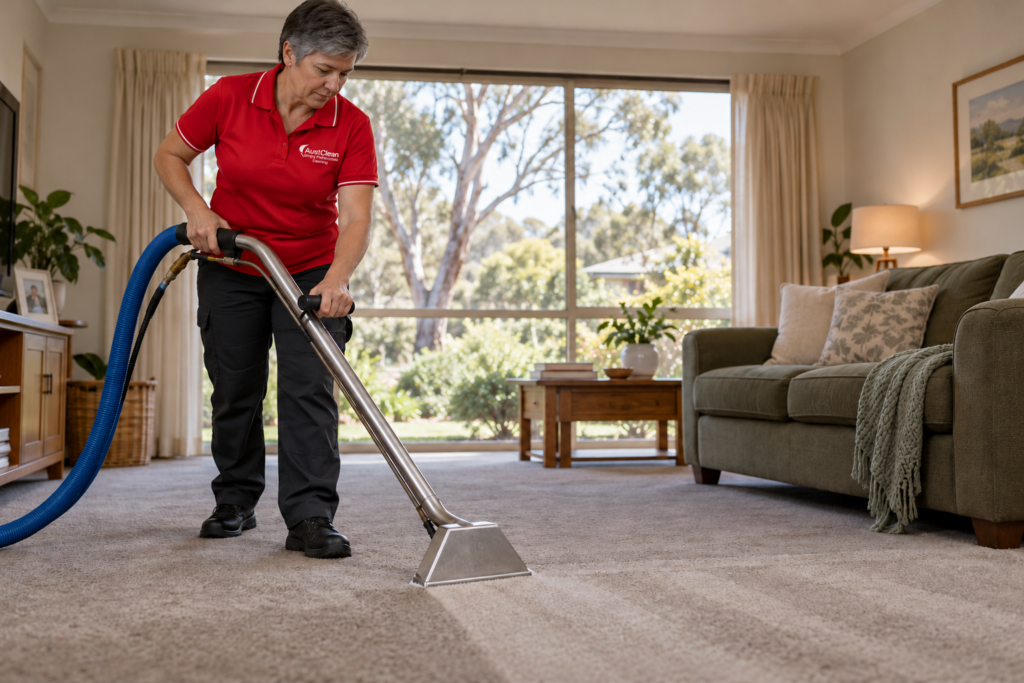
What most people call steam cleaning is hot water extraction, which flushes soil and cleaning agents from deep in the pile. Research from the Carpet and Rug Institute shows this method removes more soil than many low-moisture systems. AustClean relies on this approach across Queensland, Victoria and South Australia for consistent, hygienic results.
Simple maintenance habits between professional cleans, such as regular vacuuming, good mats at doors, a casual shoes-off habit and blotting spills straight away, slow re-soiling. These small steps help carpets look better for longer and mean each AustClean visit gives a more noticeable refresh.
How Often Should You Get Carpet Cleaning In Australia?
How often you should get carpet cleaning in Australia depends on use level, carpet type and local environment. For most owner-occupied homes, a professional hot water extraction clean every 6 to 12 months is a sensible target that keeps carpets looking good and helps protect your investment.
Australian carpets deal with extra sand, dust and humidity compared with many countries, so long gaps between cleans can shorten carpet life. Industry bodies such as the Carpet and Rug Institute and many manufacturers advise at least yearly professional cleaning to support appearance and warranty conditions. AustClean bases its maintenance plans on these ranges, then adjusts timing around how each home actually uses each room.
Baseline Carpet Cleaning Frequency What Do Standards And Manufacturers Say?
Baseline carpet cleaning frequency for typical Australian homes usually lines up with manufacturer and standard recommendations. In practical terms, that means a professional hot water extraction clean roughly every 12 months for average use, with a little flexibility either side depending on traffic.
Guidelines in the Australian Standard for carpet cleaning and in many warranty booklets call for regular professional cleaning using approved methods. According to the Carpet and Rug Institute, many mills expect proof of professional cleaning every 12 to 18 months to support stain and wear claims. Stretching beyond about two years risks both warranty problems and permanent traffic lanes that no cleaner can fully reverse, a finding consistent with industrial carpet cleaning research comparing professional formulations and their lifecycle cost implications.
Studies referenced by the IICRC show carpet can hold hundreds of grams of dry soil per square metre before it looks obviously dirty. Booking AustClean or another professional at least once a year removes that hidden load before it grinds away at fibres, helping keep pile springy and colours brighter for longer.
Light Moderate And Heavy Use Simple Carpet Cleaning Schedule Guide
Light, moderate and heavy use categories give an easy way to match your carpet cleaning schedule to real life. The more people, pets and grit moving across the floor, the shorter the safe interval between professional cleans.
Light use homes are places with one or two adults, no pets, shoes mostly off indoors and limited entertaining. In these properties, professional carpet cleaning every 12 to 18 months usually works, as long as vacuuming happens weekly. Living rooms may still benefit from yearly steam cleaning even if bedrooms look fine, simply because they carry more foot traffic.
Moderate and heavy use homes include typical family households with 2 to 4 occupants, some indoor-outdoor living and regular visitors. These spaces suit a 6 to 12 month cleaning cycle, with lounges, hallways and stairs getting priority. When you add young kids, multiple pets, allergy issues or constant visitors, main areas often drop to 3 to 6 monthly cleans. In these situations AustClean can focus on traffic lanes and high-use zones between full-house visits to help with budget while still protecting the carpet.
What Factors Decide How Often Carpets Should Be Professionally Cleaned?
The main factors that decide how often carpets should be professionally cleaned are who lives in the property, how they use the floors and what type of carpet is installed. Household size, kids, pets, smoking, climate and fibre type all push your ideal interval shorter or longer.
Good habits such as frequent vacuuming, using mats and blotting spills can safely stretch professional visits without compromising hygiene, and research on preventing high-traffic re-soiling shows just how much these daily routines influence long-term carpet condition. Research from Choice shows many Australian carpets wear out early where vacuuming is irregular and professional cleaning is delayed for years. Mapping your own lifestyle to the points below makes it much easier to set a realistic schedule that fits your household rather than just following a generic rule.
Lifestyle Family And Pets Who Lives On Your Carpets?
Lifestyle, family makeup and pets usually have the strongest effect on carpet cleaning needs. The closer people and animals are to the floor, the more frequent deep cleaning should be.
A single adult in a small unit leaves far less soil than a family of five in a suburban home. Crawling babies, toddlers and school-age kids spend lots of time on the floor, along with snacks, craft and school dirt. These homes usually need living areas cleaned every 6 months and kids’ bedrooms every 6 to 12 months, especially if shoes are worn indoors or there is a lot of outdoor play.
Pets and indoor smoking or vaping also matter. Dogs and cats bring in hair, dander, body oils and outdoor dirt, and the odd accident can soak into the underlay. Smoking or some vaping indoors leaves sticky residues that trap dust and odour. With these factors in play, a 3 to 9 month schedule in lounges and hallways is often more realistic than yearly cleaning. AustClean technicians often recommend more frequent visits for homes with multiple animals or strong odours, as freshening the carpet also freshens the whole house.
Carpet Type Colour And Australian Conditions
Carpet type, colour and local Australian conditions all change how quickly dirt builds up and shows. Wool, nylon and polypropylene each handle soil differently, and red dust or coastal humidity can speed up wear.
Fibre choice, pile style and colour are bigger influences than many owners expect. Wool feels soft and resilient but can hold stains if spills sit too long, so many wool homes suit yearly steam cleaning or even 6 to 9 monthly for pale colours. Nylon and solution-dyed nylon are tough and stain resistant, yet family areas still benefit from 6 to 12 monthly hot water extraction to stop oils and fine grit taking hold. Dark, patterned carpets may hide marks, but grit still grinds away underneath, so schedules should follow use rather than just appearance.
Coastal humidity, sand and red dirt also affect cleaning needs. Coastal suburbs near the Sunshine Coast, Gold Coast or Geelong deal with humidity and salt that can leave carpets musty if not cleaned regularly. Inland and regional areas such as Toowoomba or Mildura often battle fine red dust and farm soil that work their way deep into the pile. Entrances, halls and living rooms in these settings often need professional cleaning every 3 to 9 months to keep abrasive grit under control and prevent early matting.
Recommended Carpet Cleaning Schedules For Different Australian Homes And Properties
Recommended carpet cleaning schedules for Australian homes and properties range from 3 to 18 months, depending on how each space is used. Heavy-use family homes with pets and allergies may need main areas cleaned every season, while low-use spaces and spare rooms can sit comfortably on a yearly plan, or occasionally stretch a little longer if well maintained.
These ranges also answer common questions like how often to clean carpets in Australia with pets, kids or tenants. AustClean franchisees across Queensland, Victoria and South Australia often set up simple recurring plans so owners do not have to guess, with reminders when it is time to refresh high-traffic areas.
How Often Should Average Households Clean Carpets With Or Without Kids And Pets?
Average Australian households usually sit between light and moderate use. That often means 2 to 4 people, mixed ages, indoor-outdoor living and some entertaining, with at least one main living room doing the heavy lifting.
For these homes, hot water extraction every 6 to 12 months in lounges, halls and stairs works well, especially if vacuuming is done weekly. Spare rooms and home offices can stretch to 12 to 18 months as long as carpets still look and smell fresh after vacuuming and there are no allergy issues. Homes with no kids and no pets lean towards the longer end of the range, while families with older kids but no pets fit closer to yearly cleaning for living areas and maybe a little longer for low-use bedrooms.
Carpet Cleaning Schedules For Homes With Pets Children And Allergy Sufferers
Homes with pets, young children or allergy sufferers usually need the most frequent professional care. These groups put more load on the carpet and feel the effects sooner when floors are not hygienic or odours start to build.
Where toddlers crawl and play on the floor, living areas and playrooms benefit from professional carpet cleaning about every 6 months, sometimes more often if there are frequent spills or craft sessions on the floor. One small, well-behaved indoor pet may still manage on a 6 to 12 month timetable, but multiple pets or large outdoor dogs often need 3 to 6 monthly cleans in the busiest areas. AustClean technicians carry specialised pet treatments that target odours right down to the underlay, which helps when pets use the same favourite spots.
Allergy and asthma households have another layer to consider. For people with asthma, hay fever or dust mite allergy, carpets affect health as much as appearance. Data from the Australian Institute of Health and Welfare shows more than two and a half million Australians live with asthma, so controlling triggers at home matters. Many advisers, including Asthma Australia, suggest HEPA vacuuming several times a week and professional cleaning every 3 to 6 months in bedrooms and living rooms. In real terms, that might mean quarterly cleaning for a child’s bedroom with a dust mite allergy, plus half-yearly cleaning for the main living zone.
Carpet Cleaning For Rental Properties And Commercial Spaces
Rental properties and commercial spaces have heavier use and different expectations from owner-occupied homes. Tenants want their bond back, landlords want carpets protected and business owners need presentable, hygienic spaces for staff and visitors.
For long-term rentals, professional carpet cleaning every 12 to 18 months helps protect the landlord’s investment and keeps the property appealing. At end of lease, many agents and authorities such as the Residential Tenancies Authority Queensland expect professional steam cleaning, especially where pets lived inside. Short stay and holiday properties, including Airbnb style rentals, often need 3 to 6 monthly cleans because of constant guest turnover and suitcase traffic. AustClean’s bond-focused services help renters meet agent expectations without overpaying.
Offices, shops and clinics have their own patterns. Commercial carpets in receptions, corridors and waiting rooms face constant footsteps and outdoor grime, especially in ground-floor premises, making it worth reviewing how frequently to schedule carpet cleaning services to keep these high-exposure areas presentable and hygienic. Many facilities follow a quarterly or two to three times per year cleaning plan, combining hot water extraction with occasional interim spot work to keep things presentable between full cleans. AustClean offers scheduled maintenance programs for offices, medical rooms and retail spaces across QLD, VIC and SA, often arranging after-hours visits to minimise disruption.
What Are The Signs Your Carpet Needs Professional Cleaning Sooner?
Signs that your carpet needs professional cleaning sooner than planned include dull traffic lanes, recurring stains, musty odours and more sneezing at home. If these show up before your usual booking time, it usually pays to bring the clean forward rather than waiting another few months.
Waiting until carpets look very dirty often means some damage has already happened. Embedded grit and oxidised stains are then much harder for any cleaner, including AustClean, to remove fully. Acting when you see early signs keeps carpets looking better and can reduce the need for aggressive stain treatments.
Visual Smell And Health Clues To Watch For
Visual, smell and health clues often appear before carpets look obviously filthy. Once you know what to look for, it becomes easier to decide when to call a professional rather than guessing.
Traffic lanes, dull patches and reappearing stains are common early warnings. Dark tracks in hallways, around sofas or on stairs that stay after vacuuming point to embedded soil and worn fibres. A grey, flat look in once-bright areas is another hint that oily residues are clinging to fibres. Spots that keep coming back after DIY cleaning usually mean residue in the backing that needs professional flushing with proper extraction gear.
Persistent odours and allergy symptoms also matter. Pet smells, mustiness or smoke odours that linger even with windows open suggest contamination deep in the pile and underlay. The United States Environmental Protection Agency notes that indoor air can hold several times more pollutants than outside air. If family members sneeze or wheeze more at home than elsewhere, or notice itchy eyes in carpeted rooms, it is time to think about a deep clean and possibly stepping up your vacuuming routine.
When Spills Pet Accidents Or Water Events Mean Book Now
Some events call for a professional carpet clean right away, no matter what your regular schedule says. Fast action can stop stains, odours and mould from becoming long-term problems that are expensive to fix.
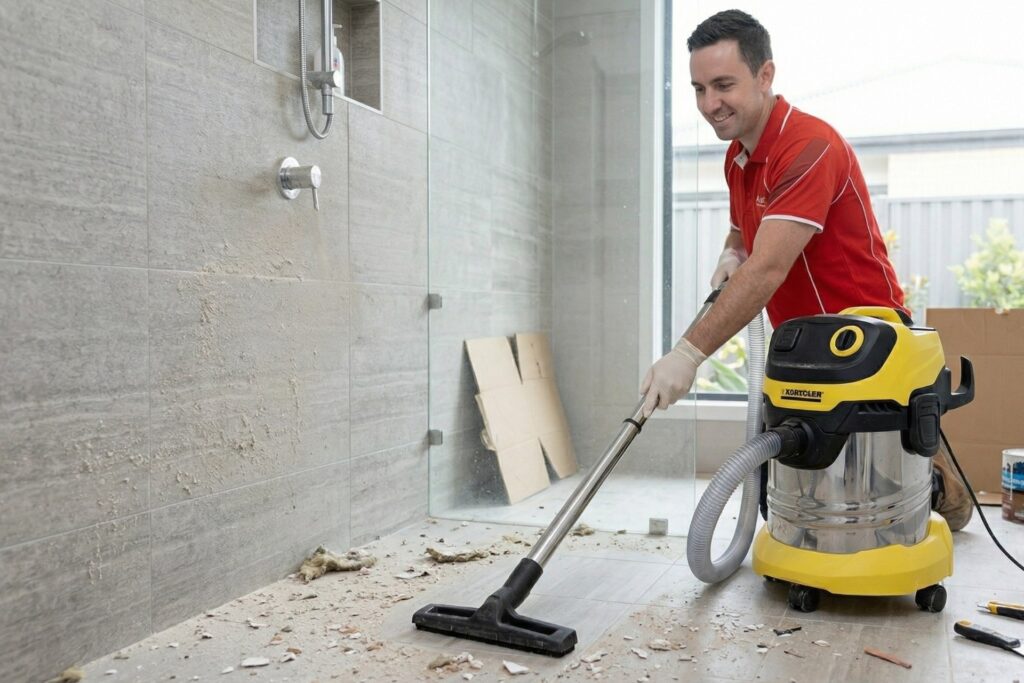
Big spills, pet accidents and renovation dust are common triggers. Large spills of red wine, cordial, coffee or milk can leave permanent marks and smells if they soak in and dry. Pet urine or vomit that still smells after home treatment often signals contamination in the underlay and even the subfloor. Post-renovation plaster dust and fine construction debris also tend to sit deep in the pile, where AustClean’s strong extraction does a far better job than a standard vacuum cleaner.
Flooding, leaks and overflows are more serious again. Burst pipes, overflowing baths or stormwater can saturate carpets and underlay within minutes. Leaving them wet for more than a day or two raises the risk of mould growth and even damaged subfloors. In these cases you should organise professional extraction, drying equipment and any needed antimicrobial treatments as soon as the leak is stopped, rather than waiting and hoping carpets will dry on their own.
Steam Cleaning Vs Dry Cleaning What Is The Best Carpet Cleaning Method In Australia?
Steam cleaning and dry cleaning describe two broad methods used on Australian carpets. For most residential homes, properly carried out hot water extraction, often called steam cleaning, gives the deepest clean and lines up with most manufacturer advice and warranty requirements.
Low-moisture or dry systems can still have a place, especially for quick spruce-ups in commercial spaces or when very short downtime is essential, and understanding the differences between hot water extraction vs encapsulation can help you choose the right approach. The right choice depends on carpet type, soiling level and how quickly areas need to be back in use, so a brief chat with a professional cleaner can save guesswork.
How Hot Water Extraction Steam Cleaning Works And How Often To Use It
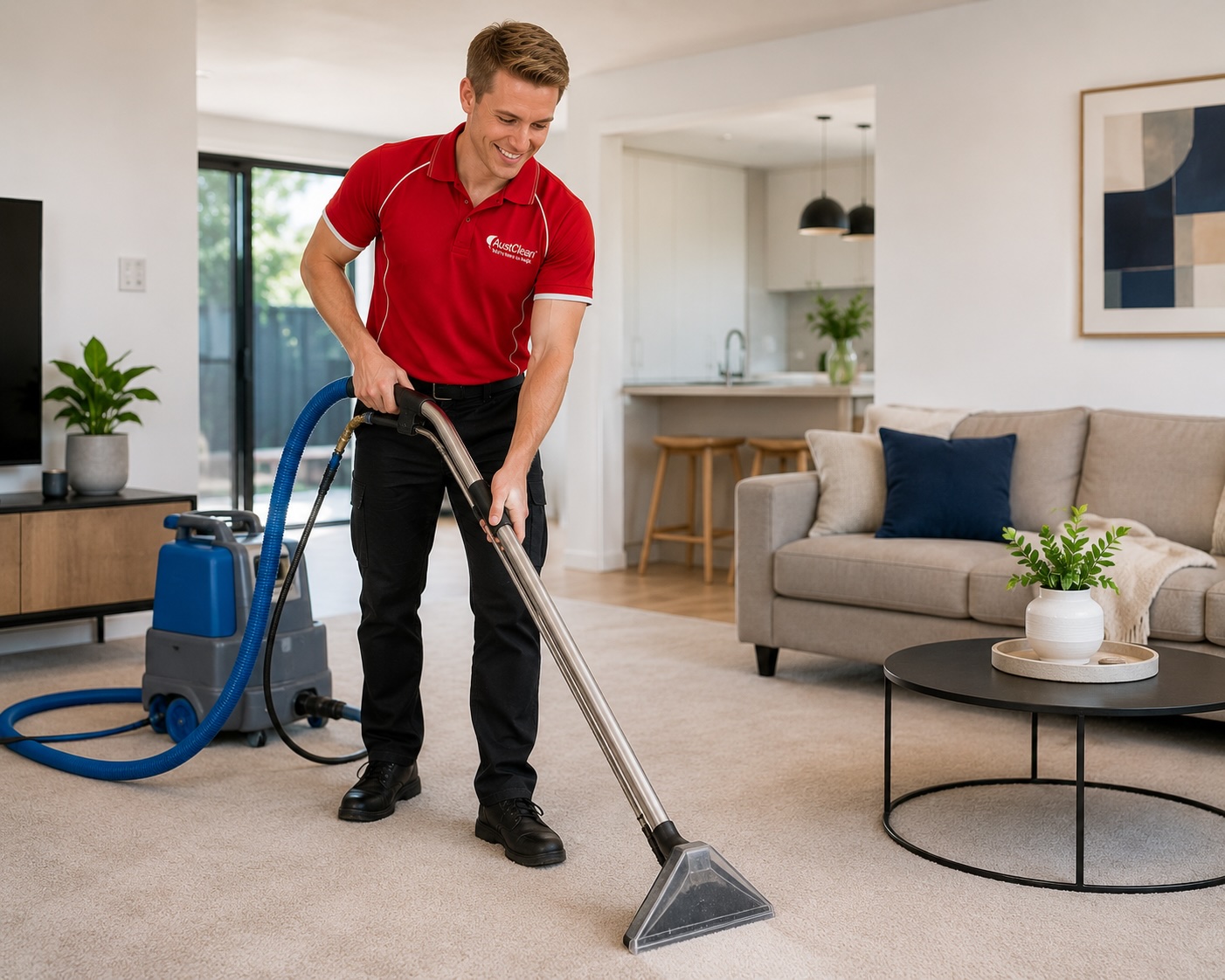
Hot water extraction works by spraying heated water mixed with a cleaning product into the carpet, then extracting it immediately with powerful suction. This reaches deep into the pile and lifts soil, allergens, bacteria and residues that normal vacuuming cannot touch. Done properly, it should leave carpets slightly damp rather than soaked, and observational research into carpet cleaning science confirms that correct extraction technique is critical to achieving hygienic results without over-wetting fibres.
Most manufacturers and groups such as the IICRC recommend this method for regular maintenance of modern wall-to-wall carpet. For many Australian households that means steam cleaning carpets every 6 to 12 months, or every 3 to 6 months in high-use or allergy-prone rooms. AustClean uses portable machines with inline heaters and strong extraction so carpets are usually dry within about 6 to 8 hours with decent airflow, often faster on low-pile synthetics.
“Professional hot water extraction is the most effective way to remove embedded soil from residential carpet,”
says a range of guidance documents from the Carpet and Rug Institute.
For homeowners, that translates into a method that not only freshens appearance but also improves hygiene and helps carpets last longer.
When Might Low Moisture Or Dry Carpet Cleaning Be Considered
Low-moisture or dry carpet cleaning methods use much less water than hot water extraction. Common versions include encapsulation products that trap soil for later vacuuming and bonnet systems that use pads to wipe the fibre surface. They often leave carpets dry within an hour or two.
These approaches can help when very fast drying is needed, such as in busy offices, some shops or apartment corridors where closing the area for half a day is not practical. They suit lightly soiled areas between deeper cleans or as part of a maintenance schedule, but they usually remove less embedded grime and allergen load than hot water extraction.
For heavily soiled homes, pet odours or end-of-lease work, AustClean and most manufacturers lean towards hot water extraction as the primary method, sometimes pairing it with spotting techniques or fibre protection. Dry methods can then be used as interim top-ups in commercial settings rather than the sole form of cleaning.
How To Maintain Carpets Between Professional Cleans (And Extend Carpet Lifespan)
How to maintain carpets between professional cleans comes down to regular vacuuming, simple prevention and quick spill response. These habits dramatically slow down re-soiling and help extend carpet lifespan in Australian homes, whether you live in a coastal unit or a large family house inland.
Combined with a sensible professional carpet cleaning frequency, this kind of routine can add years of service. The Carpet and Rug Institute notes that well-maintained carpets often last up to twice as long as neglected ones, which is a major saving when you consider the cost of full replacement.
Daily And Weekly Habits To Keep Carpets Cleaner For Longer
Daily and weekly habits do most of the work between professional visits. The aim is to stop grit entering in the first place and remove what does get in before it sinks deep into the backing.
Smart vacuuming and entry mats are the first line of defence. High-traffic areas such as lounges, halls and stairs benefit from vacuuming several times a week, and a dedicated guide on high-traffic carpet re-soiling outlines the specific techniques that make the biggest difference in these zones. Family homes without pets can often manage two to three sessions, while pet or allergy homes may need daily passes on key walkways. Using quality mats at every external door and adopting a relaxed shoes-off habit dramatically cut the amount of sand and soil that reaches the carpet and make each professional clean go further.
Spill care and simple equipment choices matter as well. When spills happen, lift solids first, then blot liquids gently with clean, white cloths rather than scrubbing, which can damage fibres and spread the mark. Use only small amounts of carpet-safe spot product and blot again with plain water to remove residue. A vacuum with strong suction and, for most cut-pile carpets, a powered brush head helps remove more embedded dirt between AustClean visits. Cylinder vacuums with HEPA filtration are often a good option for allergy households.
Extending Carpet Lifespan And Improving Indoor Air Quality
Extending carpet lifespan and improving indoor air quality are major benefits of regular maintenance, not just side bonuses. Carpet acts like a giant filter, catching particles from the air and from shoes until they are removed by vacuuming and professional cleaning.
If that material stays in the fibres, every step grinds it further into the backing. Over time, this grit works like sandpaper, wearing away fibre tips and dulling colours. Studies cited by the Carpet and Rug Institute indicate that structured maintenance programs can roughly double the usable life of many carpets, especially in busy family homes and commercial properties.
From a health angle, removing fine dust, pet dander and pollen from carpets reduces what can be kicked back into the air each time you walk across the room or children play on the floor. Organisations such as Asthma Australia highlight the value of reducing triggers in bedrooms and living rooms for people with respiratory conditions. Regular AustClean hot water extraction, combined with HEPA vacuuming and good ventilation, supports that goal for many families.
From a financial angle, stretching replacement out by several years can save thousands of dollars in materials, labour and disruption. Adding optional fibre protection after a professional clean helps repel soil and spills, making day-to-day upkeep easier and further protecting that investment. For business owners, it also keeps premises looking professional without constant refurbishments.
Ready To Refresh Your Carpets?
Ready to refresh your carpets is really another way of asking whether your current schedule still matches your lifestyle. For many Australian homes, a simple 6 to 12 month pattern, adjusted for pets, kids and allergies, keeps things under control without overdoing it or wasting money.
Light-use areas can stretch towards 18 months, while heavy-use family zones, rentals, short-stay properties and busy commercial rooms often need attention every 3 to 6 months. Watching for early signs such as dull traffic lanes, lingering odours or rising allergy symptoms helps you know when to bring a visit forward rather than waiting for carpets to look obviously dirty.
If guessing still feels hard, local AustClean owner-operators across Queensland, Victoria and South Australia can walk through your property, ask a few quick questions and suggest a practical schedule. Their police-checked, fully insured teams use hot water extraction, family-safe products and efficient drying to keep disruption low for households and businesses alike.
When you are ready to arrange your next professional carpet clean, call AustClean on 1300 282 532 or visit AustClean to request a quote. A short chat is often all it takes to lock in a plan that suits your home, business or rental property and keeps your carpets cleaner, healthier and looking their best.