Pressure cleaning Sunshine Coast homes can look simple, yet the wrong method can scar surfaces or disturb loose joints and coatings. Coastal salt, humidity, shade and rainfall feed grime, mould, algae and lichen. The suitable cleaning method depends on the surface, its condition, drainage and nearby plants.
Pressure cleaning uses controlled water force to lift dirt from durable hard surfaces. Soft washing pairs low pressure with a treatment to loosen organic growth on more delicate materials.
Sound concrete driveways often suit controlled washing, while roofs, paint, render and tired pavers need more care. Neither method repairs cracks, loose joints, failing coatings or existing roof defects.
AustClean provides broader exterior cleaning guidance through its franchise network, subject to local service availability. This guide compares methods for roofs, driveways and pavers, then covers runoff, plants and safety.
The best result begins with the surface, rather than the dirt that first catches your eye. Match water force, treatment and access needs to the material.
That choice matters before a rental inspection, property sale or routine maintenance visit. It can also help prevent avoidable marks, leaks and extra cleanup work.
Pressure cleaning or soft washing, which method suits roofs, driveways and pavers?
Choosing pressure cleaning or soft washing for Sunshine Coast roofs, driveways and pavers starts with surface condition. Use controlled pressure on sound hard surfaces, and use gentler washing where force may harm coatings, joints or materials.
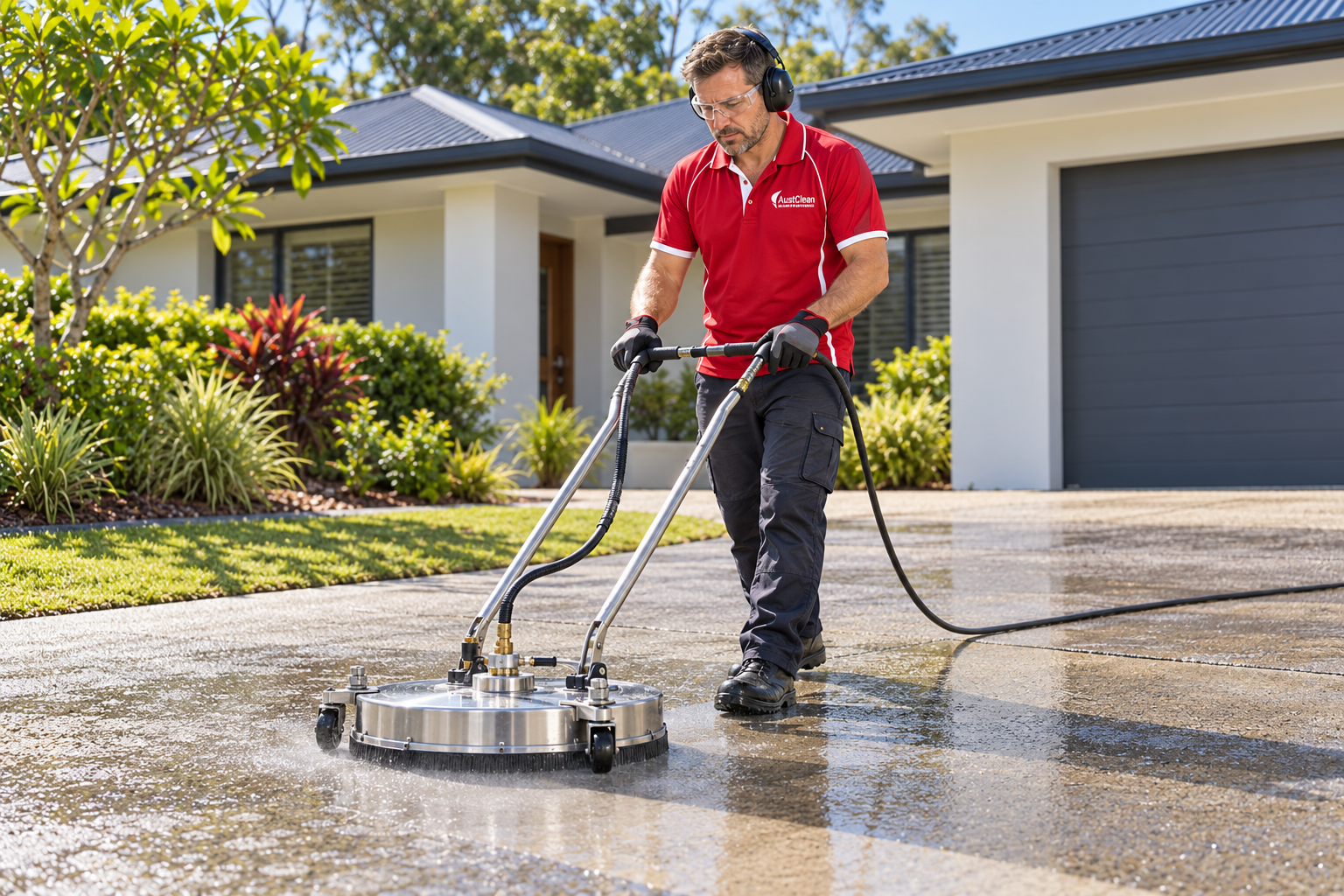
The pressure cleaning Sunshine Coast properties need is not always the strongest spray available. Water flow, nozzle distance, cleaning treatments and drainage all affect the finished result.
| Method | Mechanical action and agents | Suitable substrates | Key risks | Important limits |
|---|---|---|---|---|
| Pressure cleaning | Controlled water force lifts surface grime | Sound concrete driveways and hard paths | Etching, damaged edges and stripped coatings | Deep stains may remain |
| Soft washing | Low pressure and a treatment loosen organic growth | Roofs, render and painted finishes | Incorrect product use and runoff | Results depend on material and condition |
Driveways and concrete paths often respond well to pressure cleaning when the slab is sound. It can lift tyre marks, surface dirt, algae and general weathering from open, hard areas.
Deep oil, rust, paint and old chemical stains may stay visible after cleaning. Check cracks, repaired patches, drainage, coatings and nearby garage doors before any work begins.
Pavers, patios and pool surrounds can collect slippery growth, particularly beneath trees or furniture. Controlled cleaning can freshen these areas without treating every mark as permanent dirt.
Paver joints need special care because strong water can wash out jointing sand. Loose pavers, weak edges and worn coatings may need attention before cleaning.
Use this short paver check before selecting a method. It helps identify problems that cleaning alone cannot fix.
| Check before cleaning | Why it matters |
|---|---|
| Unstable pavers | Movement can worsen under water force |
| Loose joints | Sand may need replacing afterwards |
| Nearby plants | Spray and runoff need control |
| Drainage paths | Dirty water must not pool or enter drains unnecessarily |
| Surface coating | Some finishes need lower-pressure cleaning |
Re-sanding may suit some paved areas after cleaning, though it depends on joint type and surface condition. Discuss this before work starts, rather than after sand has already washed away.
Roofs commonly need soft washing or another low-pressure method, not forceful pressure cleaning. Roof age, material, coating condition, pitch, gutters, flashing and safe access all shape that choice.
Manufacturer advice matters for Colorbond® roofing, tiles and coated materials. Never use pressure on suspected asbestos-containing roofing, and do not attempt DIY roof access.
Roof cleaning and solar-panel cleaning are separate jobs with different care needs. Review roof cleaning guidance for Sunshine Coast properties and roof and solar panel cleaning information before arranging work.
Keep dirty runoff away from stormwater where possible, and check current local water and site rules. Protect ponds, edible plants, windows, electrical points and outdoor furniture before cleaning starts.
AustClean can provide general information about which method may suit a surface, with the final scope dependent on condition, access and local availability. See hard-surface pressure cleaning information for further details on exterior areas.
Choosing the right cleaning method
Pressure cleaning is not the right answer for every outdoor surface. Sound concrete may suit controlled pressure, while roofs, painted finishes and fragile pavers often need a gentler, inspected approach.
Cleaning improves presentation and manages grime, but it cannot repair roof defects, loose pavers, cracks or failed coatings. To confirm local availability, contact us at AustClean.
Frequently asked questions
Is soft washing safe for roofs?
Soft washing can be safer than high-pressure cleaning for some roofs because it uses lower water pressure. Safety depends on the roof’s age, material, coating, existing damage, access conditions and manufacturer advice.
A professional assessment should select the method before any cleaning begins. Older roofs and damaged materials may need additional precautions.
Can pressure cleaning damage pavers?
Yes, incorrect pressure can remove jointing sand, disturb weak pavers and harm some surface coatings. Check paver condition, joint stability, drainage and material type before cleaning.
Some paved areas need re-sanding after cleaning to restore stable joints. Existing movement, broken edges and drainage problems should be addressed separately.
Should I clean an older roof myself?
No. DIY roof access creates fall risks, and older roofing materials may be fragile.
Suspected asbestos-containing roofing must never be pressure cleaned. Seek professional advice for damaged tiles, worn coatings, blocked gutters and difficult roof access.
What should I ask a pressure cleaning provider?
Ask how the provider checks the surface and chooses between pressure cleaning and soft washing. Confirm included areas, exclusions, access needs, plant protection and runoff plans.
Request clear expectations about stains, existing damage and wet-weather rescheduling. For roof work, ask whether manufacturer guidance and roof material have been considered.
For local rules on stormwater and washdown, see Sunshine Coast Council