Upholstery cleaning should generally be done every 6 to 12 months for most homes. However, sofas in busy households with pets, children, or allergy sufferers may need professional cleaning every 3 to 6 months. Regular vacuuming and quick spill treatment help maintain your furniture between professional cleans, but deep upholstery cleaning is essential to remove embedded dirt, allergens, and bacteria.
The Hidden Dirt in Your Sofa: Why Regular Upholstery Cleaning Matters
Your upholstered furniture is often the centrepiece of your home or office. It’s where families gather, clients wait, and moments of relaxation happen. But this central role means your sofas, armchairs, and dining chairs are magnets for everything life throws at them—from coffee spills and muddy paws to invisible dust, allergens, and daily grime. While a quick wipe-down might keep things looking tidy on the surface, true upholstery cleaning goes much deeper.
Thinking about cleaning your furniture isn’t just about preserving its look; it’s a vital practice for maintaining a healthy indoor environment and protecting your significant investment. Neglected upholstery can become a hotspot for allergens and bacteria, contributing to poor air quality and potentially affecting your family’s well-being. This brings up a common and important question for homeowners and business managers alike: just how often should you be cleaning your upholstery?
The answer isn’t always straightforward, as it depends on your specific circumstances. But understanding the right frequency is key to extending the life of your furniture and keeping your space fresh and hygienic. In this guide, we’ll explore the factors that determine your ideal cleaning schedule and provide practical tips. As your trusted Australian partner, AustClean is here to offer expert advice and professional sofa cleaning services to provide the best care possible.
Key Takeaways
- The ideal
upholstery cleaning frequencyfor professional service is generally every 6 to 12 months, but this can vary based on your household’s specific needs and lifestyle. - Important
upholstery maintenance tipsfor day-to-day care include regular vacuuming to remove surface debris and acting immediately to blot spills before they set into the fabric. - Before attempting any DIY cleaning, always check the manufacturer’s care label for specific cleaning codes like “W” (Water-based), “S” (Solvent-based), “WS” (Either), or “X” (Professional only).
- Professional services from a trusted
couch cleaning companylike AustClean provide a deeper, healthier clean by removing embedded allergens and tough stains that DIY methods simply cannot handle. - When cleaning, always aim to minimise the amount of moisture used and make sure the fabric dries thoroughly to prevent the growth of mould, mildew, and unpleasant odours.
Unpacking the “How Often”: Factors Influencing Upholstery Cleaning Frequency
Determining the perfect furniture cleaning schedule isn’t a one-size-fits-all situation. While some furniture might only need a deep clean once a year, a busy family sofa could require attention far more often. At AustClean, we align our recommendations with industry best practices, such as those outlined in the Australian Standard for carpet care (AS/NZS 3733:1995). Applying similar principles, we generally advise a professional upholstery cleaning every 6 to 12 months to maintain optimal hygiene and extend the life of your furniture.
However, several key factors can shift this timeline. The composition of your household plays the biggest role. Homes with young children and pets will inevitably face more spills, crumbs, and pet dander. These environments create a higher load of soil and allergens, making more frequent couch cleaning, perhaps every 6 months, a necessity to keep things fresh and healthy.
The amount of use your furniture gets is another important factor. A sofa in a high-traffic living room or chairs in a commercial waiting area will accumulate dirt, body oils, and grime much faster than a piece of furniture in a rarely used guest room. For these heavily used items, a more frequent deep couch cleaning is essential to prevent permanent soiling and wear. Furthermore, for individuals with allergies or respiratory sensitivities, upholstery can become a major hotspot for allergens like dust mites, pollen, and mould spores. In these cases, cleaning every 6 months can significantly improve indoor air quality and reduce symptoms.
“The unseen allergens in upholstered furniture can significantly impact respiratory health, making regular, thorough cleaning a non-negotiable step for a healthier home,” explains an expert in environmental health.
Finally, your lifestyle choices, such as smoking indoors or frequently eating on the sofa, will also increase the need for professional attention to remove smoke residue, food particles, and stubborn spills.
Your DIY Guide: Keeping Upholstery Fresh Between Professional Cleans
While professional services provide an essential deep clean, what you do between those visits makes a huge difference in maintaining the look and feel of your furniture. Consistent, simple upholstery care tips can prevent dirt build-up and tackle minor issues before they become major problems. Here are some practical steps for keeping your upholstery fresh.
Understanding Your Upholstery Care Label
Before you apply any cleaner, the first and most important step is to find and understand the care label. This small tag is your furniture’s instruction manual and contains codes that tell you how to clean it safely.
- “W” means you can only use water-based cleaners.
- “S” indicates that only solvent-based (dry cleaning) products are safe.
- “WS” gives you the flexibility to use either water or solvent-based cleaners.
- “X” is a strict warning to vacuum only and call a professional for any deeper cleaning.
Always perform a spot-test with any cleaning product on a small, hidden area first to check for any discolouration or damage.
Essential General Maintenance Practices
A few routine habits can dramatically extend the life of your furniture. Weekly vacuuming with an upholstery attachment is one of the most effective upholstery maintenance tips. It removes surface dust, crumbs, pet hair, and allergens before they have a chance to work their way deep into the fabric fibres. Before you vacuum, using a soft-bristle brush to gently loosen any impacted dirt can make your vacuuming even more effective. When spills happen, act immediately. The golden rule is to blot, never rub. Rubbing can push the stain deeper and damage the fabric. Use a clean, dry cloth and work from the outside of the stain inward to absorb the liquid.
Material-Specific DIY Cleaning
For minor cleaning tasks on “W” coded fabrics, you can often use a simple DIY solution.
- For Leather & Faux Leather, a wipe with a slightly damp cloth is often enough. For a deeper clean, use a pH-balanced
leather couch cleanerand follow up with a conditioner to keep the material supple. - Synthetic fabrics like polyester and microfibre are often durable. A mild soap and water solution can work well, while a vinegar and water mixture is great for microfibre. Always blot the area dry afterwards.
- Natural fibres like cotton, linen, and wool require extreme caution. They are prone to shrinking and watermarks, so it’s best to use dry cleaning methods or very low-moisture upholstery shampoos. Never use hot water on these delicate materials.
A final, important tip is to always minimise moisture. Avoid over-saturating the fabric, as this can lead to mould growth, musty odours, and water stains. After cleaning, use fans or open windows to make sure quick and thorough drying.
Beyond the Surface: Why Professional Upholstery Cleaning Is a Game-Changer
While DIY maintenance is excellent for upkeep, there comes a point when it simply isn’t enough. Stubborn stains, lingering odours, and the deep-seated grime that accumulates over time require the expertise and advanced technology of a professional couch cleaning service. This is where AustClean steps in to provide a level of cleanliness and hygiene that home methods can’t achieve, especially for delicate materials or fabrics with an “X” care code.
AustClean’s Unmatched Expertise and Technology
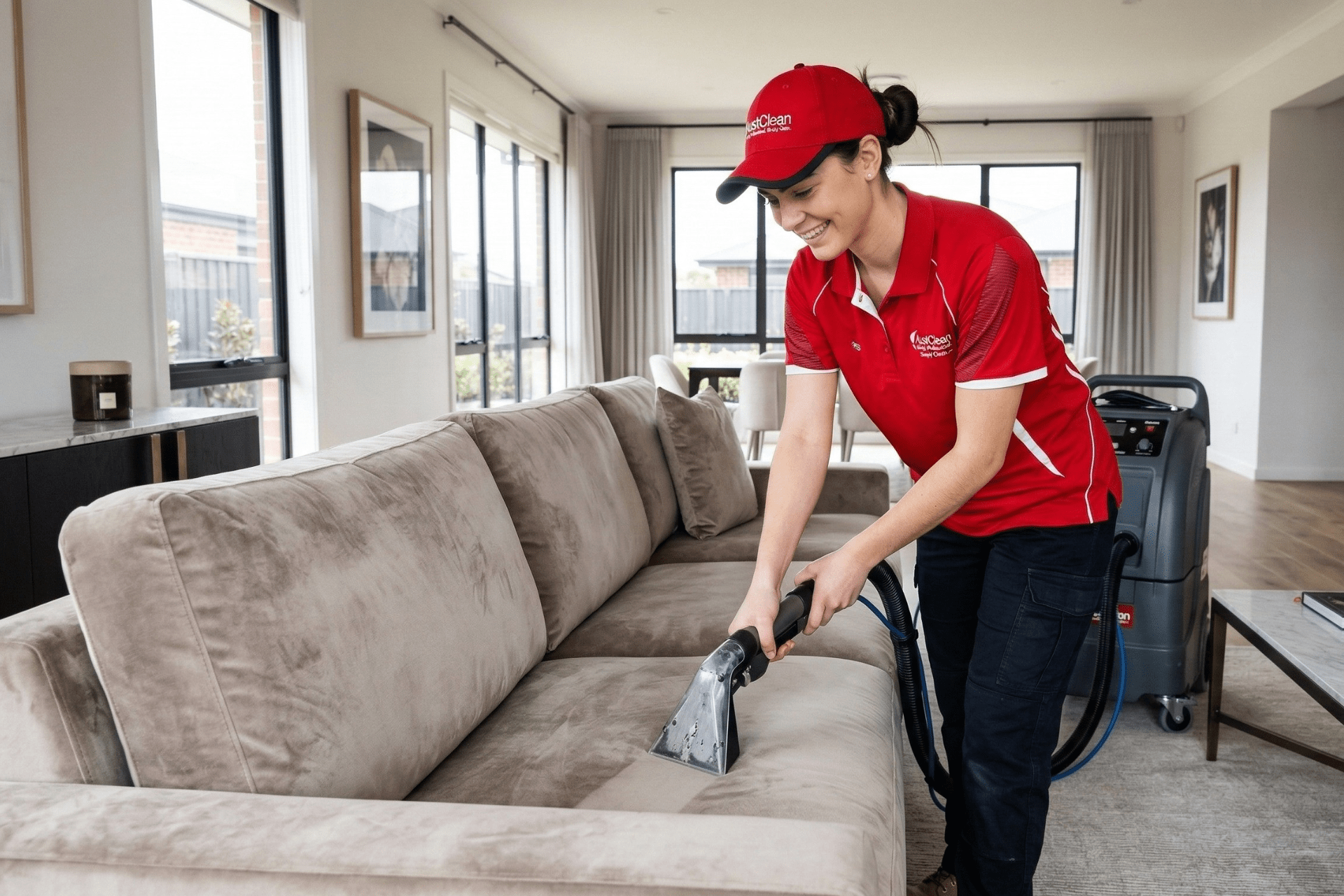
We use the industry-preferred Hot Water Extraction (HWE) method, which is recommended by the Australian Standard (AS/NZS 3733:1995) for a truly deep couch cleaning. Our technicians arrive with portable, industry-leading machines equipped with powerful inline heaters. This technology is a key part of our advantage; higher water temperatures dissolve and extract significantly more grime and dirt from your fabric’s fibres. Our portable units also give us the flexibility to access jobs in apartments, high-rises, and other areas that larger, van-mounted systems cannot reach. We pair this powerful equipment with gentle, specialised hand-tools designed specifically for the contours and fabric types of upholstery, providing a safe and effective clean for everything from sofas to fabric dining chairs.
Comprehensive Health and Hygiene Benefits
Your furniture is a hotspot for hidden contaminants. Our professional upholstery cleaning process effectively extracts allergens, dust mites, body oils, pet hair, and food crumbs that are buried deep within the fibres. This not only restores the appearance of your furniture but also dramatically improves your home’s indoor air quality. We are committed to the health of your family, which is why we exclusively use high-quality, eco-friendly, and non-toxic cleaning solutions that are completely safe for your children and pets.
Protecting Your Investment
Regular professional cleaning is one of the best ways to extend the life of your furniture. By removing abrasive dirt particles and built-up grime, we help preserve the integrity of the fabric, preventing premature wear and tear. Our advanced methods also provide quick drying times, with most upholstery being dry in just a few short hours, not days, minimising disruption to your home or business. With AustClean, you can trust our trained, police-checked local owner-operators to deliver an exceptional result. We are fully insured and stand by our work with a satisfaction guarantee: if you are not happy with the cleaning, we will rectify the issue free of charge. This commitment to quality makes us the ideal choice when you’re searching for furniture cleaning near me.
Conclusion
Maintaining your upholstered furniture is a balance between regular care and periodic professional attention. Consistent upholstery maintenance tips, like weekly vacuuming and immediate spill response, are fundamental for extending the life of your sofas and chairs. Understanding the factors that influence your specific upholstery cleaning frequency helps you create a schedule that keeps your home looking and feeling fresh.
However, for a deep, restorative clean that removes embedded allergens and stubborn stains, the expertise of a professional is essential. A thorough clean protects your investment and contributes to a healthier living environment. For a superior sofa cleaning and couch cleaning service that delivers exceptional results and peace of mind, trust the local experts at AustClean.
Ready to see the difference a professional clean can make? Contact AustClean today for a quote on upholstery cleaning near me and let us restore the beauty and hygiene of your furniture.
Ready to Refresh Your Sofa and Restore Your Furniture?
Over time, sofas collect dust, allergens, stains, and everyday grime that regular vacuuming can’t remove. A professional upholstery clean restores freshness, improves indoor air quality, and helps extend the life of your furniture.
AustClean’s expert upholstery cleaning service uses professional equipment and eco-friendly solutions to deliver a deep, safe, and effective clean for homes and businesses across Australia.
Contact AustClean today for a customised upholstery cleaning quote and bring your furniture back to life.
FAQs About Upholstery Cleaning
How Often Should You Steam Clean Upholstery?
For most homes, it’s best to (using the hot water extraction method) every 6 to 12 months. If you have pets, children, or allergy sufferers at home, you might consider a more frequent schedule, such as every 3 to 6 months.
Can I Clean My Sofa Myself, Or Do I Need a Professional Couch Cleaning Company?
DIY cleaning is effective for regular upkeep and tackling small, fresh spills. However, for removing deep-seated dirt, stubborn stains, allergens, or cleaning delicate fabrics, a professional couch cleaning company like AustClean offers a safer, deeper, and healthier result using specialised equipment.
What Are The Signs My Furniture Upholstery Cleaning Tips Aren’t Enough And I Need Professional Help?
It’s time to call a professional when you notice persistent stains that won’t lift, lingering odours, a general dull or dingy appearance, or if allergy symptoms seem to be worsening at home. When your DIY efforts no longer produce results, professional intervention is needed.
Is Professional Upholstery Cleaning Safe For My Children And Pets?
Yes, when you choose AustClean. We are committed to the safety of your family and use high-quality, eco-friendly, and non-toxic cleaning solutions. Our hot water extraction method thoroughly rinses the fabric, leaving behind minimal residue and a clean, healthy surface.
How Long Does Professional Sofa Cleaning Take To Dry?
With AustClean’s advanced equipment and methods, you can expect quick drying times. Most professionally cleaned upholstery is completely dry and ready for you to enjoy within a few short hours, not days, minimising any inconvenience to your daily routine.