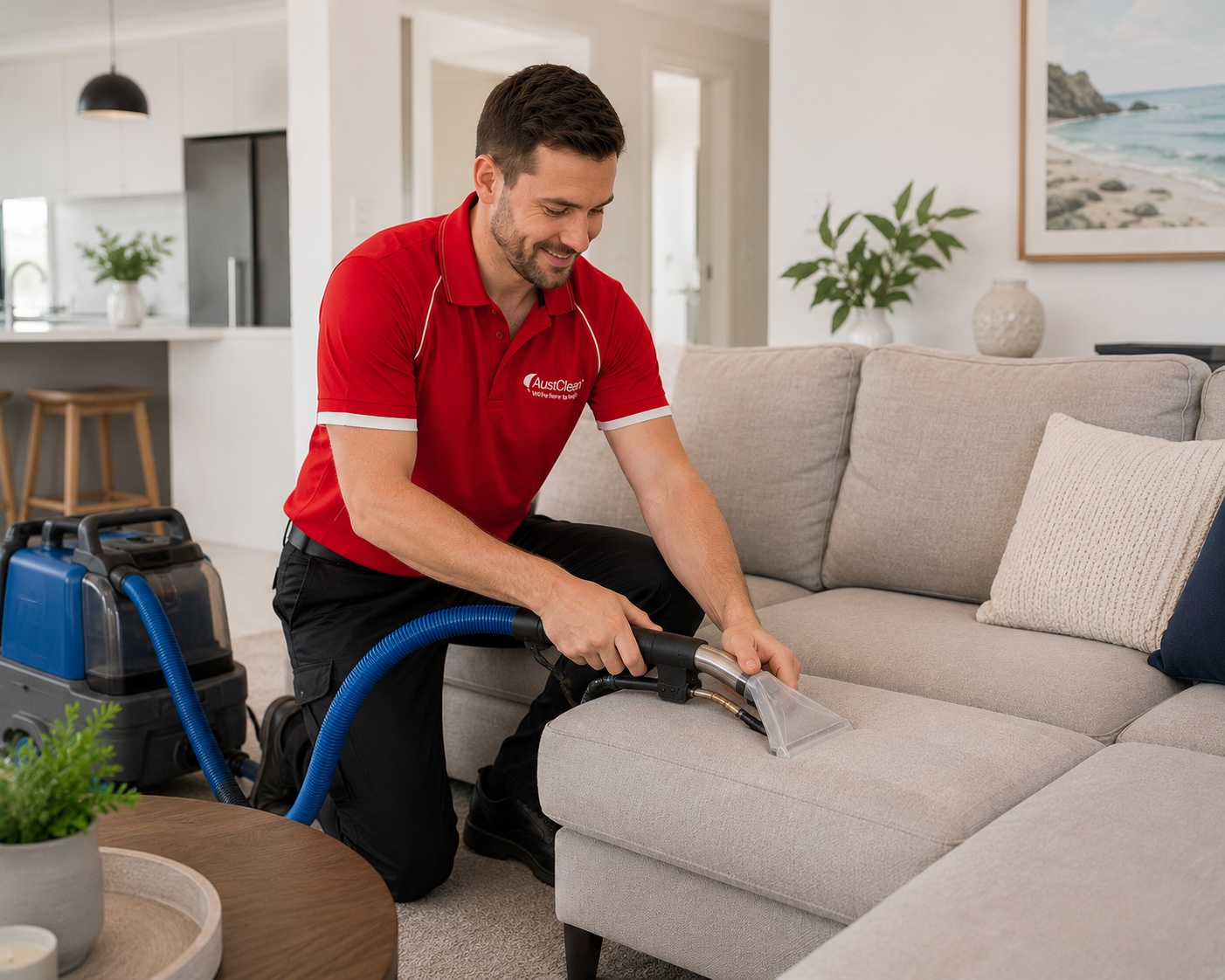
Professional upholstery cleaning helps Australian homes keep couches, armchairs, dining chairs and soft furnishings cleaner, fresher and healthier for longer. Everyday use, pets, kids, food spills, body oils, dust mites, pollen and odours can build up deep inside fabric and foam, where regular vacuuming and supermarket sprays rarely reach.
A proper upholstery cleaning service does more than improve appearance. It can help reduce allergens, remove hidden grime, treat stains, freshen indoor air and extend the life of your furniture. This guide explains what professional upholstery cleaning includes, when it is worth choosing over DIY, how often to book a clean, and how AustClean can help restore comfort and freshness to Australian living spaces.
Jump to section
- Professional Upholstery Cleaning For Australian Homes
- What Does Professional Upholstery Cleaning Actually Include?
- Is Professional Upholstery Cleaning Worth It Compared to DIY?
- How Do Pets, Allergies and Indoor Air Quality Affect the Need for Professional Upholstery Cleaning?
- When Does Upholstery Need Specialist Methods and What Results Can You Expect?
- How Often Should You Clean Your Couch and How Do You Maintain It Between Professional Visits?
- Ready to Freshen Your Lounge? Why Many Australians Choose AustClean
Professional Upholstery Cleaning For Australian Homes
Professional upholstery cleaning keeps Aussie couches, armchairs and dining chairs looking good, smelling fresh and lasting longer, especially when done every 12–18 months (or 6–12 months if you have pets, kids or allergies). A proper clean reaches deep into the fabric and foam, removing grime, odours and allergens that a quick vacuum or supermarket spray simply does not touch.
The problem is simple. Sofas, recliners and dining chairs quietly soak up body oils, food spills, pet accidents and dust until they start to look tired and smell a bit off. A once‑over with a handheld vacuum will pick up crumbs, but it will not reach what is buried in the cushions and padding.
A full professional upholstery cleaning service includes inspection, testing, stain treatment, deep cleaning, deodorising, drying help and a final check. For most Australian homes and rentals, that costs far less than replacing a lounge suite and is a smart way to protect comfort, health and furniture value.
Ready to see what actually happens during a visit, how it compares to DIY, and when AustClean is the right choice for your place? Below you will find clear, practical answers based on how real Australian homes are used.
Key Takeaways
-
What a Professional Upholstery Clean Actually Includes. A proper service covers inspection, fabric testing, pre‑vacuuming, stain work, deep cleaning, deodorising and a final walk‑through. You get a planned process, not a quick random wet pass over the fabric. That structure gives far better and safer results.
-
When Professional Cleaning Is Worth the Money. Booking a professional makes sense when furniture is used daily, has visible marks or stubborn odours, or cost a fair bit to buy. The price of a lounge clean is usually a fraction of early replacement. Over several years, that difference adds up.
-
Health and Allergen Benefits for Aussie Homes. Sofas and mattresses collect dust mites, pollen and pet dander that regular vacuuming leaves behind. Deep cleaning pulls a lot of that out of the fabric and foam. Households with asthma or hay fever often notice easier breathing and fewer musty smells.
-
How Often to Book Upholstery Cleaning. Light‑use rooms can stretch to 18 to 24 months between visits. Busy family rooms, pet homes and allergy households sit closer to 6 to 12 months. A major spill or strong odour is a good reason to book outside the normal schedule.
-
When to Choose AustClean Over DIY. DIY sprays and hire machines are fine for small, fresh marks, but they struggle with deep soil and odours. AustClean brings trained technicians, Australian Standard hot water extraction gear and fabric‑safe stain treatments. That means better results and less risk to your lounge.
What Does Professional Upholstery Cleaning Actually Include?
Professional upholstery cleaning for Australian homes usually includes inspection, fabric testing, targeted stain work, deep cleaning, deodorising or sanitising where needed, drying help and a final inspection. A company like AustClean follows a clear step‑by‑step process so each lounge or chair gets the right treatment for its fabric, condition and age.
According to the Australian Standard AS/NZS 3733, hot water extraction is the preferred method for deep cleaning many fabrics, and AustClean uses that as its main approach where suitable. For leather and delicate textiles, different low‑moisture or solvent methods are used instead.
Inspection, Testing and Preparation Before Cleaning
Inspection and testing before cleaning protect your furniture and set clear expectations about results. A professional technician will:
-
Look at the fabric or leather and check care tags
-
Feel the texture and thickness of the material
-
Note seams, zips, recliner mechanisms and cushion types
-
Check for loose threads, sagging cushions, pilling and faded arms
This helps pick up any pre‑existing wear that might affect the outcome, so there are no surprises later.
Common Australian issues are also noted, such as:
-
Pet hair embedded in the chaise or armrests
-
Kids’ drink spills or texta marks
-
Fake tan or makeup on headrests and cushions
-
Coastal humidity and fine dust from open windows and sliding doors
The technician will usually ask what caused any key stains and what products you have already tried. That history matters because some DIY spotters can either set or spread stains.
Colourfastness and shrinkage testing then happen on a hidden patch. A small amount of cleaning solution is applied and blotted to see if dye moves or the fabric reacts. This quick step guides the choice between hot water extraction, low‑moisture or solvent methods and reduces the chance of colour loss, browning or warping.
Before any machine is switched on, surrounding areas are protected. AustClean technicians often use drop sheets, corner guards and hose covers to shield walls and floors, especially in units and high‑rises where access is tight. Furniture is positioned for safe access, and a plan is set for which pieces will be cleaned first so traffic through your home is kept sensible.
Deep Cleaning, Stain Treatment, Deodorising and Drying
The hands‑on stage starts with thorough pre‑vacuuming using a commercial machine and upholstery tools. This pulls out loose grit, dust, crumbs and pet hair from seams and crevices so they do not turn into muddy residue once moisture is added. The Cleaning Industry Research Institute notes that effective dry soil removal can take out up to 70 per cent of total soil load.
Next comes targeted stain work. Common issues include:
-
Food and drink marks
-
Oils and sweat on arms and headrests
-
Makeup or fake tan on cushions
-
Pet accidents and odour spots
AustClean uses fabric‑safe products for protein stains, tannins, oils and dyes, applied in small controlled areas with gentle agitation. The aim is to lift the mark without harsh scrubbing that can damage fibres.
The main cleaning method depends on the fabric and level of soiling:
-
For many synthetics and some cotton blends, AustClean uses hot water extraction with portable units that heat water and apply it through a small upholstery tool, then extract it straight away.
-
More delicate fabrics might receive a low‑moisture treatment, using controlled amounts of solution and faster drying.
-
Leather lounges are cleaned by hand with pH‑balanced cleaners and then conditioned to restore natural oils.
Optional sanitising and odour treatments are added when needed, especially for:
-
Pet odours and accidents
-
Musty cushions in humid coastal homes
-
Rental furniture between tenancies
Moisture levels are carefully controlled and extra vacuum passes or air movers are used to speed drying, often down to just a few hours depending on conditions. Before leaving, the technician does a final walk‑through with you and points out any permanent wear or stains that did not fully shift, along with simple tips to look after the furniture as it dries.
Is Professional Upholstery Cleaning Worth It Compared to DIY?
Professional upholstery cleaning is usually worth the cost when you consider health, appearance and the price of replacement. The right service can add years of life to a lounge suite and make living areas feel noticeably fresher and easier to live in.
Research from Choice shows that many households replace large furniture earlier than planned due to staining or odours, not because the frame has failed. A periodic deep clean from AustClean often delays that expensive step and makes existing furniture more pleasant to use.
DIY vs Professional Results, Risks and Real Costs
DIY couch cleaning often relies on supermarket sprays, small handheld “steamers” or hire machines from hardware stores. These can help with a fresh spill, but they usually have:
-
Weak suction
-
Limited heat
-
General‑purpose products that do not match specific fabrics
Over‑wetting and sticky residue are common outcomes.
Professionals use high‑power extraction units, inline heaters and dedicated upholstery tools that control water flow and lift out far more soil. That deeper removal is important because, according to the US EPA, indoor air can be two to five times more polluted than outdoor air in many homes. Extracting embedded dust, sweat and spills from lounges reduces one more source of that load.
There is also the question of risk. DIY attempts can leave:
-
Browning or watermark rings
-
Stiff or crusty patches
-
Colour loss or fabric distortion
-
A sour smell when foam stays damp for days
These issues can make later professional stain removal harder or even impossible. By comparison, AustClean technicians test fibres first, choose the right method and stand behind their work with a satisfaction guarantee.
A simple way to look at cost is this. A quality three‑seater can cost many hundreds or even thousands of dollars. A professional sofa cleaning service is usually a small fraction of that. Repeating DIY experiments that do not fix odours, then replacing the lounge early, is often the real expensive path.
Health, Hygiene and Long‑Term Value Benefits
The value of a professional clean is not just about looks. Upholstered furniture behaves like a big soft filter, trapping dust, skin flakes, pet dander and smoke particles. According to Asthma Australia, about 2.7 million Australians live with asthma, and dust and allergens in the home can be a major trigger — a pattern reflected in two decades of lung health data published by the Australian Institute of Health and Welfare.
Hot water extraction and deep allergen extraction remove a lot of this hidden build‑up in one visit. That can help people with asthma, hay fever or eczema, especially when combined with:
-
Regular HEPA‑filter vacuuming
-
Sensible ventilation
-
Periodic mattress and carpet cleaning
The Australasian Society of Clinical Immunology and Allergy notes that dust mite allergy is one of the most common allergies in Australia, so reducing mite habitats across lounges, mattresses and carpets makes sense.
From a value point of view, removing abrasive grit that grinds away at fibres slows wear. Conditioning leather stops it drying out and cracking. Landlords, real estate agents and Airbnb hosts often use commercial upholstery cleaning services to keep furnishings looking good in photos and to avoid complaints about odours. Over time, that care protects both furniture and income.
As one experienced property manager told us:
“A regular upholstery clean is cheaper than a single bad review about smells in a rental.”
How Do Pets, Allergies and Indoor Air Quality Affect the Need for Professional Upholstery Cleaning?
Pets, allergies and indoor air quality all increase how often you should book professional upholstery cleaning. Sofas in busy, pet‑friendly homes need more frequent deep attention than a rarely used formal lounge that only sees guests a few times a year.
According to RSPCA Australia, around two‑thirds of Australian households share their home with a pet. That means fur, dander and the odd accident are normal on couches and recliners, even in tidy homes.
Pet Stains, Fur and Odours on Sofas and Couches
Pet‑friendly homes usually deal with a mix of:
-
Fur and dander woven into fabric
-
“Wet dog” odours after rain or beach trips
-
Urine accidents from puppies, kittens or elderly pets
-
Vomit after a stomach upset
-
Oily marks where animals like to sleep
These issues sink into the fabric and foam, so surface deodoriser sprays only mask them for a short time.
Good at‑home habits go a long way:
-
Blot fresh urine or vomit with plain paper towel or a clean cloth
-
Avoid rubbing, which spreads the stain and drives it deeper
-
Skip harsh cleaners like bleach or everyday carpet shampoo
Some of those products can bleach or lock in stains, which then makes life harder for your cleaner.
AustClean deals with pet problems by combining deep extraction with targeted urine and odour treatments and eco‑friendly detergents. Hot water loosens dried residues, and extraction pulls them out along with hair and dander. If urine has soaked deep into foam or the frame for a long time, complete odour removal may not be possible, but a major improvement is still common.
To cut repeat problems, consider:
-
Washable throws on favourite pet spots
-
Providing comfy pet beds near the lounge
-
Keeping up a regular deep cleaning schedule
For many dog or cat homes, a professional couch cleaning service every 6 to 12 months keeps things under control and the home smelling fresher.
Allergy Reduction and Better Indoor Air Quality
For people with allergies or asthma, upholstery can be a hidden source of symptoms. Dust mites, pollen and mould spores settle into cushions and then puff up into the air every time someone sits down or flops onto the lounge. The Australian Institute of Health and Welfare reports that allergic conditions are among the most common chronic health issues in the country, a finding consistent with Prevalence and Sociodemographic Variation of allergic diseases research drawn from the Australian National Health Survey.
Professional hot water extraction removes far more of this load than surface vacuuming alone. When you combine upholstery, carpet and mattress cleaning in the same visit, you treat most of the soft surfaces that hold allergens. Many AustClean clients time this for spring or early summer when windows are open and drying is faster.
Allergy‑prone households usually benefit from cleaning lounges and mattresses every 6 to 12 months. Average homes without pets or allergies can stretch to 12 to 18 months. Between visits, regular vacuuming with a soft brush tool, good ventilation and, where needed, air purifiers recommended by organisations like the National Asthma Council Australia all support better indoor air.
A simple rule of thumb is: if your lounge smells musty when you walk in after a day away, or you sneeze when you sit down, it is time to call in a professional.
When Does Upholstery Need Specialist Methods and What Results Can You Expect?
Some couches can handle standard hot water extraction, while others need low‑moisture or solvent methods to stay safe. Specialist techniques also come into play with designer fabrics, vintage pieces and severe stains.
Understanding these limits helps you know when to call AustClean for advice rather than reaching for a random cleaner at home that may not suit your fabric.
Different Fabrics, Different Methods Fabric and Leather Care Explained
Different upholstery fabrics react very differently to heat, moisture and cleaning products — research into The Influence of the upholstery textiles structure on functional properties confirms that fibre composition directly determines how a fabric responds to cleaning interventions. For example:
-
Polyester, acrylic and microfibre lounges often respond well to hot water extraction when tested first.
-
Cotton blends may also suit this method but sometimes need gentler settings to avoid shrinkage or colour shift.
-
Linen, viscose, some designer blends and items labelled “dry clean only” usually need low‑moisture or solvent‑based cleaning instead. Over‑wetting these fabrics can cause browning, water rings or texture changes that no one can fully reverse.
This is why AustClean technicians always test in a hidden spot and match the method to the fibre rather than relying on guesswork.
Leather lounges are a separate case:
-
Protected leather usually responds well to vacuuming, application of a pH‑balanced leather cleaner, gentle agitation and careful removal, followed by conditioning to restore oils.
-
Aniline or semi‑aniline leathers are more absorbent and need extra care. Heavy scrubbing or the wrong cleaner can strip finishes or cause colour loss and patchiness.
Guessing the fabric or copying a friend’s DIY method carries real risk. Delicate vintage chairs, sun‑weakened fabrics or expensive designer sofas should always be checked by a trained technician who knows the Australian Standard AS/NZS 3733 and current manufacturer guidelines.
As one senior AustClean technician often reminds clients:
“If the care label says ‘professional clean only’, treat that as a warning sign, not a suggestion.”
Realistic Expectations Around Stain Removal and Colour Improvement
Even the best professional cannot promise that every mark will vanish. Results depend on:
-
What was spilled
-
How long it sat there
-
The type and colour of fabric
-
Which products have already been used on it
Wine, coffee, curry, ink, fake tan and urine all behave differently in fibres.
Sometimes a stain has already caused permanent dye change or fibre damage. In those cases, a cleaner can often improve contrast and reduce odour, but a faint shadow may remain. Old pet urine, for example, can leave a light patch or lingering smell if it has soaked right through to the frame or underlay.
AustClean technicians talk through these limits during the pre‑inspection so you know what to expect. The focus is on realistic goals such as:
-
Brighter overall colour
-
A fresher, cleaner feel
-
Lighter and less noticeable stains
-
Reduced odour and less “doggy” or musty smell
If something can be improved further after drying, AustClean will usually return for a second look and, where suitable, a re‑clean of that area.
A good result often looks like this: the lounge appears several shades cleaner, the room smells fresher, the fabric feels softer and only a few very old or severe marks remain faintly visible. That outcome still extends the life and comfort of the furniture and makes the room far more pleasant to spend time in.
How Often Should You Clean Your Couch and How Do You Maintain It Between Professional Visits?
Most Australian households do well with professional upholstery cleaning on main couches every 12 to 18 months, and every 6 to 12 months in homes with pets, kids or allergies. Lighter‑use rooms can stretch longer if they stay clean and odour free.
The goal is to clean before the furniture looks awful or smells bad. Regular maintenance at the right interval is far kinder to fabrics than waiting until everything is heavily soiled and then trying to fix it in one go.
Recommended Cleaning Frequency for Australian Homes and Properties
Different spaces need different schedules:
-
Light‑use rooms, such as formal lounges that only see guests now and then, often manage well with a professional sofa cleaning service every 18 to 24 months. Regular vacuuming and prompt spill attention are still important here.
-
Typical family rooms where people eat snacks, watch television and relax daily need more attention. For these, 12 to 18 months between professional couch cleaning visits is a sensible range. Homes with multiple children or teenagers may lean to the shorter end.
-
If you have pets on the lounge, indoor smokers, heavy cooking odours, allergy sufferers or live in a dusty or humid area, plan for every 6 to 12 months. The Bureau of Meteorology notes that parts of Queensland and northern New South Wales have long humid seasons, which can encourage mustiness in soft furnishings.
-
Commercial spaces, serviced apartments and short‑stay rentals benefit from at least yearly cleaning and often quarterly visits for high‑use pieces. Any large spill, strong odour, visible pet accident or musty smell is a good reason to bring the schedule forward and call AustClean.
A simple conversational way to think about it is: if you would be embarrassed for guests to sit on a particular lounge without throwing a cover over it, it is probably due for a professional clean.
Easy Maintenance Tips Between Professional Cleans
Simple habits between professional visits keep your lounge fresher and stretch the time between deep services. Regular care is especially handy if you are busy and want your next AustClean visit to be as fast and effective as possible.
Try these practical tips:
-
Vacuum upholstery weekly or at least fortnightly with a soft brush tool.
-
Focus on seams, crevices and under loose cushions where crumbs and grit hide.
-
Remove throws and scatter cushions first so you reach all surfaces.
-
This light routine stops dirt grinding into fibres and reduces allergens.
-
-
Deal with spills straight away.
-
Blot with a clean, white, absorbent cloth.
-
Work from the outside of the mark towards the centre and avoid rubbing.
-
Use plain water only unless the care label and manufacturer recommend something else. Strong supermarket cleaners can set stains or strip dyes.
-
-
Rotate and flip loose cushions regularly if the design allows.
-
Swap seats that get the most use with those at the ends of the lounge.
-
This spreads wear and soiling more evenly and keeps cushions feeling comfortable for longer.
-
It also helps the next professional clean look more even across the whole suite.
-
-
Protect high‑risk areas.
-
Use washable throws or fitted covers over arms, chaise sections and kids’ spots.
-
Wash these after messy movie nights or pet naps.
-
For leather lounges, keep furniture out of direct sun where possible to reduce fading and drying.
-
-
Freshen the room air.
-
Open windows when weather allows to let moisture and odours escape.
-
Use exhaust fans in kitchens and bathrooms to cut humidity.
-
In damp climates, consider a dehumidifier in living areas.
-
-
Consider booking carpets, rugs and mattresses at the same time as your upholstery cleaning service.
-
AustClean offers combined packages across Queensland, Victoria and South Australia that save time and often work out cheaper than separate visits.
-
A whole‑home clean like this gives a clear reset for indoor air quality and general freshness.
-
Ready to Freshen Your Lounge? Why Many Australians Choose AustClean
A professional upholstery clean gives your lounge, armchairs and dining chairs a proper reset. You gain brighter fabric, lighter odours, fewer allergens and a softer feel under hand, all without the cost and hassle of new furniture. For busy households, that is a very practical upgrade that you will notice every time you sit down.
AustClean follows a clear process on every job. A trained local technician inspects your furniture, tests the fabric, pre‑vacuums, treats stains, chooses hot water extraction or another suitable method, applies odour or sanitising products when needed, helps speed up drying and finishes with a joint inspection. This mirrors methods recommended in the Australian Standard AS/NZS 3733 for fabric care.
AustClean uses industry‑preferred hot water extraction for suitable fabrics, eco‑friendly agents that are safe for children and pets, and fully portable machines that can reach apartments and high‑rises. Each franchise is locally owned and insured, so you are dealing with someone who understands local dust, humidity and lifestyle patterns. Transparent pricing and a satisfaction guarantee add extra peace of mind.
If you are weighing up professional sofa cleaning near you, AustClean makes it straightforward to request a quote online or over the phone. You can ask about:
-
Combined carpet and upholstery cleaning
-
Packages that include mattresses and rugs
-
Commercial upholstery cleaning services for offices and short‑stay properties
One well‑planned visit can leave your place feeling cleaner, fresher and ready for the next season.
Conclusion
Professional upholstery cleaning gives Australian homes and properties far more than a tidy‑up. It treats deep soil, bacteria, pet issues and allergens while protecting the fabric or leather you invested in. Regular visits keep lounges looking good and delay the need for expensive replacement.
DIY spot work still has a place, especially for fresh spills handled quickly and gently. The real gains come when that day‑to‑day care is backed by periodic deep cleaning from a trained team like AustClean. That mix balances cost, convenience and results for real households.
If your couch looks tired, smells a bit off or has not seen a proper clean in more than a year, now is a sensible time to act. Get in touch with AustClean to discuss your furniture, book a visit at a schedule that fits your household, and then follow simple maintenance habits so your furniture stays comfortable, healthy and welcoming for everyone who uses it.