A professional commercial office clean goes far beyond a quick vacuum and emptying a few bins. It is a structured service that covers workstations, shared spaces, kitchens, bathrooms, floors, high‑touch points and rubbish, usually following a written office cleaning checklist.
In simple terms, a commercial office cleaning service includes routine surface cleaning and disinfection, amenities cleaning, floor care, bin and recycling management, touchpoint sanitising and, when needed, deeper tasks such as carpet and window cleaning.
When the scope is vague, offices end up with sticky kitchens, tired bathrooms and dust building up around desks. Staff notice, visitors notice and landlords often notice during inspections.
A structured program with a provider such as AustClean helps create a healthier, safer and more professional workplace across Queensland, Victoria and South Australia. This guide walks through what is usually included, how daily, weekly and periodic services fit together, what affects your ideal schedule and how to pick the right partner.
Keep reading to see how a clear plan for commercial office cleaning can support your team, your clients and your budget.
Key Takeaways
-
A standard commercial office clean covers workstations, reception, meeting rooms, kitchens, bathrooms, floors and bins. It also includes targeted touchpoint sanitising for items such as door handles and switches. Most providers follow a written office cleaning checklist so the same tasks happen every visit.
-
Daily, weekly and periodic cleaning routines work together rather than standing alone. Light daily tasks keep hygiene and presentation under control between visits. Scheduled deeper work such as carpet cleaning, window washing and detailed bathroom descaling keeps the office looking fresh over the long term.
-
Cleaning frequency depends on office size, staff numbers, visitor traffic and industry risk. A small professional suite may need services two or three times a week. A busy medical office or contact centre usually benefits from daily office cleaning services, plus regular deep cleaning of key areas.
-
Regular professional office cleaning supports health, safety, brand image and staff morale. Research from the Australian Department of Health and Aged Care highlights that good hygiene practices reduce the spread of illness, which links directly to sick days and productivity.
-
AustClean delivers tailored commercial office cleaning for Australian businesses using trained local teams, clear checklists and flexible schedules. Their mix of routine cleaning, periodic deep cleans and optional services such as commercial carpet cleaning helps offices meet day‑to‑day needs and lease expectations.
“Clean workplaces are not just about appearance; they are a practical tool for protecting staff health and productivity.” – Adapted from guidance by the Australian Department of Health and Aged Care
What Does A Commercial Office Clean Typically Include?
A commercial office clean usually covers every main area of your workplace, not just visible clutter. A professional team follows a set office cleaning checklist that lists tasks for desks, shared spaces, amenities, floors, touchpoints and bins so nothing is overlooked.
Most commercial office cleaning services in Australia group tasks into categories such as general areas, amenities, floors and waste. AustClean uses a structured janitorial checklist for each site so franchise teams know exactly what to do in every room. According to the Building Service Contractors Association of Australia, clear scopes like this are one of the best ways to reduce complaints and call‑backs.
The sections below break down what happens in typical areas during a standard visit.
Workstations, Reception, Meeting Rooms And Common Areas
Workstation and reception cleaning focuses on keeping the spaces people touch and see every day clean and hygienic. Cleaners usually:
-
Dust and wipe desks that have been left clear
-
Wipe monitor stands, phone handsets and other hard surfaces
-
Take care around paperwork and personal items
-
Lightly sanitise keyboards, mice and shared headsets where office rules allow
Open‑plan areas and meeting rooms receive similar attention. Tables, chair arms, credenzas, whiteboards and door handles are wiped and sanitised. Internal glass around meeting rooms and entry doors is cleaned to remove fingerprints and smudges so client‑facing spaces look sharp for presentations and video calls. Research highlighted by Harvard Business Review links tidy, orderly environments with better focus and higher reported satisfaction.
Detail cleaning happens on a schedule rather than every single visit. This can include:
-
Skirting boards and door frames
-
Internal glass partitions and window sills
-
Vents, high ledges and light fittings that collect dust
AustClean programs these items into its office cleaning checklist, so smaller offices, co‑working hubs and larger corporate floors all receive the right level of attention over the month, not just on inspection day.
Kitchens, Lunchrooms, Bathrooms And Rubbish Removal
Kitchens and lunchrooms are hygiene hot spots in any office. A typical clean includes:
-
Wiping and sanitising benches, tables, cupboard fronts and splashbacks
-
Cleaning appliance exteriors such as microwaves, fridges, dishwashers, toasters and kettles
-
Scrubbing sinks, taps and draining boards to remove tea and coffee stains, food residue and grease
Bathrooms and toilets need thorough cleaning every visit, with protocols informed by research such as the Environmental and Microbiological Performance study on green cleaning in commercial buildings confirming the hygiene importance of consistent amenities disinfection. Cleaners usually:
-
Disinfect toilets, urinals, basins, taps, mirrors and partition doors
-
Pay attention to flush buttons, door handles and other high‑touch points
-
Mop floors with disinfectant, focusing on corners and bases of fixtures where grime tends to build
According to Safe Work Australia, good housekeeping and clean amenities help reduce health complaints and hygiene‑related risks in offices.
Rubbish and recycling removal is another core inclusion. All office, kitchen and bathroom bins are:
-
Emptied and relined
-
Waste taken to the building’s collection point in line with strata or landlord rules
Where contracts include consumables, AustClean can:
-
Restock toilet paper, hand towels, soap and sanitiser
-
Report when levels are running low
This keeps essentials on hand without office staff constantly checking supplies.
How Are Commercial Office Cleaning Tasks Split Into Daily, Weekly And Periodic Services?
Commercial office cleaning programs usually combine daily, weekly and periodic tasks so your workplace stays clean without paying for unnecessary work. Daily visits keep high‑use areas hygienic, weekly tasks deal with build‑up and periodic services handle deep cleaning and presentation.
AustClean starts by mapping out:
-
Which spaces need attention every time
-
Which can wait a few days
-
Which only need occasional work
This mix depends on how many people use the office, the type of work you do and any lease or health requirements. Research from the World Health Organization notes that regular cleaning and disinfection are important layers in reducing the spread of common respiratory viruses, which is why high‑touch areas appear so often in these schedules.
Here is how typical daily and periodic routines compare.
Daily And Weekly Office Cleaning Routines
Daily office cleaning services look after the spaces staff touch constantly. Common daily tasks include:
-
Emptying bins and replacing liners
-
Wiping and disinfecting kitchen benches, tables and appliance exteriors
-
Cleaning bathroom fixtures such as toilets, basins and taps
-
Spot vacuuming or mopping main walkways, receptions and kitchens
High‑touch points receive special focus. Door handles, lift buttons, light switches, fridge handles and shared equipment controls are wiped with suitable disinfectant. Where offices follow a clear‑desk policy, cleaners can also wipe desks and workstation surfaces each visit, which many businesses appreciate during flu season. The Australian Department of Health and Aged Care notes that frequent surface cleaning supports hand hygiene and reduces the spread of common infections.
Weekly routines go a little deeper. Cleaners usually:
-
Vacuum all carpeted areas, including under desks where they can reach
-
Mop all hard floors more thoroughly
-
Dust window sills, shelves and furniture
-
Spot‑clean internal glass and mirrors
Internal microwaves, fridge shelves and dishwasher filters may be cleaned weekly by agreement. AustClean adjusts the split between daily and weekly tasks for small ten‑person offices, busy open‑plan floors and multi‑storey tenancies so each site receives an appropriate level of service.
To help compare, here is a simple snapshot.
| Task Type | Daily | Weekly |
|---|---|---|
| Bins and recycling | Yes | Deep clean if needed |
| Kitchens (benches, sinks) | Yes | Inside appliances |
| Bathrooms and toilets | Yes | Extra descaling |
| Workstation surfaces | Often | Detailed dusting |
| Main floors | Spot vacuum/mop | Full vacuum and mop |
| Internal glass | As required | Spot cleaning |
Periodic Deep Cleans, Carpet Cleaning And Optional Services
Periodic services focus on deep cleaning and presentation items that do not need attention every week. Typical office deep clean tasks include:
-
High dusting of vents, beams and ceiling corners
-
Wall spot washing in high‑traffic corridors
-
Detailed descaling of bathroom tiles, grout and fixtures
-
Intensive kitchen cleaning, including grout and areas behind appliances where access allows
Many businesses also schedule an office deep clean during shutdowns or quieter periods.
Carpet and upholstery care sits in this group. Commercial carpet cleaning uses methods such as hot water extraction or low‑moisture systems to remove embedded dirt, stains and odours. Upholstered chairs and fabric partitions can be spot treated or cleaned across a whole floor. According to the Australian Bureau of Statistics, full‑time employees spend many hours each week in offices, so clean carpets and fabrics play a role in indoor air quality and comfort.
Hard floors may need machine scrubbing, buffing or strip and seal services, especially in older buildings or high‑traffic lobbies. Optional exterior work ranges from internal and external window cleaning to pressure cleaning of entries and paths. AustClean often plans these periodic services around fit‑outs, end‑of‑lease dates or seasonal weather patterns so work is timed when it suits both the client and the building.
How Do You Choose The Right Commercial Office Cleaning Schedule For Your Workplace?
Choosing the right commercial office cleaning schedule means matching service levels to how your workplace actually runs. The best plan keeps key areas hygienic and presentable without paying for more visits than you need.
The ideal mix of daily, weekly and periodic tasks depends on floor area, staff numbers, visitor traffic, business type and landlord expectations. A quiet design studio with hybrid staff has very different needs to a medical clinic or busy call centre. AustClean works with business owners and office managers to shape cleaning programs that suit real‑world use, not just a generic package.
The points below help you quickly assess where your office might sit.
Factors That Influence Cleaning Frequency And Scope
Several practical factors influence how often different parts of your office need cleaning. These include:
-
Total floor area and how spaces are used
-
Number of staff and contractors on site
-
How often clients, patients or visitors attend
-
Number of bathrooms, kitchens and shared breakout spaces
-
Whether you share facilities with other tenants
Building rules from strata or property managers also matter, because they can set standards for common areas and waste rooms.
Industry risk is another key factor. Medical and allied health offices, childcare‑related services and food‑adjacent businesses usually need higher cleaning and sanitisation standards than a small professional consulting suite. Hybrid work changes the picture again, since desks may be used less even while bathrooms, lifts and kitchens still see heavy use on peak days. That is why many workplaces maintain daily cleaning for amenities and touchpoints even if desk areas can wait a little longer.
The table below gives a rough guide for different office types.
| Office Type | Approx Staff | Typical Routine | Notes |
|---|---|---|---|
| Small 5–10 person suite | 5–10 | Cleaning 2–3 times weekly plus quarterly deep clean | Limited space but shared amenities need regular attention |
| Growing 30–50 person open‑plan office | 30–50 | Daily cleaning plus scheduled carpet and window work | Higher foot traffic and more client visits |
| Multi‑tenant floor with shared areas | 40+ across several tenants | Daily common‑area cleaning plus tenant‑level services | Close coordination with property manager and strata |
| High‑risk or health‑related office | 10–40 | Daily cleaning, frequent touchpoint sanitising, strict amenities care | Often higher compliance and hygiene expectations |
When you compare quotes and think about office cleaning cost Australia wide, always look at scope as well as price. A slightly higher price that includes proper bathroom, kitchen and floor care often saves money by reducing complaints, rework and lease‑related issues later.
Tip from facilities managers: “If a quote seems cheap, check which tasks are excluded or only done occasionally. That is usually where the trade‑offs sit.”
Working With AustClean To Build A Tailored Office Cleaning Plan
AustClean starts each new commercial office clean with a site walkthrough and a practical chat about what matters most to you. Office managers often highlight bathrooms, kitchens, reception appearance, meeting rooms and carpet wear as key pain points. Franchise teams listen, take notes and then map those priorities against AustClean’s janitorial cleaning checklist for that site.
Together, you can decide:
-
Which tasks happen daily
-
Which move to weekly cycles
-
Which are set as periodic deep cleans
Cleaning times are another part of the plan. Many businesses prefer after hours office cleaning, while others in secure buildings or shared hubs might choose early mornings or low‑impact daytime visits. AustClean already works across a wide range of workplaces in Queensland, Victoria and South Australia, so teams are used to fitting in with different rosters.
You can also agree on how consumables, keys and security processes will work. Some clients want AustClean to manage consumables and stock levels, while others buy in bulk and ask cleaners to refill and report only. Because programs are tailored, services can scale up or down if staff numbers change, hybrid work patterns shift or the business relocates.
Why Does Regular Commercial Office Cleaning Matter For Health, Safety And Workplace Image?
Regular commercial office cleaning directly supports health, safety and the image your workplace projects to staff and visitors. Clean, well‑maintained spaces help reduce illness, lower safety risks and present a professional face to clients and new hires.
Australian employers have a duty of care to provide a safe, hygienic workplace under workplace health and safety laws. A structured office cleaning program is one practical way to meet that duty while also protecting business reputation. Safe Work Australia highlights that poor housekeeping is a common factor in many slip, trip and fall incidents, so cleaning is more than just appearance.
The next sections explain how cleaning relates to both wellbeing and perception.
Health, Safety And Productivity Benefits Of Professional Office Cleaning
Professional office cleaning targets the germ hot spots that drive illness in busy workplaces. Regular disinfection of toilets, taps, door handles, lift buttons, shared desks and kitchen surfaces reduces the spread of colds, flu and other viruses. The World Health Organization notes that cleaning and disinfection of frequently touched surfaces is an important part of infection control in shared environments.
Good cleaning also supports air quality and comfort. Commercial‑grade vacuums with HEPA filters remove dust and allergens from carpets and soft furnishings, which can help staff who live with asthma or allergies. Regular dusting reduces the fine particles that settle on screens and workstations. Over time, this kind of routine care often leads to fewer complaints about stuffy or dusty offices.
Safety links closely to cleaning standards. Prompt clean‑up of spills, well‑maintained floors and clear walkways reduce the chance of slips and trips. Safe Work Australia reports that slips, trips and falls make up a significant share of serious workplace injury claims, so preventing these incidents is a smart focus. By outsourcing to trained AustClean teams, staff can spend time on their actual roles instead of ad hoc cleaning that may not meet WHS expectations.
“A clean, orderly workplace is a safer workplace – for staff, contractors and visitors alike.” – Safe Work Australia guidance (paraphrased)
First Impressions, Brand Reputation And Staff Morale
Visitors often form an opinion of your business within seconds of stepping into reception. Smudged glass, marks on walls, dirty carpets or unpleasant bathroom odours can quietly weaken even the strongest pitch or proposal. Clean, well‑lit lobbies, tidy corridors and fresh amenities send a different message, one that suggests care, organisation and attention to detail.
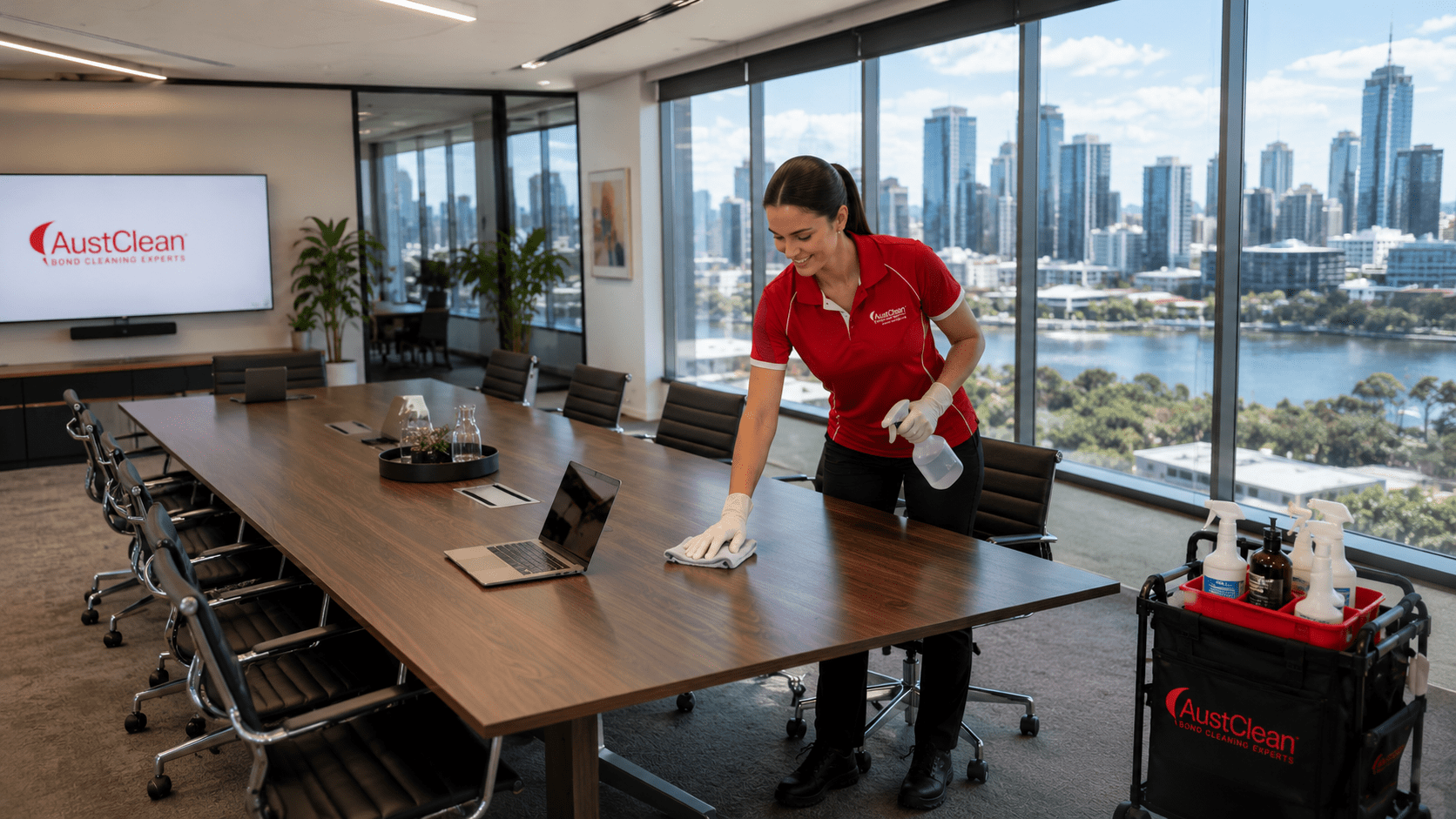
Boardrooms and meeting rooms matter just as much. Spotless tables, clear glass, dust‑free equipment and fresh air all support client meetings and internal workshops. Research discussed by Harvard Business Review indicates that employees who work in clean, orderly environments tend to feel more positive about their employer and more engaged in their work.
Staff experience their workplace all day, not just for a short visit. Tidy break rooms, hygienic kitchens and consistently clean bathrooms make it easier for people to feel comfortable and respected. That sense of care can feed into morale, retention and productivity, and influence how proudly people talk about their workplace to friends and family. AustClean’s consistent standards across Queensland, Victoria and South Australia help multi‑site businesses maintain the same level of presentation in each location, whether it is a small branch or a larger head office.
What Should You Look For In A Commercial Office Cleaning Company In Australia?
Choosing a commercial office cleaning company in Australia means weighing more than just hourly rates. You need a partner that understands office environments, communicates clearly and delivers the same quality week after week.
Key factors include:
-
Relevant experience with similar workplaces
-
Clear scopes and written checklists
-
Staff training and supervision
-
Insurance cover and safety systems
-
Security awareness and reliability
-
Willingness to adapt as your needs change
The Facilities Management Association of Australia notes that well‑managed cleaning contracts contribute directly to building performance and tenant satisfaction. A provider such as AustClean combines local franchise owners with established systems, which can be especially helpful for busy small‑to‑medium businesses.
The points below offer a simple framework when comparing options.
Essential Qualities Of A Reliable Office Cleaning Provider
Experience with similar workplaces is a good starting point. A cleaner that services professional suites, co‑working hubs, medical offices or government tenancies will already understand access rules, privacy expectations and common problem areas. Ask for examples that match your office size and industry, whether you are in inner Melbourne, suburban Brisbane or a regional centre.
Clear documentation matters too. Look for a written office cleaning checklist and scope of works that spells out:
-
Which areas are covered
-
How often tasks occur
-
What lies outside the quote
This lets you compare providers fairly and reduces confusion later. The Building Service Contractors Association of Australia encourages clients to request written scopes for exactly this reason.
Staff training and vetting are another priority. Cleaners should know how to:
-
Use commercial equipment safely
-
Dilute chemicals correctly
-
Work around staff and visitors without disruption
Public liability and workers compensation insurance protect both parties if something goes wrong. In sensitive sites such as medical suites, education offices or government buildings, checks such as national police clearances or working with children cards may be needed.
Quality control and communication complete the picture. Reliable providers have:
-
Simple ways for you to raise issues
-
Regular inspections or check‑ins
-
Clear reporting on incident or breakage management
Some also offer environmentally focused products and methods, which can support your sustainability goals and help staff who react to strong chemical smells.
How AustClean Delivers Professional, Tailored Commercial Office Cleaning
AustClean brings these qualities together through its network of local franchise teams across Queensland, Victoria and South Australia. Services range from routine daily office cleaning and workplace cleaning services through to commercial carpet cleaning office programs, window cleaning, pressure cleaning and post‑construction or end‑of‑lease office cleaning. This mix lets you cover everything from daily bins and bathrooms to larger periodic jobs with a single provider.
Franchise owners use professional‑grade equipment and eco‑friendly cleaning products that suit modern offices. They follow standardised checklists and procedures that AustClean has refined over many years, so you receive consistent results even if cleaners change. For small business office cleaning, AustClean can keep things simple, while larger sites benefit from more detailed scopes and reporting.
Flexibility is another strength. Cleaning can happen after hours, early in the morning or during the day for lower‑impact tasks, depending on building rules and your preference. AustClean also backs its work with a satisfaction guarantee, so if something is missed, you can expect it to be fixed promptly.
A typical engagement looks like this:
-
Site visit and walkthrough – review layout, usage and current cleaning standards.
-
Discussion of priorities – agree on must‑have areas such as amenities, reception and meeting rooms.
-
Written proposal and checklist – daily, weekly and periodic tasks set out clearly.
-
Trial period or staged start – adjust as needed based on feedback from staff and managers.
In Summary
A commercial office clean covers much more than a quick vacuum and emptying a few bins. It is a structured service that looks after workstations, reception, meeting rooms, kitchens, lunchrooms, bathrooms, floors, windows, rubbish and high‑touch points, supported by a clear office cleaning checklist. Daily, weekly and periodic tasks work together so your workplace stays hygienic and presentable without wasted spend.
The right schedule depends on your office size, staff numbers, visitor traffic, industry risk profile and lease conditions. A busy city office may need daily services and frequent deep cleans, while a quieter suburban practice might be comfortable with cleaning two or three times a week plus quarterly extras. Either way, regular commercial office cleaning supports staff wellbeing, safety, productivity and strong first impressions for clients and visitors.
Choosing a reliable provider is just as important as choosing the right scope. Look for clear documentation, trained and insured staff, consistent quality control and good communication. AustClean offers all of this through its local franchise network across Queensland, Victoria and South Australia, delivering tailored commercial cleaning services for workplaces of many sizes.
Ready for a Cleaner, Healthier Workplace?
If you are ready to review your current arrangements or set up cleaning for a new site, contact AustClean for a personalised commercial office cleaning quote and a practical program that suits the way your business actually runs.
Frequently Asked Questions
Question: What Does Office Cleaning Usually Include In Australia?
Office cleaning in Australia usually includes workstations, reception, meeting rooms, kitchens, lunchrooms, bathrooms, floors, bins and touchpoint sanitising. Common tasks cover dusting, vacuuming, mopping, wiping surfaces, cleaning toilets and emptying and relining bins. Optional extras often include commercial carpet cleaning, internal and external window cleaning, office deep clean services and exterior pressure cleaning. The exact scope appears in a written office cleaning checklist agreed with your provider.
Question: How Often Should A Typical Office Be Professionally Cleaned?
Most busy offices benefit from professional cleaning at least once per day on weekdays. Smaller, lower‑traffic sites sometimes choose services two or three times a week, combined with quarterly or annual deep cleaning of carpets, windows and bathrooms. It is wise to review frequency whenever staff numbers, hybrid work patterns or visitor levels change so high‑use areas still receive enough attention.
Question: What Affects The Cost Of Commercial Office Cleaning In Australia?
Commercial office cleaning cost in Australia depends on:
-
Floor area and layout
-
Visit frequency and time of day
-
Number of bathrooms, kitchens and shared spaces
-
The condition of the premises and any build‑up
-
Specialist services such as window cleaning, pressure cleaning or commercial janitorial services
Some quotes include consumables, while others do not, and end‑of‑lease office cleaning is usually priced differently. Always compare quotes based on scope, not just hourly rate.
Question: What Is The Difference Between Regular Office Cleaning And An Office Deep Clean?
Regular office cleaning focuses on day‑to‑day presentation and hygiene in high‑use areas such as desks, kitchens, bathrooms and main walkways. An office deep clean adds more detailed work, including high dusting, cleaning behind furniture, intensive bathroom and kitchen descaling, full internal glass, and thorough carpet or upholstery cleaning. Deep cleans are often scheduled seasonally, after renovations or at the end of a lease.
Question: Can Office Cleaning Be Done After Hours So It Doesn’t Disrupt Staff?
Yes, after hours office cleaning is very common in Australia. Many businesses prefer cleaners to work early in the morning or in the evening so staff and clients are not disturbed. Professional providers follow agreed security procedures, including key or swipe‑card management and alarm operation. AustClean offers flexible scheduling to fit your building access rules and workplace preferences.
Question: Do Professional Office Cleaners Provide Sanitisation Services For High-Touch Areas?
Yes, modern professional office cleaning services almost always include sanitisation for high‑touch areas. Cleaners use appropriate disinfectants on items such as door handles, switches, lift buttons, shared desks, fridge handles and printer controls, allowing proper contact time. Frequency can increase during flu season or when workplaces request extra office sanitisation services for added reassurance.