A messy office and vague cleaning routine quickly turn into staff tension, missed tasks and extra sick days.
Without a clear office cleaning checklist or schedule, everyone assumes someone else will deal with the mess.
The easiest way to build a cleaning schedule people actually follow is to keep it simple, zone based and realistic.
You list the key areas, turn them into short daily and weekly tasks, assign names, then back that up with a printed checklist or calendar.
When staff see clear expectations and time limits, and when heavy jobs sit with a professional cleaner such as AustClean, the schedule feels fair rather than frustrating.
This article walks through a practical office cleaning checklist for small Australian workplaces, from daily basics to deep cleans, plus the supplies and safety rules that sit behind it.
It also shows how to turn that list into a cleaning schedule for workplace teams that fits your budget and energy, instead of draining it.
Table of Contents
- The Essential Office Cleaning Checklist
- What Is An Office Cleaning Checklist And Why Does It Matter For Small Businesses?
- How To Build A Practical Daily And Weekly Office Cleaning Checklist
- Deep Cleaning Office Checklist Monthly, Quarterly And Annual Tasks
- Office Cleaning Supplies List And Chemical Safety For Australian Workplaces
- How To Create An Office Cleaning Schedule That Actually Works (And Stick To It)
- Bringing It All Together Your Simple Path To A Cleaner, Healthier Office
- Frequently Asked Questions
The Essential Office Cleaning Checklist
Key Takeaways
A short summary helps busy owners grasp the value of an office cleaning checklist before reading every section.
These points link the practical steps to the calmer, healthier office most small businesses want.
-
The real purpose of an office cleaning checklist is shared clarity. It gives staff, landlords and cleaners the same picture of what good looks like. That shared picture reduces finger pointing and helps the whole office feel calmer and more professional.
-
Getting the balance right between daily, weekly and deep cleaning avoids wasted effort. Light daily tasks protect hygiene and first impressions, while weekly and monthly jobs quietly protect carpets, kitchens and bathrooms in the background. This balance saves time and protects your fit-out.
-
High touch areas you cannot afford to miss sit at the heart of any checklist. Handles, switches, shared keyboards and kitchen points carry most germs. Regular attention here supports staff health and reduces the chance of a bug racing through the whole team.
-
Customising your checklist to your business and budget keeps it realistic. A quiet internal office and a busy client lounge do not need the same frequency. Matching tasks to how your space actually runs means people are far more likely to stick with the plan.
-
Bringing in a professional like AustClean at the right moments takes pressure off everyone. Staff keep to simple daily habits, while trained cleaners handle bathrooms, floors and deep work. That mix usually gives the best results for the least stress.
What Is An Office Cleaning Checklist And Why Does It Matter For Small Businesses?
An office cleaning checklist is a written list of zones and tasks that spells out how a workplace stays clean, safe and presentable.
For small Australian businesses, this checklist turns random tidy ups into a simple system that supports staff health, morale and brand image.
Unlike a broad commercial cleaning checklist used across many building types, an office cleaning checklist focuses on the exact rooms staff and clients use each day.
It links each space, such as reception or the kitchen, with a clear set of daily, weekly and deep tasks.
That structure helps owners avoid both extremes, where nothing gets cleaned or one person quietly does everything and burns out.
According to Safe Work Australia, slips, trips and falls remain one of the leading causes of serious workplace injury claims.
Simple cleaning habits, like dry walkways and quick spill response, turn your checklist into a safety tool as well as a tidiness plan.
Clean bathrooms, fresh air and low odour products, which providers such as AustClean use, also show staff that their comfort matters, which supports morale and retention.
A written checklist also supports cost control.
-
You can decide in advance which tasks sit with staff and which sit with a cleaning provider
-
You can compare quotes against your list
-
You avoid paying twice for the same work
Over time, consistent care extends the life of carpets, vinyl and furniture, which protects property value for owners and investors across Queensland, Victoria and South Australia.
What Should A General Office Cleaning Checklist Cover?
A general office cleaning checklist covers every space where people walk, sit, eat, meet or use shared equipment.
That includes reception and client areas, workstations, meeting rooms, kitchens, toilets, corridors, entryways, storage rooms, server rooms and any outdoor entries or balconies.
Good checklists group tasks by both zone and frequency.
-
Daily items, such as emptying bins or cleaning bathrooms, sit in one section
-
Weekly dusting or internal glass work appears further down
-
Annual and seasonal jobs, including carpet steam cleaning or end of lease cleans, round out the picture
A written checklist also reduces confusion about who does what.
You can mark which items sit with staff, such as rinsing their mugs, which ones belong to building management, such as shared lobby toilets, and which ones belong to a provider like AustClean.
That clarity helps avoid awkward chats about why the kitchen or shared fridge smells unpleasant again.
Most importantly, no office is ever too messy to start.
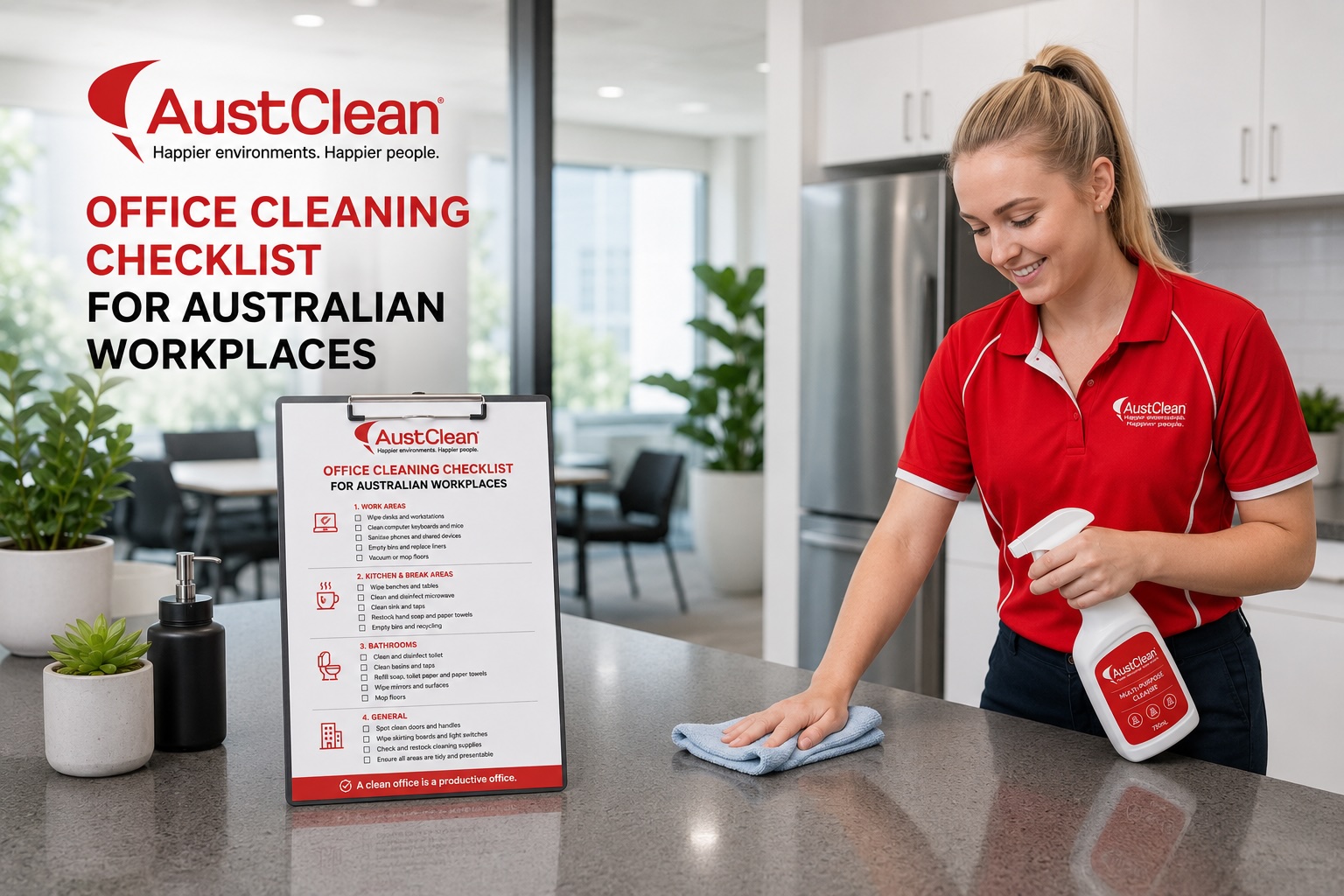
Even if the current state feels embarrassing, simply walking through with a clipboard and writing down each zone gives you a starting point.
From there, you can chip away at the list, improve one area at a time and gradually bring the whole space up to the standard you want clients to see.
How To Build A Practical Daily And Weekly Office Cleaning Checklist
Building a practical daily and weekly office cleaning checklist means matching cleaning effort to health risk, foot traffic and client visibility.
For small businesses, the aim is a short list of must do tasks that keeps the office safe and presentable without stealing hours from core work.
Research shared by Harvard Business Review links tidy, low clutter workspaces with productivity gains of up to around 15 percent.
That does not require perfection, just a steady rhythm of simple tasks that stop grime and clutter from getting ahead of you.
AustClean cleaners use exactly this approach when they design checklists for small offices across Brisbane, Geelong and regional centres.
Daily tasks should focus on rubbish, bathrooms, kitchens, high touch points and visible floors.
Weekly work can then handle deeper dusting, internal glass, appliance interiors and edge vacuum work.
Anything that needs special equipment or heavy chemicals, such as carpet steam cleaning or grout restoration, usually sits in a monthly or annual deep clean.
Here is a simple way to picture the balance.
| Task Type | Main Focus | Typical Examples | Usual Owner |
|---|---|---|---|
| Daily Tasks | Hygiene and first impression | Bins, bathrooms, kitchen benches, entry floors, touch points | Staff plus AustClean or another cleaner |
| Weekly Tasks | Build-up prevention | Dusting, glass, appliance interiors, edge vacuum work | Mainly AustClean, some staff help |
| Deep Tasks | Asset care and reset | Carpet steam work, tile scrubbing, high dust work | Professional cleaners only |
This table can sit beside your checklist as a quick guide when you decide where each task belongs.
Daily Office Cleaning Duties List For Busy Workplaces
A daily office cleaning checklist for busy workplaces keeps core hygiene and presentation under control, even on hectic days.
The trick is to link each key zone with a small bundle of short tasks, rather than one giant vague note that says clean office.
Reception and common areas benefit from quick wins:
-
Empty bins so rubbish never overflows
-
Wipe counters and side tables
-
Straighten chairs and magazines
-
Spot clean obvious marks on glass doors
According to Nielsen Norman Group, clear checklists can reduce routine task errors by more than 20 percent, so even a one page daily list on a clipboard can lift consistency.
At workstations, focus on what affects everyone rather than private items:
-
Empty desk or central bins
-
Wipe shared hot desk tops
-
Align chairs
-
Vacuum the main walkways so staff are not stepping over crumbs or tripping on cables
Personal keyboard and screen care can stay with each staff member unless you have asked AustClean to include quarterly device sanitising.
Meeting rooms need a fast reset after each day.
-
Clear rubbish
-
Remove leftover cups or food
-
Wipe the table, remotes and conference phone
-
Straighten chairs
-
Check under the table for stains or crumbs
A clean, orderly meeting room sends a strong message to visiting clients and helps your own team feel ready for the next session.
In the kitchen or tea room, daily habits matter for both hygiene and pest control.
-
Empty bins and recycling
-
Wipe benches and tables
-
Clean the sink and taps
-
Wipe appliance exteriors
-
Sweep, then mop the floor
Australian health guidance from the Department of Health links good hand and surface hygiene with lower rates of respiratory illness, so regular attention here helps keep winter bugs in check.
Toilets and bathrooms should always sit in the professional column of your office cleaning checklist.
-
Full cleaning and disinfection of toilets, urinals, basins and touch points
-
Restocking of soap and paper
-
Mopping with disinfectant solution
A provider such as AustClean will also check for leaks, odours or damage and report back before minor issues grow into major repair bills.
Finally, daily high touch points across the office deserve their own short line on the list.
Door handles, light switches, lift buttons, handrails and printer controls carry a large share of germs, so a quick wipe with suitable disinfectant each day makes a real difference.
That habit becomes even more important during flu season or when a bug has already moved through your team.
Weekly Office Cleaning Checklist And Schedule
A weekly office cleaning checklist steps beyond the obvious into the places dust, grime and fingerprints slowly gather.
These tasks keep your office from drifting from fine to tired over a few months.
Start with dusting and surfaces.
-
Once a week, dust window sills, skirting boards, tops of cabinets, picture frames and reachable vents
-
This supports better air quality and reduces hay fever triggers, which helps staff who are sensitive to dust
Workstations and IT gear also deserve a weekly pass, as long as staff and your cleaner agree on boundaries.
-
Dust monitor stands and the backs of screens
-
Wipe shared keyboards and phones where they exist
-
Give printers and photocopiers a more detailed clean
Many AustClean teams use approved wipes for equipment, which avoid moisture damage while still lifting grime.
In the kitchen, weekly work includes:
-
Cleaning inside the microwave
-
Wiping fridge shelves for spills
-
Wiping cupboard doors and handles
-
Cleaning chair legs and table bases
These jobs stop odours and sticky build-up that can otherwise surprise you when a client steps in for a quick coffee.
Bathrooms benefit from extra attention once a week as well.
-
Use descaler on toilets where needed
-
Polish stainless steel fittings
-
Wipe walls and partitions around hand dryers and basins where splashes collect
Floors also gain from:
-
Edge vacuum work along skirting boards
-
Moving light furniture to vacuum underneath
-
A more thorough mop on hard surfaces
Many small offices like to time these weekly tasks for a quieter period, such as late Friday afternoon.
Staff might chip in for minor parts, like clearing benches, while AustClean handles the heavier items on the same visit as a regular clean.
That way, you finish the week with a fresh base and start Monday without visible clutter from the previous days.
Deep Cleaning Office Checklist Monthly, Quarterly And Annual Tasks
A deep cleaning office checklist covers the heavier tasks that protect carpets, tiles, bathrooms and furniture over the long term.
For small businesses, planning these monthly, quarterly and annual jobs in advance avoids large surprise bills and keeps the office from looking tired.
Industry data from cleaning bodies such as ISSA suggest that regular carpet maintenance can almost double carpet life compared to irregular care.
That kind of saving matters when you consider the cost of replacing floor coverings across a whole tenancy.
Providers like AustClean build deep work into service plans so owners can budget calmly instead of scrambling later.
Monthly and quarterly items often focus on high or hidden areas.
-
Tops of tall cupboards
-
High vents and light fittings
-
Detailed carpet vacuum work
-
Machine scrubbing of tiles
-
Fridge interiors
-
Server room dust control
Quarterly work may also include descaling taps and shower heads, especially in end of trip facilities.
Annual and end of lease tasks act as a reset.
-
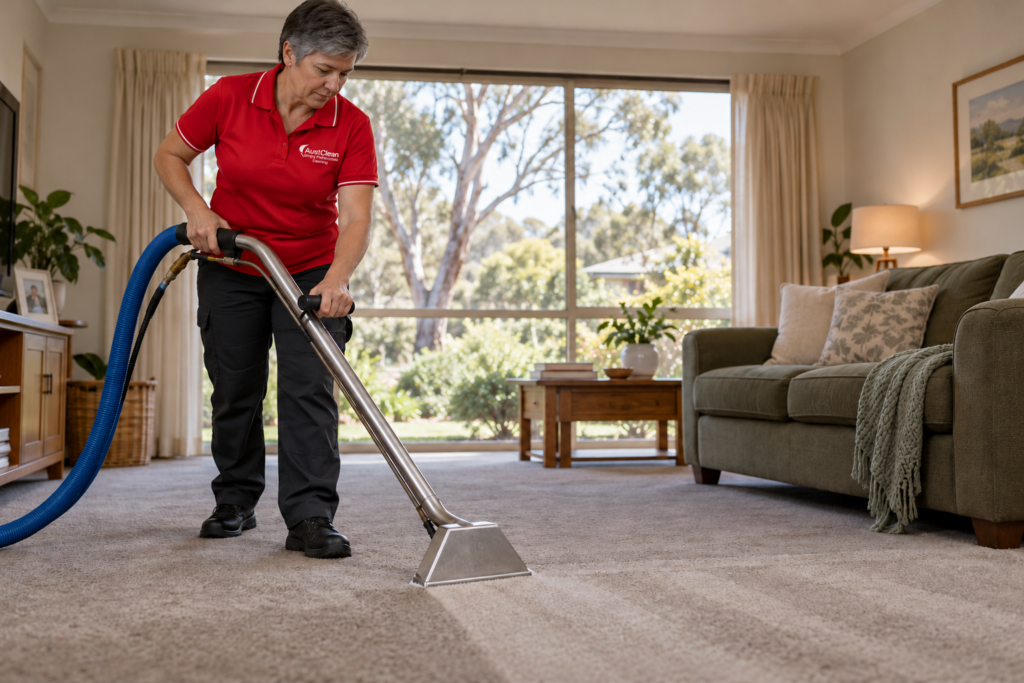
Full office carpet steam cleaning
-
External window care
-
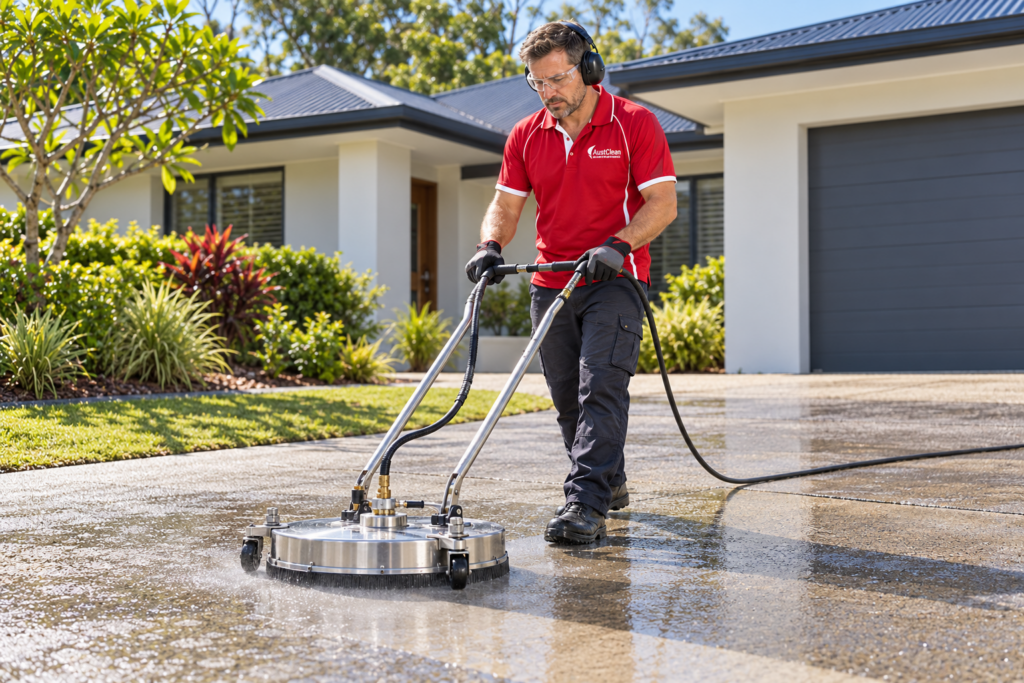
Pressure cleaning of entries
-
Deep work on chairs and blinds
-
Full kitchen and bathroom detail
Investment property owners across Queensland and Victoria often link these larger jobs with lease renewals or tenant changes.
By placing all these tasks into a deep cleaning section of your office cleaning checklist, you gain a clear long view.
You can schedule major work for quieter trading periods, such as school holidays, and co‑ordinate it with other trades, like air conditioning maintenance or pest control.
Monthly And Quarterly Commercial Office Cleaning Checklist
A monthly and quarterly commercial office cleaning checklist targets the places daily and weekly habits simply do not reach.
These tasks keep the whole environment feeling fresh, rather than only the eye level surfaces.
High and hard to reach spots come first.
-
Dust the tops of tall cupboards
-
Clean high vents and light fittings
-
Remove cobwebs in corners or near entry doors
This helps air quality and stops your office from gaining that forgotten ceiling look that clients notice more than many owners realise.
Carpets and soft furnishings need deeper attention too.
-
Detail vacuum all carpeted areas
-
Move furniture where practical
-
Treat stains before they set hard
-
Clean fabric chairs and screens, which quietly collect dust and odours
-
Plan for professional carpet cleaning through AustClean every six to twelve months, depending on foot traffic
Hard floors in kitchens, foyers and bathrooms benefit from machine scrubbing to lift dirt from tiles and grout.
Vinyl areas may need occasional strip and seal work when they begin to dull, especially in corridors or reception.
A well planned floor program reduces slip risk and preserves the look of your tenancy for far longer.
In kitchens, monthly or quarterly work includes full fridge cleans inside and out, moving portable appliances to clean behind and descaling kettles and coffee machines.
Bathrooms benefit from:
-
Machine scrubbed floors
-
Descaled taps and fixtures
-
Polished wall tiles
-
Clean ventilation grilles
Storage rooms and server rooms should be dusted and vacuumed carefully, without disturbing IT equipment, and checked for water ingress or pests.
Annual And End-Of-Lease Commercial Building Cleaning Checklist
An annual and end of lease commercial building cleaning checklist provides a full reset for your office or small commercial suite.
This protects bond money, supports make good obligations and presents a fresh canvas for the next year of work.
Annual tasks often include:
-
Whole office carpet steam cleaning
-
Full external window clean where access allows
-
Pressure washing of entries and paths
-
Deep cleaning of office chairs and blinds
Many landlords across Melbourne, Adelaide and the Sunshine Coast expect this level of care, especially in modern buildings with visible glass and polished finishes.
End of lease or office reset work goes even further.
-
Walls and skirting boards are washed or spot treated
-
Inside cupboards and storage areas are cleaned
-
Kitchens and bathrooms receive thorough sanitising
-
Every floor type receives detailed attention
-
Internal glass, partition framing and window tracks are cleaned so the space feels as close to new as possible
These are classic times to call in AustClean.
The company offers tailored one off commercial building cleans and bond style services across Queensland and Victoria, with all work guaranteed.
That takes pressure off both tenants and property owners and reduces the risk of disputes over cleanliness at handover.
Office Cleaning Supplies List And Chemical Safety For Australian Workplaces
A clear office cleaning supplies list helps small businesses avoid cupboards full of random sprays that no one trusts or understands.
Instead, you hold a focused kit that covers your office cleaning checklist safely and in line with Australian expectations.
According to Safe Work Australia, exposure to hazardous chemicals causes hundreds of serious workers compensation claims each year.
Good chemical choice, clear labels and correct storage reduce that risk while still keeping the office hygienic.
AustClean uses colour coded tools and well documented products, which is a useful model for any workplace that still manages some tasks in house.
Your supplies list should cover chemicals, consumables and equipment — A Guide to Efficient Office Cleaning outlines how structuring these categories clearly reduces waste and helps staff use the right product for each task.
For many small offices, it makes sense to keep this list short and let a professional cleaner supply heavier products and machinery.
That way you limit both upfront cost and safety complexity, while still having enough on hand for basic in between tasks.
What Should Be On Your Office Cleaning Supplies List?
An effective office cleaning supplies list includes a small set of dependable products rather than a crowded shelf of half used bottles.
Each item should clearly match a task on your office cleaning checklist, so nothing sits in the cupboard without a purpose.
Chemicals most offices usually need:
-
Neutral multi purpose cleaner for general surfaces
-
Bathroom disinfectant
-
Glass cleaner
-
Floor cleaner suitable for your actual floor type
-
Toilet cleaner
-
Stainless steel cleaner
-
Food safe degreaser for stubborn kitchen marks
-
Hand soap and alcohol based hand sanitiser
Consumables include:
-
Paper towels
-
Toilet paper
-
Bin liners in the right sizes
-
Hand soap cartridges or refills
-
Sanitiser refills
-
A mild odour neutraliser instead of heavy fragrance sprays
Clear labelling and consistent brands reduce confusion for staff who restock supplies.
Equipment should include:
-
Colour coded microfibre cloths
-
Colour coded mops and buckets
-
HEPA filter vacuum
-
Broom and dustpan
-
Extendable duster
-
Non scratch pads
-
Labelled spray bottles
-
Wet floor signs
-
Basic PPE such as gloves and closed shoes
Simple colour coding, such as red for toilets, green for kitchens and blue for general areas, helps prevent cross contamination.
Many small businesses choose to let AustClean supply and manage most of these items.
Their teams arrive with commercial grade and eco friendly options already chosen, so owners do not need to research pH levels or worry about mixing incompatible products.
Chemical Safety, WHS And Workplace Hygiene Checklist Essentials
Chemical safety and workplace hygiene sit alongside your office cleaning checklist, not behind it.
Australian businesses have a duty to provide a work environment that is safe, clean and free from avoidable health risks.
Basic WHS obligations include:
-
Safe, unobstructed walkways
-
Clean amenities
-
Safe chemical storage
Safety data sheets must be accessible for each product, containers must be labelled and chemicals should never move into unmarked spray bottles.
Mixing products such as bleach and ammonia can release dangerous fumes, so clear signage and staff awareness matter.
Personal protective equipment should match the task.
-
Gloves belong with almost all bathroom work and rubbish handling
-
Eye protection may be needed for splash risk
-
Closed, non slip footwear helps on wet floors
Higher risk tasks, such as biohazard clean ups, often require additional PPE and training, which is one reason many offices rely on AustClean for those jobs.
On the hygiene front, your checklist should highlight high touch surfaces in kitchens, bathrooms and shared areas.
During flu season, many offices choose to increase the frequency of disinfection on handles, switches, lift buttons and printer touch points.
The Australian Department of Health notes that combined cleaning and hand hygiene steps reduce respiratory and stomach illnesses, which can cut sick days when applied consistently.
AustClean aligns services with Australian OHS standards and offers low odour, plant based options for sensitive workplaces.
That approach supports both compliance and staff comfort, especially in smaller offices where strong smells linger.
“Clean, well‑ventilated spaces are one of the simplest ways to protect worker health and confidence.”
— Adapted from guidance by the Australian Department of Health
How To Create An Office Cleaning Schedule That Actually Works (And Stick To It)
An office cleaning schedule that people actually follow turns your office cleaning checklist into a living routine instead of a forgotten document.
The goal is a simple calendar that matches real foot traffic, staff capacity and your budget.
Start by listing all tasks from your checklist by frequency.
-
Place daily items in one column
-
Weekly in another
-
Monthly and annual tasks further along
This quick exercise already gives you a clear view of workload, which helps when you talk with your team or with AustClean about service options.
Next, match tasks with roles.
-
Staff usually handle personal desks, quick spills and simple resets
-
Professional cleaners look after bathrooms, kitchens, floors and deep work
-
Building management may carry responsibility for shared lobbies or external areas, which should still appear on your master schedule for clarity
Research cited by the Australian Bureau of Statistics shows that full time employees already use close to their full allocation of personal leave each year.
Asking them to add unpaid cleaning on top of their core work can quietly damage morale.
A clear schedule with fair division of duties avoids resentment and constant arguments about whose turn it is to scrub the toilets.
Finally, decide how you will track completion.
-
Laminated checklist near the cleaners cupboard
-
Shared calendar
-
Simple facilities or task app
Whatever method you choose, consistency matters more than technology, so pick something easy and stick with it.
Setting Up A Cleaning Schedule For Small Businesses And Different Office Types
Setting up a cleaning schedule for small businesses starts with a realistic view of your office type.
A home office, a six person internal suite and a busy suburban agency each need a different rhythm.
Think about:
-
Staff numbers
-
Client visits
-
Opening hours
-
Floor types
-
Whether you share amenities with other tenants
A quiet internal office with six to ten staff and low client traffic might run professional cleaning two or three times a week, with staff wiping benches in between.
Bathrooms and kitchens still need regular care, but deep carpet work might fall once or twice a year with AustClean.
A busy client facing office with twenty to fifty staff usually needs a daily full clean.
-
Bathrooms and kitchen
-
Bins
-
Floors
-
Touch points
Deep work, such as machine scrubbed tiles and frequent carpet cleaning, may sit monthly or quarterly depending on wear.
Home offices sit at the lighter end.
-
A weekly routine of dusting, vacuuming and wiping equipment
-
Monthly window and vent care
This usually keeps these spaces in good shape. When carpets or tiles begin to look tired, a one off deep visit from AustClean can make a big difference without a regular contract.
A simple matrix helps turn this thinking into a visual schedule:
-
Across the top: daily, weekly, monthly, annual
-
Down the side: each zone (reception, workstations, kitchen, bathrooms, etc.)
-
In each box: who does what, and when
AustClean offers a free on site quote across many parts of Queensland and Victoria, and using a structured Workplace Organization Preparation Guide beforehand can help you arrive at that conversation with a clear picture of your zones and priorities.
Their owner operators can walk through your space, help build this matrix and even supply a commercial cleaning checklist printable that matches your actual office rather than a generic template.
Deciding When To Outsource To AustClean Vs Handling In-House
Deciding what to outsource versus handle in house often comes down to fairness, cost and stress levels.
Many small businesses discover that asking staff to clean leads to friction without much saving.
When employees on professional wages scrub bathrooms or mop large floors, you pay premium rates for non specialist work.
Results can feel patchy, and arguments start around rosters, missed turns or low effort.
This can quietly harm morale, especially if only a few conscientious people keep stepping in.
Some jobs still sit neatly with staff:
-
Tidying personal desks
-
Rinsing individual dishes
-
Wiping a spill they just caused
-
Taking turns to reset a meeting room after use
These tasks take only minutes and help build shared respect for the space.
Heavier and more technical work usually pays to outsource.
-
Bathrooms and kitchens
-
Carpet and floor care
-
High dusting
-
Deep cleaning
-
Any commercial building cleaning checklist level work
These suit a provider such as AustClean.
Their cleaners are insured, police checked and trained, and they bring all equipment and chemicals with them.
AustClean also adjusts schedules to traffic and budget rather than pushing a one size fits all plan.
Many clients start small, then change frequency once they see how much calmer the office feels when the basics simply happen in the background.
Outsourcing in this way frees owners and staff to focus on meaningful work, knowing their workplace will look and feel professional for both clients and the team.
“The best cleaning schedule is the one your people actually follow, without stress or arguments.”
— AustClean Field Feedback, Collated From Small Business Clients
Bringing It All Together Your Simple Path To A Cleaner, Healthier Office
Bringing everything together, a structured office cleaning checklist gives small businesses a clear, calm path to a cleaner, healthier workplace.
It combines daily habits, deeper tasks and sensible scheduling into one simple picture.
A good checklist:
-
Protects staff health
-
Supports morale and reduces workplace stress
-
Strengthens first impressions with clients and visitors
-
Preserves property value
It turns messy, last minute scrambles before client visits into steady, predictable care.
With clear roles, staff no longer argue over basic jobs, and owners gain confidence that health and safety expectations from bodies such as WorkSafe Victoria and WorkSafe Queensland are being met.
You do not need to apply every idea overnight.
-
Start with a short daily list that covers bins, bathrooms, kitchen benches and key touch points
-
Add weekly and monthly items next
-
Plug deep tasks into quieter times of the year so they do not disrupt trade
From there, consider which parts sit best with a professional team.
An office cleaning checklist printable and a free, no obligation on site quote from AustClean can turn your notes into a clear plan.
With local owner operators across Queensland and Victoria, eco friendly product options and all work guaranteed, AustClean offers a steady partner for business owners who want a clean office without another headache to manage.
Frequently Asked Questions
Question How Often Should A Small Office Be Cleaned Professionally?
A small internal office normally needs professional cleaning at least two to three times a week.
Busy client facing spaces usually benefit from daily visits, especially for bathrooms and kitchens.
Staff numbers, visitor levels and how often people use shared amenities all matter.
AustClean looks at foot traffic, layout and budget, then suggests the lightest schedule that still keeps the office healthy and presentable.
Question What Is The Difference Between A Daily Office Cleaning Checklist And A Deep Cleaning Checklist?
A daily office cleaning checklist focuses on hygiene and appearance.
It covers bins, surfaces, bathrooms, touch points and main floors so the office feels clean every day.
A deep cleaning checklist reaches hidden and high areas, carpets, upholstery, grout, appliances and descaling.
These tasks sit monthly, quarterly or annually and protect fittings, reduce odours and keep the space looking fresh for years.
Question Can We Use The Same Commercial Cleaning Checklist For All Our Offices?
You can use the same basic commercial cleaning checklist structure across sites, but each office still needs adjustments.
Different layouts, staff numbers, floor types and shared amenities change what matters most.
Site specific risk checks help identify high traffic or high touch zones that need extra care.
AustClean creates customised commercial office cleaning checklists for each location so nothing important gets missed.
Question What Should Be Included In A Janitorial Cleaning Checklist For Bathrooms And Kitchens?
A good janitorial cleaning checklist covers all bathroom and kitchen surfaces plus consumables.
-
Bathrooms should include toilets, urinals, basins, mirrors, partitions, floors and every touch point
-
Kitchens need benches, sinks, splashbacks, appliance handles, bin areas and a plan for fridge and microwave interiors
Both zones must include restocking, odour control and regular disinfection to meet WHS expectations for a safe, hygienic workplace.
Question How Do I Know If It’s Time To Upgrade Our Office Cleaning Schedule?
It is time to review your office cleaning schedule when smells linger, dust gathers quickly or staff complain more about hygiene.
More sick days, negative client comments or sticky kitchen floors are other warning signs.
Walk through with a general office cleaning checklist and compare it to what currently happens.
If the gap feels large, booking a free on site review with AustClean can help refine frequencies without blowing the budget.