End of lease carpet cleaning is one of the most common causes of bond disputes in Australia, yet many renters are unsure when professional carpet cleaning is actually required. While tenancy laws generally require carpets to be left reasonably clean, lease agreements, pet clauses, stains, odours and property manager expectations can all influence whether a professional end of lease carpet cleaning service is needed before handing back the keys.
Understanding the difference between normal wear and tear, DIY carpet cleaning and professional steam cleaning can help protect your bond and avoid unnecessary costs. This guide explains Australian tenancy requirements, how carpets are assessed during final inspections, when professional cleaning is worth the investment, and how services like AustClean help renters, landlords and property managers achieve smoother end of lease outcomes.
Jump to section
- End Of Lease Carpet Cleaning In Australia: What Renters Need To Know
- What Is End Of Lease Carpet Cleaning And How Is It Different From A Normal Clean?
- When Is End Of Lease Carpet Cleaning Actually Required Under Australian Tenancy Rules?
- How Carpets Impact Bond Returns, Inspections And Common End Of Lease Disputes
- DIY Carpet Cleaning Vs Professional End Of Tenancy Cleaning Services
- How AustClean Handles Bond And Carpet Cleaning For Stress-Free Vacates
- Making The Right Call On End Of Lease Carpet Cleaning
- Conclusion
End Of Lease Carpet Cleaning In Australia: What Renters Need To Know
End of lease carpet cleaning is usually required in Australia only when your lease or pet clause calls for it, or when the carpets are left stained or smelly. If there are no special terms and the carpets are reasonably clean, a careful DIY clean may be enough, but once pets, deep stains or strict agents are involved, a professional end of lease carpet clean is often the safer option for your bond.
That grey area worries renters, owners and property managers across Queensland, Victoria and South Australia. State tenancy laws focus on leaving the place reasonably clean, yet carpets often trigger arguments because stains and odours are hard to judge. Bond data from the Queensland Residential Tenancies Authority shows cleaning and damage among the most frequent reasons for disputes.
This guide explains when professional end of lease carpet cleaning is actually required in Australia, and when a careful DIY clean may be enough. It looks at tenancy rules, fair wear and tear, pet conditions, inspection habits and the difference between routine carpet cleaning and a full vacate steam clean. You will also see how AustClean handles bond carpet cleaning so you can hand back keys with confidence.
Key Takeaways
This section gives the main answers in one place. It highlights when you must book a professional, how carpets affect bond refunds and where DIY fits in. You can read these points now, then move into the detail that matches your situation.
-
Professional carpet cleaning is usually required when your lease or pet clause clearly says so, or when carpets were recorded as freshly cleaned at move in. Ignoring those terms lets the landlord recover cleaning costs from your bond.
-
A thorough DIY clean can be enough when there are no special clauses and carpets only show light wear. Short tenancies without pets or big spills often fall in this group. You still need to vacuum carefully and remove obvious marks.
-
Carpets play a big part in bond decisions because stains and smells stand out at inspection. Tenant advice groups such as Tenants Victoria report that cleaning is one of the main reasons people seek help with bond claims. A professional receipt shifts that discussion in your favour.
-
DIY methods help with small spills yet often fall short for a full vacate. Professional end of lease steam cleaning reaches deep into the pile, cuts odours and gives written proof of work. AustClean adds a bond back style guarantee, which means they return to fix any reasonable cleaning items they missed.
-
AustClean offers combined bond cleaning and carpet cleaning across QLD, VIC and SA. Local owner operators follow RTA style checklists and use eco friendly hot water extraction equipment. That combination helps tenants, owners and property managers feel comfortable about inspection results.
What Is End Of Lease Carpet Cleaning And How Is It Different From A Normal Clean?
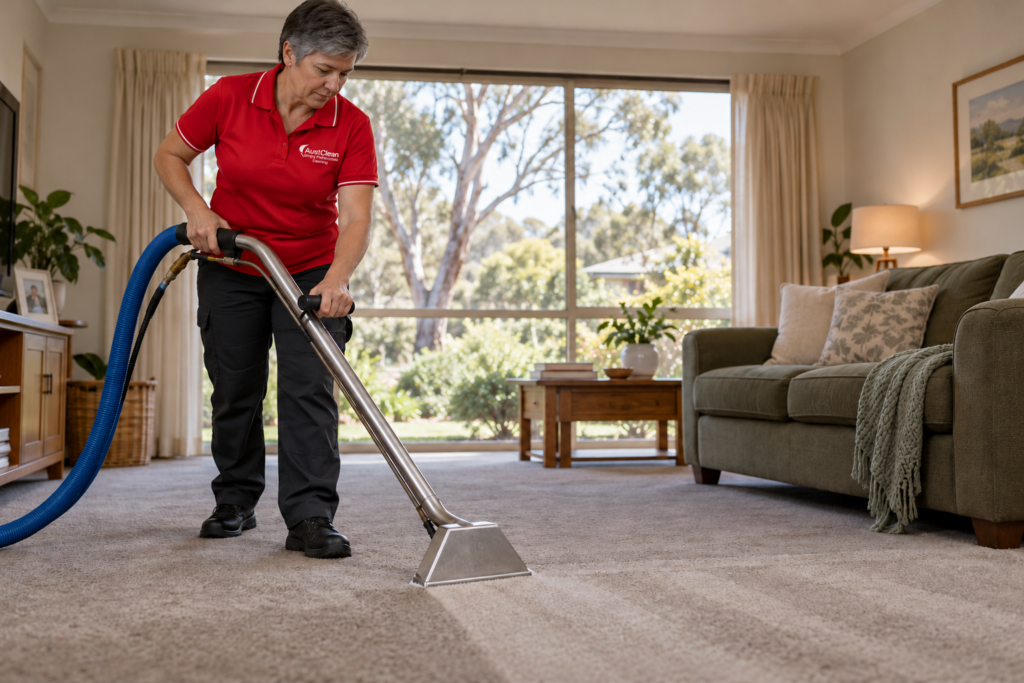
End of lease carpet cleaning is a deep, documented service carried out when a tenant moves out of a property. It aims to bring carpets back as close as practical to their ingoing condition, allowing for fair wear and tear. Professional cleaners such as AustClean use commercial hot water extraction, targeted stain treatment and written invoices that property managers rely on during bond checks.
According to guidance from NSW Fair Trading, tenants must leave premises reasonably clean, including floors and carpets. Regular vacuuming helps, but a vacate level result usually needs more than a quick once over. That is where the difference between standard carpet cleaning and a full end of lease steam clean starts to matter.
Standard Carpet Cleaning Vs End Of Lease Steam Cleaning
Standard carpet cleaning during a tenancy usually means:
-
Regular vacuuming
-
Fast spot work on new spills
-
Occasional DIY machine hire or home shampooers
This keeps the home comfortable for daily living, although deeper dirt and old spills may stay in the fibres. Property managers rarely inspect mid tenancy carpets with the same level of detail that they apply at vacate.
End of lease steam cleaning is a whole property service focused on bond and inspection standards. Typically, a technician will:
-
Pre vacuum thoroughly.
-
Apply a pre spray to loosen soil.
-
Treat stains individually.
-
Use hot water extraction over every booked area.
That process pulls out grit, old detergent residue, pet hair and many odours that normal cleaning leaves behind. At the end, they leave a tax invoice that clearly states the address, date and end of lease carpet cleaning service carried out.
Stain Treatment And Pet-Related Carpet Cleaning Requirements
Stain work plays a special role in end of tenancy carpet cleaning. Common move out marks include:
-
Red wine, coffee and tea
-
Makeup and fake tan
-
Ink and texta
-
Grease, oil and food spills
Professionals use specific spotters for each type, along with gentle agitation and extra extraction passes. These steps often lighten or remove stains that basic supermarket products only smear or spread.
Pet issues bring extra expectations. Even well behaved dogs and cats can leave urine marks, lingering odours and fur trapped along skirting boards. Many leases link indoor pets to mandatory professional carpet cleaning and separate flea treatment, a point backed by advice on sites like Tenants Queensland.
It is important to know:
-
Serious urine damage may still show as a faint patch after cleaning.
-
Strong pet odours sometimes come from underlay or subfloor, which cleaning alone cannot fully fix.
-
In those situations, some costs can remain claimable from the bond.
That is why early, honest discussion with the agent and your cleaner helps to set realistic expectations.
When Is End Of Lease Carpet Cleaning Actually Required Under Australian Tenancy Rules?
End of lease carpet cleaning is not automatically required by law in every Australian tenancy — in fact, a recent ruling found that the requirement for professional carpet cleaning at end of lease was ruled invalid in Tasmania, signalling how tenancy laws continue to evolve across Australia. State legislation, such as the Acts overseen by Consumer Affairs Victoria, focuses on returning the property in a reasonably clean state that matches the ingoing condition, allowing for wear. In practice, lease clauses, pet conditions and entry reports often make professional carpet cleaning the sensible choice.
Tenant groups and agencies across Queensland, Victoria and New South Wales repeat one message:
“The starting point is always your written agreement and condition report.” – General advice reflected by Tenants Victoria and Tenants Queensland
What matters most is the combination of your written lease, the condition report and what has happened during the tenancy. If those documents point to professional work or show better starting condition than the current state, DIY methods alone may not pass inspection.
Lease Agreement Clauses, Fair Wear And Tear, And Pet Conditions
Most modern leases include clear wording about carpets. Common phrases are that carpets must be left in a clean condition consistent with the start of the tenancy, or that they must be professionally cleaned at the end of the tenancy with a receipt provided. Where pets have lived inside, clauses often add a requirement for both carpet cleaning and flea treatment.
Fair wear and tear usually covers:
-
Mild flattening of pile in walkways
-
Slight colour loss in traffic areas
-
General ageing of fibres
Tribunals such as VCAT and QCAT accept that landlords cannot claim for this sort of normal use.
Tenant damage is different and can include:
-
Wine or cordial spills
-
Bleach marks
-
Pet urine and faeces stains
-
Heavy grime from neglect
When those issues appear, agents can reasonably argue that professional end of lease carpet cleaning is needed to bring carpets back to their earlier standard. In serious cases, they may also claim partial replacement, depending on the age and life expectancy of the carpet.
When Tenants May Not Need Professional Carpet Cleaning
There are situations where tenants may not strictly need a professional clean. For example, a short tenancy in a small unit with:
-
No pets
-
Few visitors
-
No visible stains or odours
can sometimes pass with a very thorough DIY vacuum and spot clean. This is stronger when carpets were not professionally cleaned just before move in and the lease does not mention end of lease steam cleaning or professional receipts.
However, tenants still need to think about how the agent will look at the floors — real-world cases of renters in a stand-off over clean carpets show how quickly these disputes can escalate when expectations are not clearly managed. Light coloured or older carpets often show marks easily in bright daylight, even if they seemed fine during normal living.
Some renters in this position still book affordable end of tenancy carpet cleaning to reduce risk. A quick chat with a provider such as AustClean can clarify what level of work is realistic for your property and budget.
How Carpets Impact Bond Returns, Inspections And Common End Of Lease Disputes
Carpet condition has a major effect on bond refunds because stains and smells are very visible at inspection. Tenant resources from groups like Tenants Victoria note that cleaning and damage are among the most common reasons for bond disputes. Since carpets are costly to replace, owners and managers pay close attention to them.
During move out, a small difference in carpet appearance can separate a full bond refund from a claim for professional cleaning or even part replacement. That is why documented end of lease carpet cleaning often feels like cheap insurance. It shows the tribunal, if needed, that you made reasonable efforts to return the property in good condition.
How Property Managers Assess Carpets At Final Inspection
Property managers start with the ingoing condition report and photos, then compare those with what they see on inspection day. They look closely at:
-
High traffic areas such as hallways and lounge rooms
-
Areas near the kitchen and entry doors
-
Where dining tables and couches once sat
-
Edges near skirting boards and under where beds were
From an agent’s point of view, reasonably clean carpets show:
-
No obvious stains when viewed in daylight
-
No strong smells, including pet and smoke odours
-
No dark soil trails along walkways
Where pets were approved, they expect carpets to look and smell neutral, with no urine odour or heavy fur build up. A professional invoice that states end of lease carpet steam cleaning has been completed gives them confidence to mark carpets as satisfactory. Without that, they may wonder whether DIY work has masked deeper issues that will return.
Common Carpet-Related Bond Disputes (And How To Avoid Them)
-
A tenant hires a supermarket machine the day before handover and rushes through the clean. Carpets look patchy and still feel damp when the agent arrives. The agent books a professional clean, deducts the cost from the bond and may add an administration fee for organising it.
-
Pets have lived indoors but the tenant only vacuums and sprays supermarket deodoriser. At inspection the agent still notices pet odour and refers to the lease clause that mentions professional carpet cleaning and flea treatment. The renter faces both cleaning and pest bills from the bond, which could have cost less if arranged directly.
-
A long tenancy leaves clear walkways that look grey even after professional work, yet no strong stains remain — understanding the 72-hour inspection window can help tenants time their carpet cleaning to ensure results are assessed at their best. Tribunals such as NCAT often see this as fair wear rather than damage when cleaning receipts are available. Having an invoice from a company like AustClean makes it easier to show that you met your obligations, even if some wear remains.
To reduce the risk of arguments:
-
Plan carpet work early, not the night before handover.
-
Document pre existing damage in writing and with photos.
-
Keep all quotes, invoices and receipts.
AustClean adds another layer by offering a bond back style guarantee on their cleaning, so if an agent raises a fair concern related to their work, they return to address it.
DIY Carpet Cleaning Vs Professional End Of Tenancy Cleaning Services
DIY methods and professional services each have a place at the end of a lease. Home efforts can work for fresh spills and day to day care, while professional end of lease carpet cleaning targets deep soil and bond level presentation. The choice often comes down to your lease terms, carpet condition, time and risk tolerance.
Consumer advice from groups like Choice points out that hire machines rarely match the power of commercial units. Many tenants only discover this after spending time and money on DIY work that still fails inspection. Understanding what each option can and cannot deliver will help you decide.
What DIY Methods Can And Can’t Achieve At The End Of A Lease
Popular DIY options include:
-
Hire machines from supermarkets or hardware stores
-
Home carpet shampooers
-
Spray-on spot cleaners
-
Home recipes using products like bicarb soda and white vinegar
These can be handy during the tenancy for fresh marks and light refreshing. With care, they may improve the look of small areas or a single room.
Their limits appear once you try to clean a whole property to vacate standard:
-
Hire units usually have weaker suction and lower water temperature than professional gear, so they can leave carpets too wet or with detergent residue.
-
Residue attracts new dirt and may make fibres look dull again within days.
-
DIY attempts with harsh chemicals or strong scrubbing can bleach fibres or spread stains, reducing what a later professional clean can fix.
-
A receipt for a machine hire usually does not satisfy any clause that specifies professional carpet cleaning.
That said, DIY is still useful for:
-
Keeping on top of spills during the lease
-
Refreshing traffic lanes between professional cleans
-
Very low wear tenancies where the agent is flexible and the lease is silent
Why Professional End Of Lease Steam Cleaning Is Often Worth It
Professional hot water extraction, often called steam cleaning, uses higher heat, stronger vacuum and matched detergents. Technicians treat stains and odours before cleaning, then rinse and extract in a single step. The result is deeper soil removal, better odour reduction and faster drying compared with most DIY options.
Research shared by the Carpet Institute of Australia notes that many carpet manufacturers recommend periodic professional steam cleaning to keep carpets in good condition. At lease end, that same method helps meet agent expectations and protects both tenant and landlord.
Here is a simple comparison.
| Aspect | DIY Methods | Professional Steam Cleaning |
|---|---|---|
| Cleaning depth | Helpful for surface soil and small spills, yet struggles with heavy traffic lanes and old stains. | Reaches deep into the pile, flushing out embedded grit, old detergents and many stubborn marks. |
| Odour control | Deodorisers can mask smells for a short time. | Treats the source of many odours, especially when combined with targeted treatments. |
| Drying time | Often quite slow when machines leave extra moisture in the backing. | Strong vacuum and better technique cut drying time, often to just a few hours. |
| Bond protection | No formal proof and mixed results can lead to re cleaning orders. | Itemised invoice and familiar standard give agents confidence to release the bond. |
| Time and stress | You collect, use and return the machine while also moving house. | A company such as AustClean handles the process while you focus on packing and paperwork. |
“Most renters underestimate how long proper carpet cleaning takes when they are already exhausted from moving.” – Common feedback from property managers across QLD and VIC
How AustClean Handles Bond And Carpet Cleaning For Stress-Free Vacates
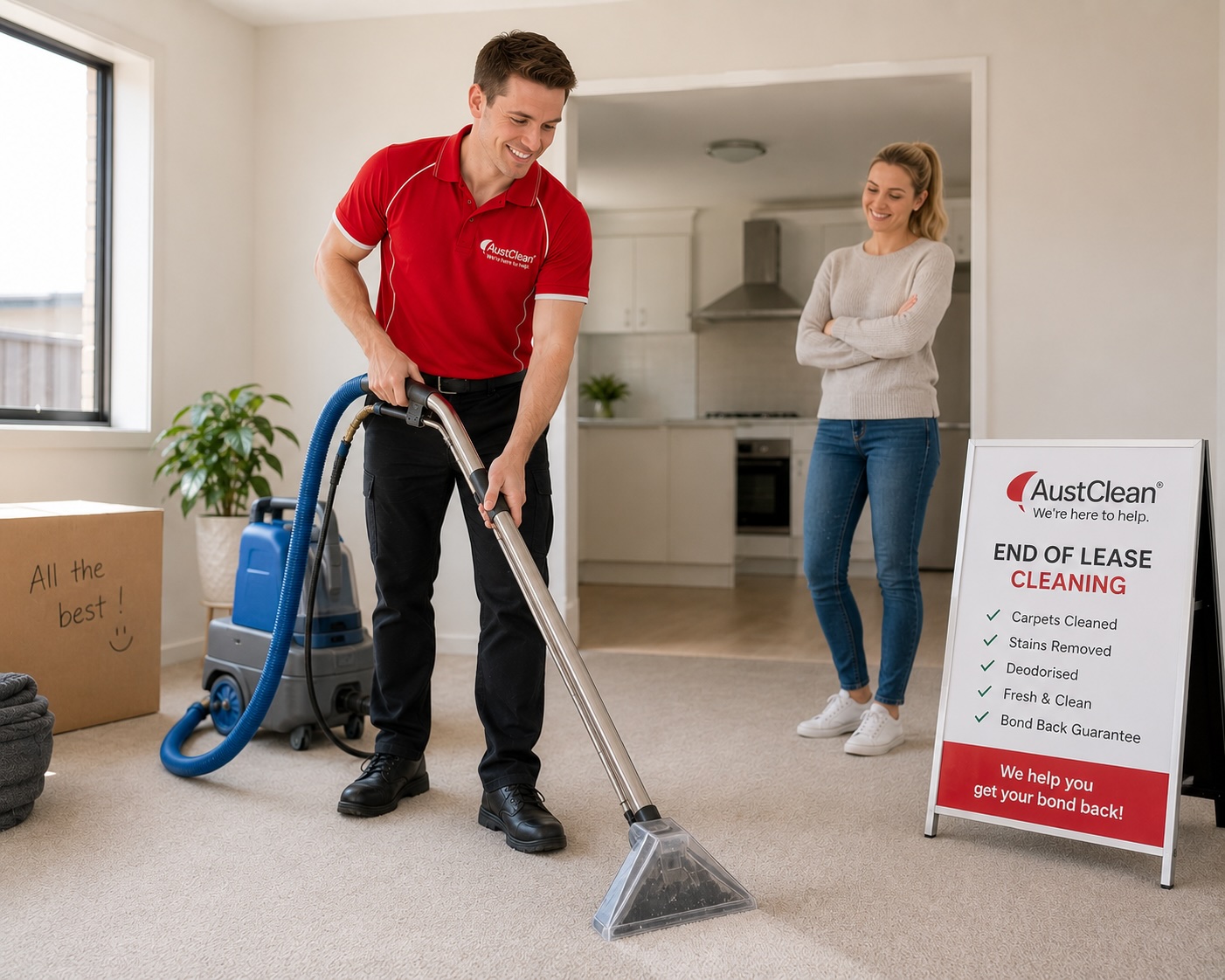
AustClean specialises in end of lease cleaning across Queensland, Victoria and South Australia, with more than 30 local owner operated franchises. Each local team treats every property as if it were their own, using commercial hot water extraction equipment and RTA style checklists. Their bond back guarantee gives renters and owners extra comfort during final inspection.
For tenants, AustClean focuses on protecting the bond by aligning their work with what property managers expect to see. For landlords and investors, regular vacate cleaning between tenants helps maintain property value and reduces vacancy time. The same thorough approach supports property managers who want consistent results across large portfolios.
What To Expect From AustClean’s Professional Carpet Cleaning At End Of Lease
AustClean’s carpet service follows a clear, practical process:
-
Walk through and inspection – Check fibre type, stains, traffic lanes and any pre existing damage against your condition report.
-
Commercial pre vacuum – Lift dry soil, sand and pet hair so wet cleaning is more effective.
-
Pre treatment – Apply carefully chosen detergents and individual stain spotters, paying special attention to traffic lanes and pet areas.
-
Hot water extraction – Use portable machines with inline heating, combining heated water with strong suction to rinse and extract soil and residues.
-
Deodorising and additional treatments – Where needed, apply deodoriser and targeted treatments for pet accidents or stubborn marks.
-
Grooming and final check – Groom the pile for a fresh look and walk through key areas to confirm the result.
Finally, they leave a detailed tax invoice that clearly states end of lease carpet cleaning for the address. That document sits neatly with your other move out papers and can be uploaded to bond claims or tribunal portals if needed.
All-In-One Bond Cleaning, Local Operators And Bond-Back Peace Of Mind
Beyond carpets, AustClean offers full bond cleaning packages that cover:
-
Kitchens, including ovens, rangehoods and splashbacks
-
Bathrooms and laundries
-
Windows, tracks and sills
-
Skirting boards, doors and frames
-
Cupboards, wardrobes and shelves
-
Light fittings, fans and under appliances where accessible
Teams work from checklists aligned with guidance from agencies such as the Residential Tenancies Authority, which helps match the standard agents are trained to apply. Combining end of lease cleaning and carpet cleaning in one booking means fewer trades to coordinate and a single standard of work.
AustClean’s owner operators are local, police checked and fully insured, which supports trust for both tenants and landlords. If an agent raises a fair cleaning item related to AustClean’s work, the bond back guarantee means the team returns promptly to fix it at no extra cost. Busy families, business tenants and investors can request an end of tenancy cleaning quote online or over the phone, then lock in a date that fits their move.
Making The Right Call On End Of Lease Carpet Cleaning
The right decision about end of lease carpet cleaning starts with your paperwork.
-
Read the lease carefully, including any special conditions.
-
Look at the entry condition report and photos.
-
Think honestly about what has happened during your tenancy.
Any clause that mentions professional carpet cleaning, pets or receipts is a strong sign you should book a qualified cleaner.
Next, look honestly at the carpets in normal daylight rather than at night:
-
If you can see clear stains, grey traffic lanes, pet hair or smell any odour, professional help is usually worth the cost.
-
When carpets look similar to the entry photos, the tenancy was short and no special clauses apply, a careful DIY job may pass, although there is still some risk.
Compare the likely cleaning fee with the size of your bond and your time pressure. According to tenant advice services such as Tenants Queensland, bond disputes often drag on for weeks and cause real stress. Paying for a professional end of lease carpet clean now may cost less than both the time and money tied up in an argument later.
If you prefer a simple, low stress option, booking AustClean for both bond cleaning and carpets can make sense. You get one contact, a clear quote and work carried out by local operators who deal with property managers every day. That combination gives renters, owners and managers confidence when inspection day arrives.
Conclusion
End of lease carpet cleaning sits at the centre of many bond decisions, yet the rules are not as simple as always or never. The real answer depends on your lease, the ingoing condition report, any pets and how the carpets now look and smell. When those factors line up with clear clauses, visible stains or strong odours, professional steam cleaning becomes the sensible choice.
DIY care still plays a part, especially during the tenancy and in very low wear situations. A careful vacuum and spot clean may satisfy some agents where no special terms apply and carpets already started in used condition. Even then, renters need to weigh the risk of a dispute against the relatively modest cost of a professional clean.
For time poor tenants, homeowners and property managers across Queensland, Victoria and South Australia, AustClean offers a practical way to remove that uncertainty. Their local teams combine hot water extraction carpet work with full bond cleaning and a bond back style guarantee. With the right plan in place, you can move on from your lease with your bond secure and your carpets ready for the next chapter.