Jump to section
- Introduction
- Why Every High‑Traffic Workplace Needs An Office Cleaning Checklist
- What Daily Office Cleaning Tasks Should Never Be Missed?
- What Should Be On Your Weekly Office Cleaning Checklist?
- How Do You Build A Cleaning Schedule And Maintain Workplace Hygiene Standards?
- When Should You Bring In Professional Office Cleaning Services Like AustClean?
- Let’s Keep Your Workplace Consistently Clean And Productive
- Frequently Asked Questions
Introduction
Without a clear Office Cleaning Checklist, high-traffic workplaces quickly feel grubby, cluttered and unprofessional by midweek. Overflowing bins, sticky kitchen benches and smelly bathrooms not only look bad, they also frustrate staff and visitors. Germs spread faster through shared desks and equipment when nobody is quite sure who cleans what.
A practical daily checklist for a busy office should always cover rubbish removal, disinfecting desks and touchpoints, kitchen and bathroom cleaning, reception and entry presentation, floor care and restocking hygiene supplies. That checklist spells out which tasks happen every day, which areas get extra attention and who is responsible for each step. When you pair that structure with consistent workplace cleaning, you protect hygiene, staff wellbeing, first impressions and productivity.
This article shows how to build that structure for an Australian workplace, from daily non-negotiables through to weekly and periodic deep cleaning. It also explains how a partner such as AustClean helps keep high-traffic offices, clinics and retail sites clean without putting extra pressure on your team. Read on to map out a simple, realistic office cleaning routine that fits your business.
Key Takeaways
Key ideas from this guide help busy workplaces get organised quickly. Use these points as a reference while you read. They also work as a quick checklist when you review your current office cleaning routine.
-
Why A Structured Office Cleaning Checklist Matters
A written checklist brings order to office cleaning so nothing important is forgotten. It supports hygiene, safety, staff morale and brand reputation in high-traffic spaces. It also gives managers a clear way to review and improve their commercial cleaning checklist over time. -
Daily Non-Negotiables In High-Traffic Workplaces
Certain tasks need attention every single workday. These include bins, desks, kitchens, bathrooms, reception zones and high-touch surfaces. Skipping them quickly leads to smells, complaints and higher sickness risk. -
Weekly And Periodic Deep-Clean Tasks To Lock In Standards
Weekly and monthly items deal with dust, build-up and harder jobs such as carpets and tiles. They protect furniture, flooring and equipment from early wear. Many of these tasks are best handled by professional cleaners with commercial equipment. -
Hygiene, WHS And Quality Control
Good checklists link directly to Work Health and Safety expectations in Australia. They separate cleaning from disinfecting, set safe methods and record that tasks are actually completed. Simple inspections and sign-offs keep standards steady. -
When To Call In Professional Cleaning Support Like AustClean
As traffic grows, DIY cleaning often stops working. A local provider such as AustClean can plan, deliver and document a cleaning schedule that suits your site, hours and industry, without disrupting your core work.
“Clean, orderly workplaces don’t happen by accident – they’re the result of a clear plan that’s followed every day.” – AustClean Operations Team
Why Every High‑Traffic Workplace Needs An Office Cleaning Checklist
Every high-traffic workplace needs an Office Cleaning Checklist to keep hygiene, safety and presentation on track. A written checklist sets clear expectations for how often each area is cleaned, who does the work and what standard you expect.
Without that structure, cleaning becomes random and patchy, especially in busy offices, medical rooms and retail stores. According to Safe Work Australia, poor housekeeping increases the risk of slips, trips and falls, which are among the most common causes of injury at work. A simple office cleaning list helps control clutter, spills and rubbish that contribute to those incidents.
There is also a human side. Staff feel more valued when bathrooms, kitchens and desks are consistently clean rather than only tidied before visitors arrive. Research from Harvard Business Review links cleaner workplaces with higher reported productivity and focus, which matters for any business that relies on office-based work. Clean, calm environments support better concentration and lower stress, especially in open-plan offices.
For many Australian workplaces, especially in Queensland, Victoria and South Australia, AustClean supports this structure. Local franchise owners follow agreed commercial office cleaning checklist documents for each client site. That keeps service levels consistent, even when staff change or workloads spike, and gives managers something concrete to review during performance checks or WHS meetings.
What Does An Effective Office Cleaning Checklist Cover?
An effective Office Cleaning Checklist is more than a loose to-do list. It is a simple document that lists every area in your workplace, how often it is cleaned and who is responsible. That way, everyone sees the same plan rather than guessing or assuming “someone else” will do it.
Key zones usually include:
-
Reception and entry areas
-
Workstations and hot-desks
-
Meeting and board rooms
-
Kitchens or break rooms
-
Bathrooms and toilets
-
Corridors, stairs and lifts
-
Storage spaces and printers
-
External entry points and foyers
A good business cleaning checklist groups tasks into:
-
Daily office cleaning tasks
-
Weekly office cleaning checklist items
-
Deep cleaning office checklist work
-
An office maintenance checklist for issues such as leaks, odours or broken fittings
It also shows what staff handle and what sits with your professional cleaners or building manager. AustClean teams use structured checklists across offices, clinics and retail sites so high-traffic areas get the right mix of daily, weekly and periodic attention. This reduces missed tasks and keeps standards more predictable from week to week.
What Daily Office Cleaning Tasks Should Never Be Missed?
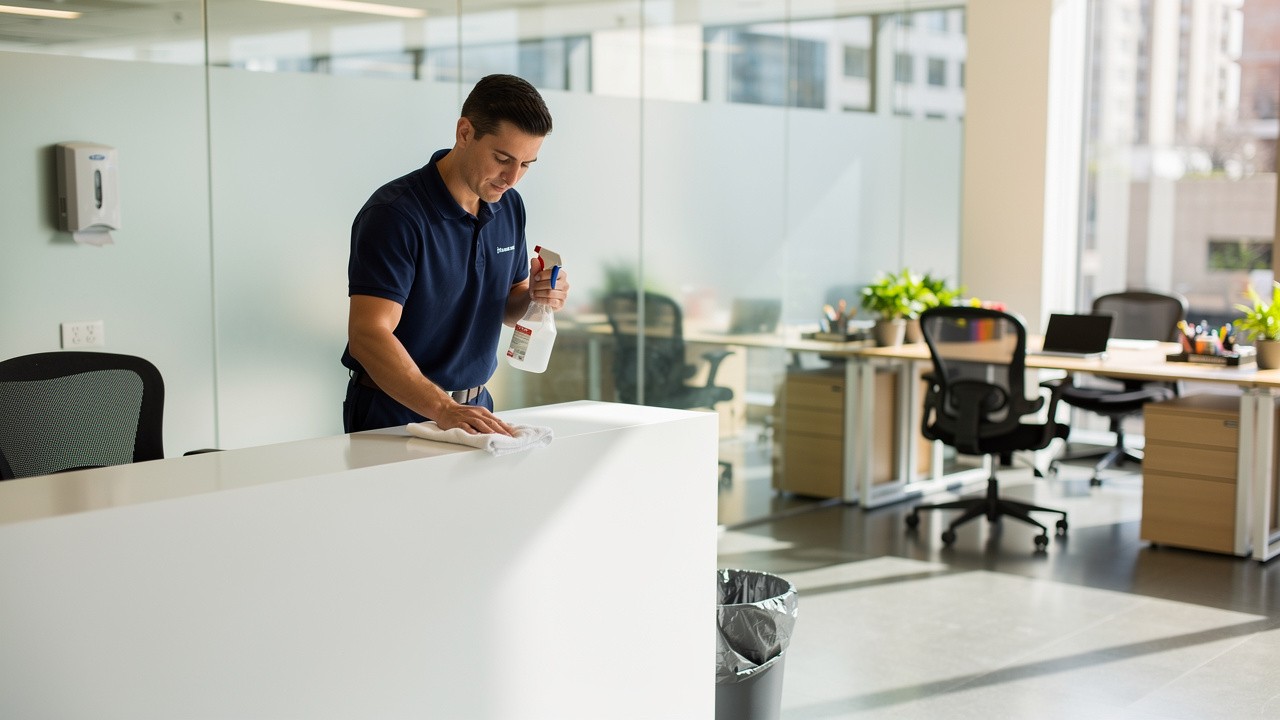
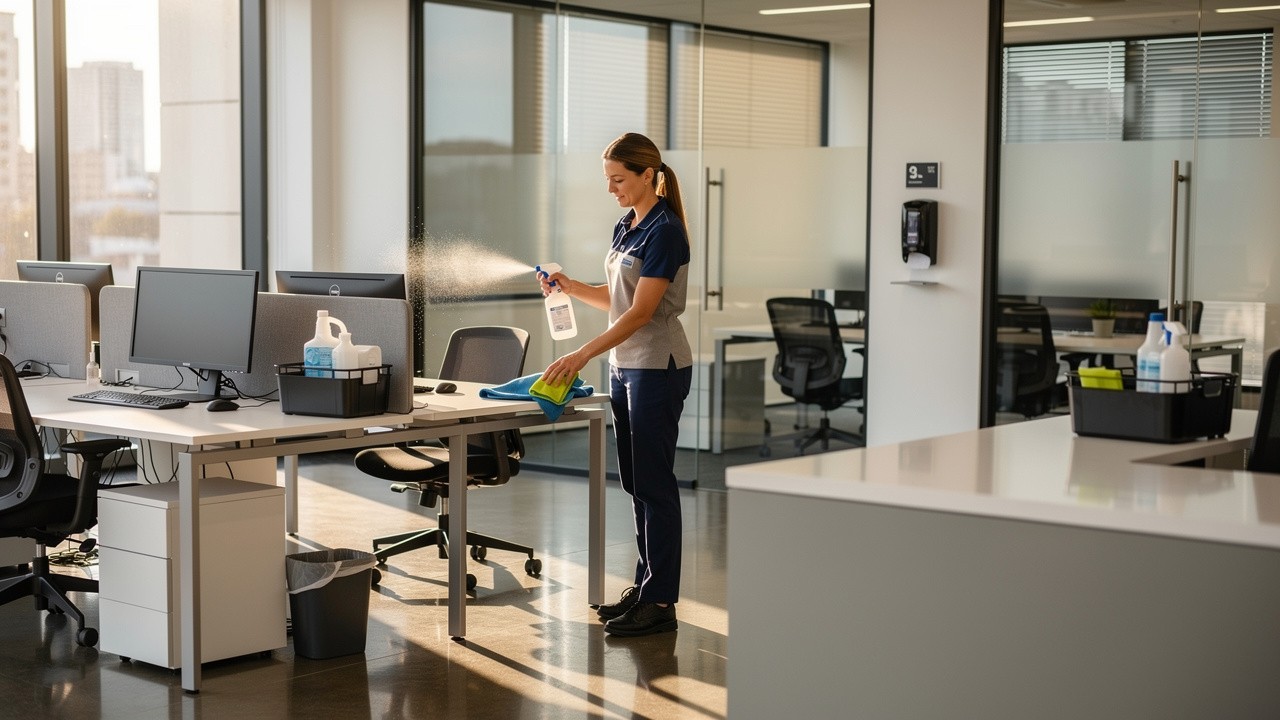
Daily office cleaning tasks that should never be missed in a busy workplace focus on the areas people touch most. A consistent daily routine cuts germs, controls odours and keeps the space looking professional for staff, clients and visitors. It also stops small messes turning into bigger, more expensive problems.
Guidance from the Australian Department of Health explains that regular cleaning and disinfecting of high-touch surfaces lowers the spread of viruses in shared environments. For offices, that means desks, shared keyboards, door handles, lift buttons, bathrooms and kitchens all need reliable daily care. High-traffic workplaces such as medical reception areas or busy retail offices usually need some tasks completed more than once a day, especially bathrooms and entry zones.
Daily Checklist For Desks, Kitchens, Bathrooms And Reception
A simple daily office space cleaning checklist keeps things moving at the end of each shift. It focuses on workstations, client-facing areas, food spaces, bathrooms and hygiene touchpoints. You can adapt the details to the size and layout of your site.
-
Workstations And Open-Plan Areas
-
Wipe desks, chair arms and drawer handles with suitable disinfectant so crumbs and fingerprints do not build up.
-
Clean shared keyboards, mice and phones with electronics-safe wipes, paying extra attention in hot-desking setups.
-
Empty desk and central bins, replace liners where needed and keep walkways free from boxes or loose cables.
-
-
Reception, Entryways And Client Spaces
-
Vacuum or sweep entrances, corridors and waiting areas so dirt from outside does not spread.
-
Disinfect reception counters, visitor pens, clipboards, EFTPOS terminals and sign-in tablets that change hands all day.
-
Straighten chairs, remove worn brochures and spot-clean glass doors or partitions for a neat first impression.
-
-
Office Kitchen And Break Room
-
Wash or load dishes, mugs and cutlery so nothing smelly sits overnight.
-
Wipe and sanitise benchtops, tables, cupboard handles and appliance touchpoints such as microwaves, fridges, kettles and coffee machines.
-
Empty rubbish and recycling, seal food waste, sweep floors and spot-mop spills before pests or odours appear.
-
-
Bathrooms And Toilets
-
Clean and disinfect toilets, urinals, basins, taps and splashbacks so fixtures stay sanitary.
-
Sanitise high-touch points including door handles, cubicle locks, flush buttons, hand dryer buttons and sanitary bin lids.
-
Refill soap, paper towel and toilet paper, empty all bins and mop floors with disinfectant, checking that ventilation keeps smells under control.
-
-
Health, Hygiene And Safety Touchpoints
-
Wipe door handles, lift buttons, stair rails, fridge handles, photocopier panels and shared remotes with an appropriate disinfectant.
-
Refill hand sanitiser stations and disinfectant wipe tubs in reception, meeting rooms and kitchens.
-
Use colour-coded cloths and mops for bathrooms, kitchens and general areas, and report leaks, broken lights or trip hazards through your office maintenance checklist or directly to AustClean if they manage your site.
-
Tip: Nominate “closing checks” for each area – for example, one person signs off on the kitchen list before leaving – so daily office cleaning tasks are part of the normal workday, not an afterthought.
What Should Be On Your Weekly Office Cleaning Checklist?
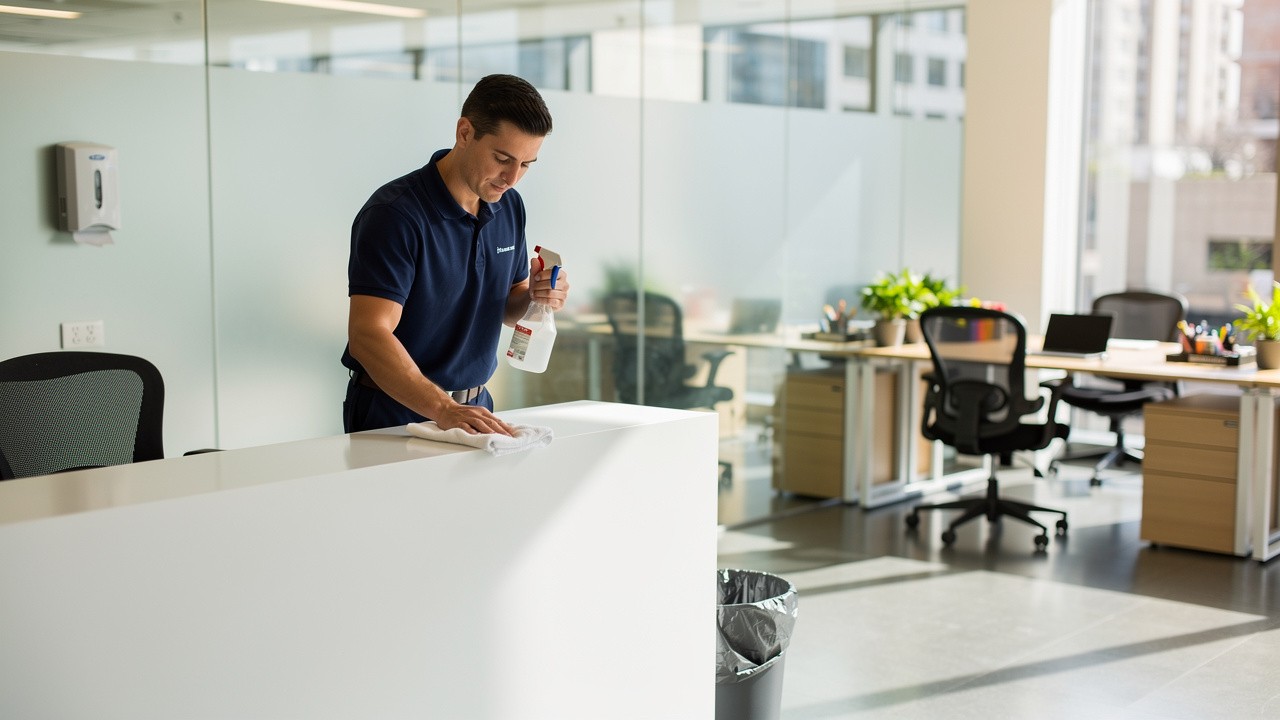
A weekly office cleaning checklist steps beyond quick tidying and tackles dust, build-up and hidden grime. Weekly tasks help carpets, chairs, tiles and fittings last longer, which saves money on replacements over time. They also keep the workplace feeling fresh rather than just “wiped over”.
In high-traffic workplaces, weekly jobs often include extra detail in meeting rooms, under desks, in kitchen appliances and across bathroom surfaces. These items work alongside your daily commercial cleaning checklist so standards do not slowly slide. Research reported by Harvard Business Review links cleaner workplaces with better concentration and lower reported stress, which supports a more productive team.
Weekly And Periodic Cleaning For Busy Offices
Weekly and periodic tasks suit a scheduled commercial cleaning checklist handled by trained cleaners. They pick up what daily routines miss and prepare the office for the next busy period. Many Australian businesses arrange these with providers such as AustClean.
-
General Areas, Workstations And Meeting Rooms
-
Vacuum all carpets thoroughly, including under desks and tables, and mop hard floors.
-
Dust window sills, filing cabinets, picture frames, vents and skirting boards so dust does not trigger allergies.
-
Wipe and disinfect boardroom tables, chair backs and arms, whiteboards, glass boards and shared conferencing equipment.
-
-
Weekly Kitchen And Break Room Deep Clean
-
Empty fridge shelves and drawers, removing unlabelled or out-of-date food in line with office rules.
-
Wipe internal fridge surfaces, splashbacks and the inside of microwaves more thoroughly than during daily cleans.
-
Clean toaster crumb trays and sandwich presses, launder tea towels and reusable cloths and review stocks of tea, coffee, sugar, milk and paper products.
-
-
Weekly Bathroom And Toilet Detailing
-
Descale and deep clean toilets and urinals, paying attention under rims and around flush points.
-
Scrub tiles and grout to prevent soap scum and mildew, and polish mirrors without streaks.
-
Wipe partitions and doors more completely, remove limescale from taps and stainless steel and check that floor drains and dispensers are in good condition.
-
-
Monthly And Periodic Deep Cleaning
-
Schedule high dusting of ceilings, light fittings and the tops of cupboards as part of a deep cleaning office checklist.
-
Arrange carpet extraction, machine scrubbing of tiled floors, vinyl sealing and full internal window cleaning at sensible intervals.
-
In very high-traffic workplaces, consider quarterly or half-yearly deep cleans of upholstery, blinds and air vents.
-
AustClean uses commercial-grade equipment for these tasks, which is usually more practical than buying machines for a single office. This type of commercial cleaning support is especially useful where presentation directly affects client confidence, such as professional services offices, medical suites and busy retail head offices.
How Do You Build A Cleaning Schedule And Maintain Workplace Hygiene Standards?
Building a cleaning schedule that maintains workplace hygiene standards starts with your Office Cleaning Checklist. The schedule turns that list into a realistic plan that matches your trading hours, traffic levels and risk profile.
Workplace cleaning in Australia also sits under Work Health and Safety expectations. Guidance from Safe Work Australia notes that employers must provide a work environment that is safe, so regular cleaning and safe chemical use are part of that duty. A good office cleaning schedule joins daily, weekly and periodic tasks with safe methods, personal protective equipment and correct storage of products.
In higher risk environments such as medical offices or allied health clinics, your schedule may include more frequent disinfection of waiting rooms and treatment spaces, as outlined in environmental cleaning guidance for healthcare settings during outbreaks. Lower risk workplaces still need bathrooms, kitchens, reception areas and high-touch surfaces cleaned at sensible intervals. AustClean helps many Australian businesses align their commercial cleaning schedule with both WHS expectations and lease requirements, so managers can demonstrate that hygiene has been addressed in a structured way.
Setting Frequencies, Responsibilities And Quality Controls
Turning a checklist into a working commercial cleaning schedule means answering three simple questions: how often does each task happen, who completes it and how do you confirm it was done properly. Clear answers stop misunderstanding and gaps.
-
Designing A Cleaning Schedule For Your Workplace
-
Start by assessing foot traffic and use across the site, such as busy reception zones compared with quiet back offices.
-
Group tasks into daily, weekly and periodic categories using your office space cleaning checklist.
-
Choose times that suit your business, for example before opening, after closing or between shifts, and consider any noise restrictions in multi-tenant buildings.
-
-
Defining Who Does What
-
Allocate light duties to staff, such as wiping spills immediately, clearing personal desks once a week and managing their own food in fridges.
-
Assign regular commercial cleaning list of services items like vacuuming, mopping, bathroom sanitising and high-touch disinfection to your cleaning provider.
-
Put these responsibilities in writing so nothing falls between staff and contractors, and make the checklist easy to access in printed or digital form.
-
-
Hygiene, WHS And Compliance Basics
-
Distinguish cleaning from disinfecting and specify where each is needed so chemicals are used wisely — a structured approach to task time allocation is also validated by the CHSWC janitor workload update, which compares actual time spent on tasks with industry-recommended standards.
-
Use products that meet Australian standards, follow Safety Data Sheets and provide gloves and masks or eye protection where splashing is possible.
-
Keep exits, fire equipment and escape routes clear as part of a broader workplace hygiene checklist that supports WHS compliance and risk management.
-
-
Quality Control And Continuous Improvement
-
Use written or digital commercial office cleaning checklist sign-offs for daily, weekly and periodic work.
-
Define simple standards such as “no visible marks on tables” and “bins emptied, liners replaced if soiled”.
-
Review incident reports, odour complaints and staff feedback regularly to adjust frequencies or methods.
-
AustClean supervisors carry out regular checks and adjust routines based on client feedback, which helps offices and retail spaces across Australia keep cleaning on track.
-
“If it’s not written down and checked, it usually doesn’t happen consistently.” – Facilities Manager, Melbourne CBD (quoted anonymously)
When Should You Bring In Professional Office Cleaning Services Like AustClean?
Professional office cleaning services are worth bringing in when daily tidying by staff is no longer enough to keep standards acceptable. This often happens as staff numbers grow, trading hours extend or client expectations rise.
Typical warning signs include:
-
Regular complaints about bathrooms
-
Persistent smells in kitchens, bins or corridors
-
Visible build-up on carpets, tiles or furniture
-
Staff arguing about “whose turn” it is to clean shared areas
-
Managers spending time chasing cleaning instead of focusing on revenue or clients
Studies discussed by Harvard Business Review report that staff in cleaner environments feel more focused and take fewer sick days, so poor cleanliness can carry a real business cost. For leased offices and medical suites, landlords or regulators may also expect documented commercial cleaning schedules that internal teams cannot easily provide.
Professional cleaners bring training, equipment and product knowledge that most workplaces do not have in-house. In regions such as Brisbane, the Gold Coast and Adelaide, AustClean teams support busy offices, retail stores and clinics with structured checklists and local knowledge. They work around trading hours, security requirements and site access needs, so staff can arrive each day to a workspace that already feels ready.
Tailoring Your Checklist With A Professional Cleaning Partner
Working with a professional partner lets you adjust your Office Cleaning Checklist to the real way your site operates. The provider helps you balance budget, risk and presentation rather than guessing. That partnership also means you have expert advice when regulations or expectations change.
-
Signs You Have Outgrown A DIY Approach
-
Staff begin raising issues about dirty bathrooms, kitchen smells or sticky meeting tables.
-
Managers spend time chasing up ad-hoc cleaning instead of focusing on core work.
-
You might also worry about passing landlord inspections or industry audits, especially in medical, allied health or busy retail sites.
-
-
What A Professional Commercial Cleaning Checklist Includes
-
A typical commercial cleaning checklist covers routine office and workspace cleaning, high-touch disinfection, bathroom and kitchen hygiene, and carpet and floor care.
-
It usually includes window and glass cleaning plus periodic deep cleaning that links to your deep cleaning office checklist.
-
Reputable providers across cleaning services Australia also adjust frequencies to match real-world traffic rather than a generic plan.
-
-
How AustClean Supports Australian Offices And Retail Businesses
-
AustClean works with you to shape an office cleaning checklist and office cleaning schedule around your layout, staffing and hours.
-
Trained local cleaners follow consistent checklists and Safe Work Australia aligned methods using suitable commercial-grade products and equipment.
-
Regular quality checks and open communication make it easy to refine your program as your business or occupancy changes, and you can contact AustClean to discuss options without pressure.
-
Let’s Keep Your Workplace Consistently Clean And Productive
A well-planned Office Cleaning Checklist underpins hygiene, safety and presentation in any high-traffic workplace. When everyone knows the daily, weekly and periodic tasks, it becomes much easier to keep bathrooms fresh, kitchens pleasant and desks ready for work. Staff notice the difference and so do clients and visitors.
Daily office cleaning checklist items such as bins, touchpoints, kitchens and bathrooms stop small problems turning into big ones. Weekly and periodic tasks keep carpets, furniture, tiles and glass in good condition, which protects the money already invested in your fit-out. Taken together, these routines support healthier staff, better focus and a more professional image.
Consistency comes from both a clear plan and reliable delivery. Some businesses manage that internally, while many across Queensland, Victoria and South Australia prefer to partner with a specialist such as AustClean. If you are ready to tidy up your approach to office cleaning, consider speaking with AustClean about a practical program for your own high-traffic workplace.
Book a professional office cleaning quote
If your team is struggling to keep up with daily cleaning, AustClean can create a practical commercial cleaning plan that suits your workplace, hours and budget.
Frequently Asked Questions
Question: What Is The Difference Between A Daily Office Cleaning Checklist And A Deep Cleaning Office Checklist?
Answer: A daily office cleaning checklist covers routine hygiene and presentation tasks in high-use areas such as desks, kitchens, bathrooms and reception. A deep cleaning office checklist focuses on periodic work including carpet extraction, high dusting, tile and grout scrubbing and detailed appliance or bathroom cleaning. Both levels are needed to control germs, support staff wellbeing and protect surfaces over time.
Question: How Often Should A Busy Office In Australia Be Professionally Cleaned?
Answer: A busy, client-facing office in Australia usually needs professional cleaning at least once per day. Medium-use offices may work well with several visits per week, while very small low-traffic sites sometimes manage with a thorough weekly service. Factors such as staff numbers, visitor traffic, industry risk and landlord or audit requirements all play a part, and AustClean helps match frequency to budget and risk level.
Question: What Should Be On Our Office Cleaning Supplies List?
Answer: An office cleaning supplies list should include neutral floor cleaner, multipurpose spray, glass cleaner, toilet cleaner and a suitable disinfectant. You also need bin liners, paper towels, toilet paper, hand soap, sanitiser, microfibre cloths and wipes. Basic equipment includes a commercial-grade vacuum, mops and buckets, brooms, a cleaning caddy and caution signs, all stored safely with labelled products and accessible Safety Data Sheets. For larger or multi-level offices, consider extra vacuums and spare consumables so cleaning is not delayed.
Question: How Can We Make Sure Cleaners Follow Our Commercial Cleaning Checklist Properly?
Answer: The best way to keep cleaners aligned with your commercial cleaning checklist is to use written or digital tick sheets for daily, weekly and periodic tasks. Set clear standards and schedule regular walkthroughs or spot checks so expectations stay visible. Encourage staff to report issues quickly, and choose providers like AustClean that already build supervisor checks and feedback into their service, including corrective action when something is missed.
Question: Can Our Staff Handle Cleaning, Or Do We Really Need Professional Cleaners?
Answer: Staff can look after basic tidiness such as wiping small spills, doing their dishes and keeping personal desks clear. Their time, skills and access to equipment usually limit how far they can take consistent workplace cleaning, especially around bathrooms, carpets and infection control. In high-traffic or client-facing workplaces, combining a realistic staff responsibility list with a professional commercial cleaning checklist from a provider such as AustClean gives better long-term results, fewer missed tasks and a stronger, more reliable first impression.