End of lease cleaning Port Lincoln prepares a rental home for handover by addressing grease, dust, rubbish and overlooked storage spaces. Start with the entry inspection record and leave enough time to clean each room, document the result and return keys without a last-minute rush.
In South Australia, tenants must return the premises and associated property in a reasonable condition and reasonably clean, taking account of its condition at the start of the tenancy and fair wear and tear. Keep cleaning, damage and ordinary wear as separate issues.
This guide covers room-by-room cleaning, outdoor areas, evidence for your records and final inspection steps. It also explains when a cleaner may save time without promising a particular bond outcome.
AustClean provides bond and end-of-lease cleaning services for homes needing extra help before handover. The agreed scope can include interior rooms, carpets, windows and outdoor areas.
Use the tenancy agreement, entry inspection record and written property-manager requests to plan the work, but remember that a lease or checklist cannot override South Australian tenancy law. The standard is reasonable cleanliness after allowing for the property’s starting condition and fair wear and tear.
Leave time between cleaning and key return for any questions from the property manager. That buffer may prevent a stressful last-minute rush.
Key takeaways
-
Use the lease and entry inspection record to set the cleaning standard.
-
Remove belongings and rubbish before cleaning rooms, appliances and storage areas.
-
Keep cleaning separate from repairs, damage and fair wear and tear.
-
Take dated photos, retain records and confirm key-return arrangements in writing.
What should be on your Port Lincoln end-of-lease cleaning checklist?
A Port Lincoln end-of-lease cleaning checklist starts with the tenancy agreement, entry inspection record and written instructions from the property manager. The aim is to return the premises and associated property in a reasonable condition and reasonably clean, taking account of the starting condition and fair wear and tear.
Check the South Australian Government moving-out guidance before booking work or returning keys. It explains the current steps for private renters in South Australia.
The Residential Tenancies Act 1995 and Consumer and Business Services SA provide the South Australian framework for tenancy matters. For bond release steps, use Consumer and Business Services and Residential Bonds Online. A cleaning receipt can support your records but does not guarantee a bond outcome.
|
Before cleaning begins |
Action |
|---|---|
|
Lease and records |
Read the lease, entry inspection record and any condition report comments |
|
Belongings |
Remove furniture, food, personal items and rubbish |
|
Storage |
Empty cupboards, drawers, wardrobes, sheds and garage shelves |
|
Utilities |
Keep water and power connected until cleaning and inspection are complete |
|
Access |
Confirm keys, access arrangements and inspection timing |
|
Written requests |
Ask the property manager to identify any specific cleaning concerns in writing |
Once the home is empty, it is easier to reach corners, floors, cupboards and appliance spaces. Moving belongings out first also helps prevent fresh marks and rubbish being left behind.
Use this room-by-room checklist when preparing the property:
-
Kitchen
-
Empty and wipe cupboards, drawers and pantry shelves.
-
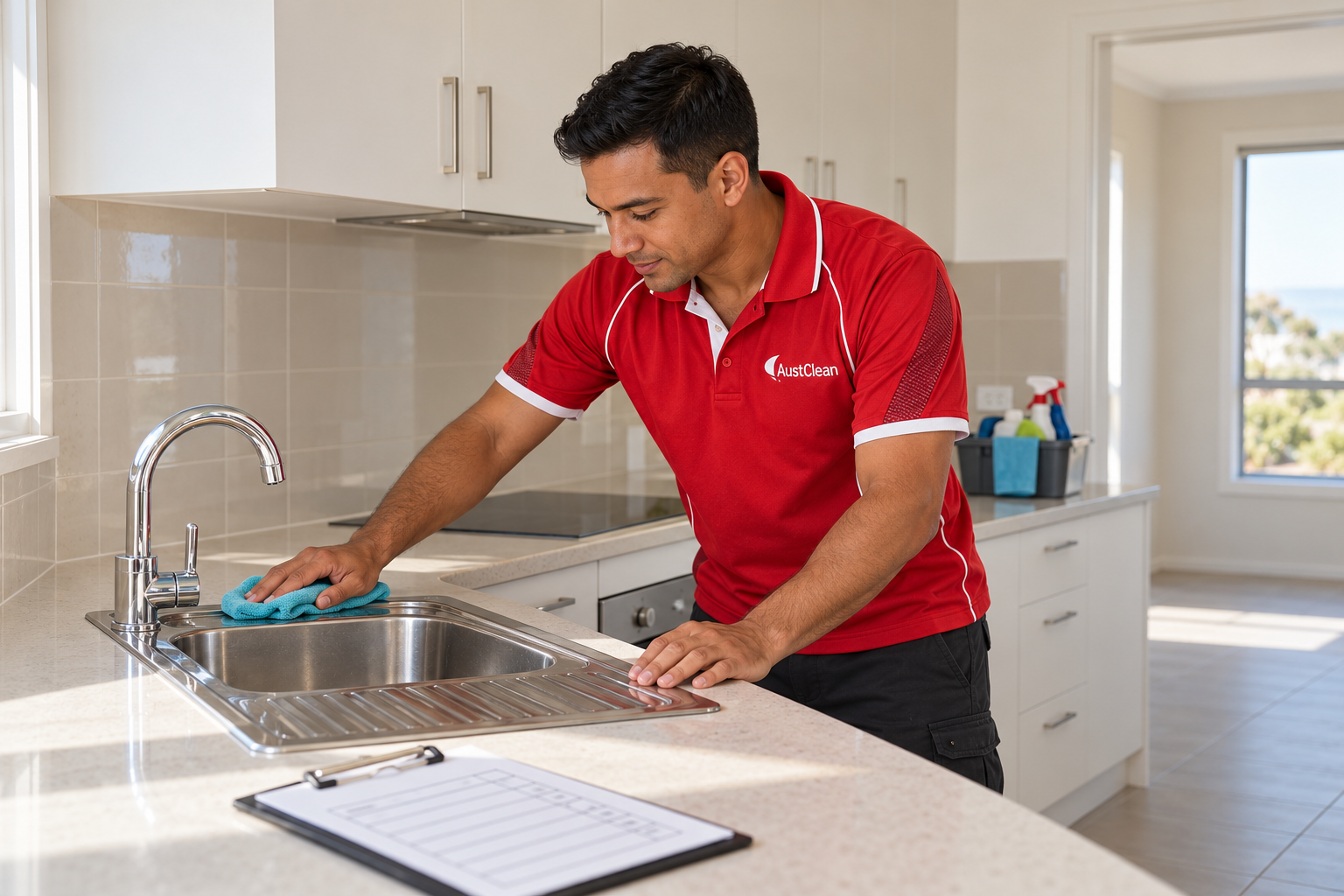
Clean the oven, cooktop, rangehood, splashback, sink, taps and benchtops.
-
Remove crumbs and food from the dishwasher, refrigerator cavity and other supplied appliances where relevant.
-
Clean floors, skirting boards and accessible wall marks with suitable products.
-
-
Bathroom and laundry
-
Clean shower screens, tracks, tiles, toilets, basins, mirrors, taps and drains.
-
Wipe the laundry trough, cupboards, bench areas and accessible exhaust covers.
-
Address accessible surface mould carefully, but report failed sealant, leaks or damaged grout rather than attempting risky repairs.
-
-
Bedrooms and living areas
-
Empty and clean wardrobes, shelves, drawers, doors, handles and window sills.
-
Wipe switches, skirting boards and safe-to-reach light fittings.
-
Remove cobwebs, vacuum carpets and clean hard floors.
-
Treat removable wall marks gently to avoid damaging paint.
-
-
Windows, glass and floors
-
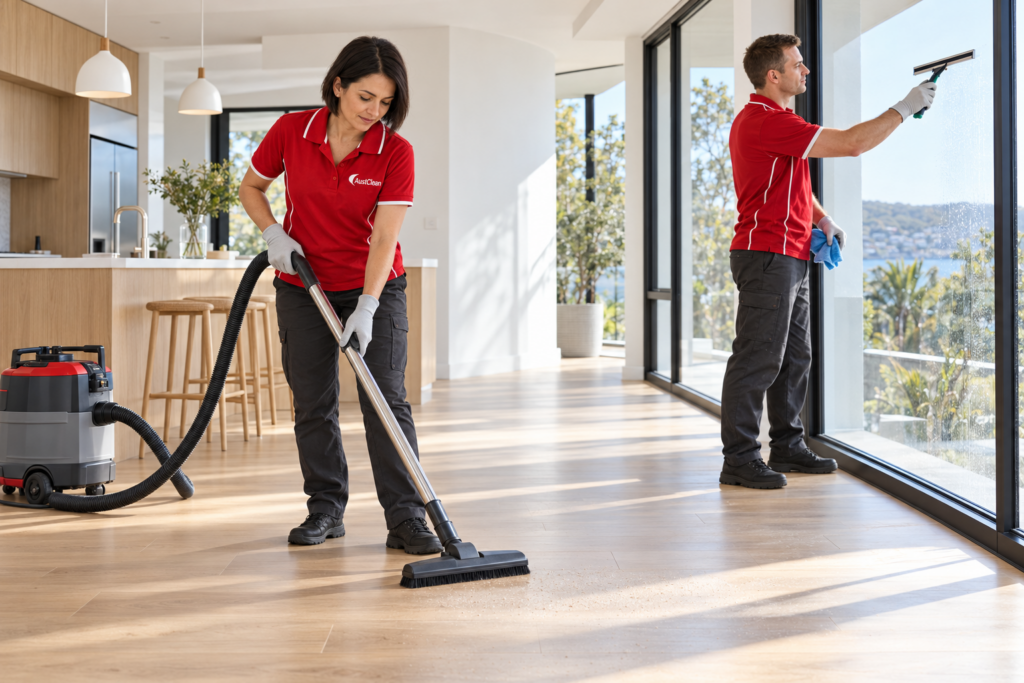
Confirm the agreed scope for carpets, accessible internal glass, frames, tracks and flyscreens.
-
Check whether carpet cleaning is reasonably required because of the carpet’s condition or a lawful tenancy obligation.
-
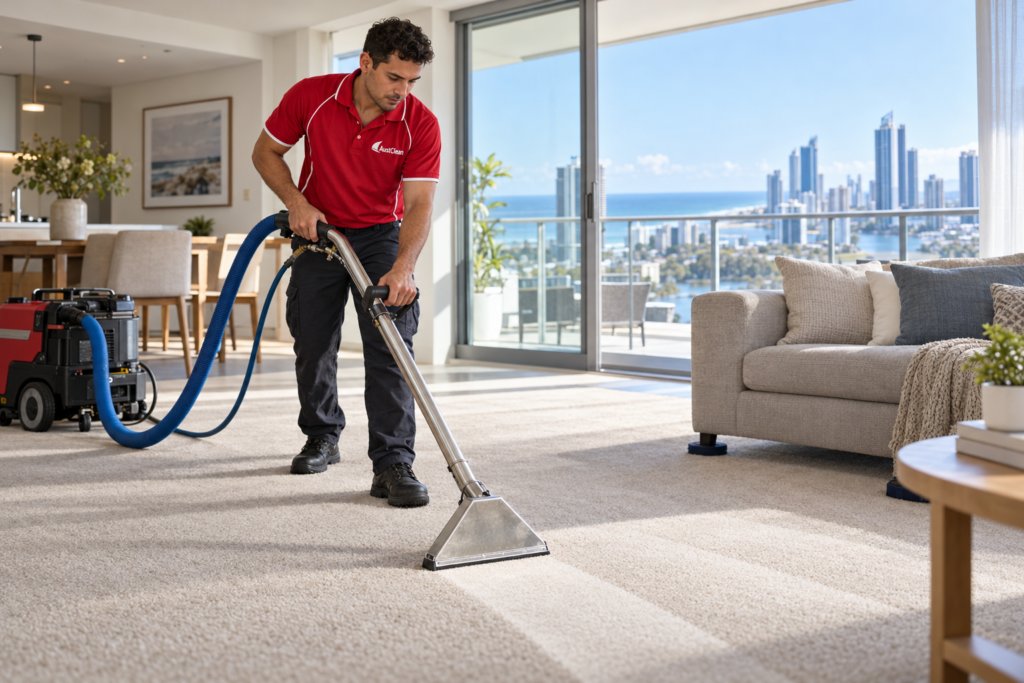
Professional carpet cleaning is not an automatic end-of-tenancy requirement. Where a pet approval includes a professional-standard carpet-cleaning condition, that standard does not necessarily require hiring a professional cleaner; check current Consumer and Business Services guidance on renting with pets.
-
-
Outdoor areas
-
Inspect balconies, patios, entryways, garages, sheds, driveways and bins.
-
Remove rubbish, sweep loose debris and check the agreement for any gardening or lawn duties.
-
Clean outdoor surfaces only where this is part of the agreed tenancy responsibility or cleaning scope.
-
Check supplied appliances carefully, including the oven, dishwasher and refrigerator cavity where applicable. Remove food, grease, crumbs and loose debris before wiping surfaces.
Cleaning is different from repairing damage. Broken fittings, damaged paint, failed sealant, holes, burns and tenant-caused stains may need separate assessment or written agreement.
Ordinary deterioration from normal use may be fair wear and tear. Keep cleaning issues separate from damage and maintenance, and report possible repairs or pre-existing faults to the property manager in writing rather than attempting work that could make them worse.
Take dated photos after the clean. Include wide shots and close images of cupboards, appliances, bathrooms, floors, accessible glass and outdoor areas.
Keep the invoice, written scope of work and messages about the handover. A cleaning receipt can support your records, but it does not guarantee or determine a bond outcome.
Complete the exit inspection sheet carefully and retain a copy. Return keys, remotes, swipe cards and supplied items according to the property manager’s instructions.
Ask these questions before the final inspection:
-
Is carpet cleaning requested, and what is the reason for that request?
-
Which windows, glass panels and exterior areas are included in the expected cleaning scope?
-
Are there any known maintenance issues already recorded against the property?
-
When and where should keys, remotes and access devices be returned?
-
Can any further cleaning request be provided with the relevant room, item, photo and written detail?
If more work is requested, ask for the exact room, item and concern in writing. Photos from the property manager can help separate cleaning concerns from damage, maintenance or fair wear and tear.
For end of lease cleaning Port Lincoln, AustClean can cover agreed kitchens, bathrooms, carpets, upholstery, windows and exterior areas. Review the bond-cleaning service and end-of-lease cleaning checklist before booking.
Property owners and managers can also review the owner hub for service information. Confirm ovens, carpet cleaning, accessible glass and outdoor work in writing before the appointment.
Contact us to discuss property size, access and requested inclusions. Call Bradley Pope on 0437 388 034.
Final handover steps
A Port Lincoln tenancy handover requires a final check of cleaning, records, access items and property-manager instructions. A sound handover follows the lease, entry inspection record and clear written communication.
Good end-of-lease cleaning in Port Lincoln focuses on comparable cleanliness rather than making an older property look new. Keep photos, invoices and inspection notes, then allow time for follow-up questions.
Arrange AustClean early if the move, property size or agreed scope makes the work difficult to manage. Check City of Port Lincoln requirements if rubbish disposal or outdoor cleanup involves local collection or disposal services.
Frequently asked questions
These end-of-lease cleaning and tenancy handover answers address common questions from South Australian renters. They explain cleaning expectations, records, bond questions and where to seek help when a dispute arises.
Do I need a professional cleaner at the end of a lease in South Australia?
Not always. Check the lease, entry inspection record and agreed cleaning standard first.
A professional cleaner can help with time-heavy work, but professional cleaning is not automatically required at the end of every tenancy. Check the property’s condition, the tenancy agreement and current Consumer and Business Services guidance; a lease or checklist cannot override the law.
What is the difference between cleaning and damage?
Cleaning removes dirt, grease, dust and ordinary residue. Damage can include broken items, burns, holes or tenant-caused stains.
Fair wear and tear is ordinary deterioration from normal use. Keep it separate from cleaning and damage, and ask the property manager to identify any concern that is not clearly cleaning-related.
Will a cleaning receipt guarantee my bond return?
No. A receipt can support your records, but it does not guarantee a bond return. Bond matters can also involve rent, damage, missing items or other tenancy issues.
Keep photos, the invoice, the service scope, your entry inspection record and messages with the property manager. These records may help if questions arise after handover.
Where can I get help with an end-of-tenancy dispute in South Australia?
Use the South Australian Government moving-out guidance and Consumer and Business Services for current information. Request written details and photos of claimed issues, and keep your entry record, exit evidence, receipts and relevant messages before seeking further support.
The South Australian Civil and Administrative Tribunal (SACAT) may hear residential tenancy disputes. Check its current process before lodging an application.
Should I clean carpets, windows and outdoor areas?
Check the tenancy agreement, entry inspection record and written instructions from the property manager, while remembering that these cannot override South Australian tenancy law. Confirm the requested scope for carpets, accessible glass and outdoor areas before arranging work.
For tenancy rights and bond information in South Australia, see Consumer and Business Services SA