Professional oven cleaning can save hours of hard, messy scrubbing while giving results that household products rarely match. For many Australians, paying for a professional oven cleaning service is worth the money once grease is heavy, time is limited, or a bond inspection or food safety check is coming up.
When the oven is only lightly soiled and there is plenty of time and energy, a careful DIY clean can still be enough.
The real question is not whether cleaning the oven matters, but whether doing it yourself is the smartest way to get it done. The answer depends on how dirty the oven is, how much free time there is, any health or mobility issues, and how high the standard needs to be. This article compares the costs, time, safety and results of a professional oven cleaning service versus DIY so that choice is clear.
You will see what professional technicians actually do, realistic 2026 Australian pricing, when DIY is sensible, and when a professional oven cleaning service such as AustClean offers better value. By the end, it will be easier to decide whether to keep scrubbing or book a specialist instead.
Key Takeaways
-
When DIY Oven Cleaning Is Enough
DIY suits ovens with light grease, recent spills and no serious burnt-on carbon. It works best for people who have a free afternoon, are comfortable using mild supermarket products and do not need inspection-level results. Regular quick wipe downs after cooking can stretch the time between any professional visits. -
When Professional Oven Cleaning Is Better Value
A professional oven clean makes sense when grease is thick, smells linger, glass is brown, or access to parts like the fan cover is tricky. It also pays off before end-of-lease inspections, home sales and commercial audits where standards are high. In these cases, paying once for specialist work is often cheaper than risking a failed inspection or early appliance replacement. -
Hidden Benefits And How AustClean Fits In
Professional oven cleaning improves hygiene, reduces fire risk, supports more even cooking and can extend the life of the appliance. It also removes the physical strain and chemical exposure that comes with harsh DIY products. AustClean brings trained local technicians, specialist equipment, and environmentally responsible products, offering a professional oven cleaning service across Queensland, Victoria and South Australia.
“A clean oven is not just about how it looks. It’s about safer cooking, better tasting food and protecting an expensive appliance.” – AustClean Training Team
What Does Professional Oven Cleaning Actually Involve?
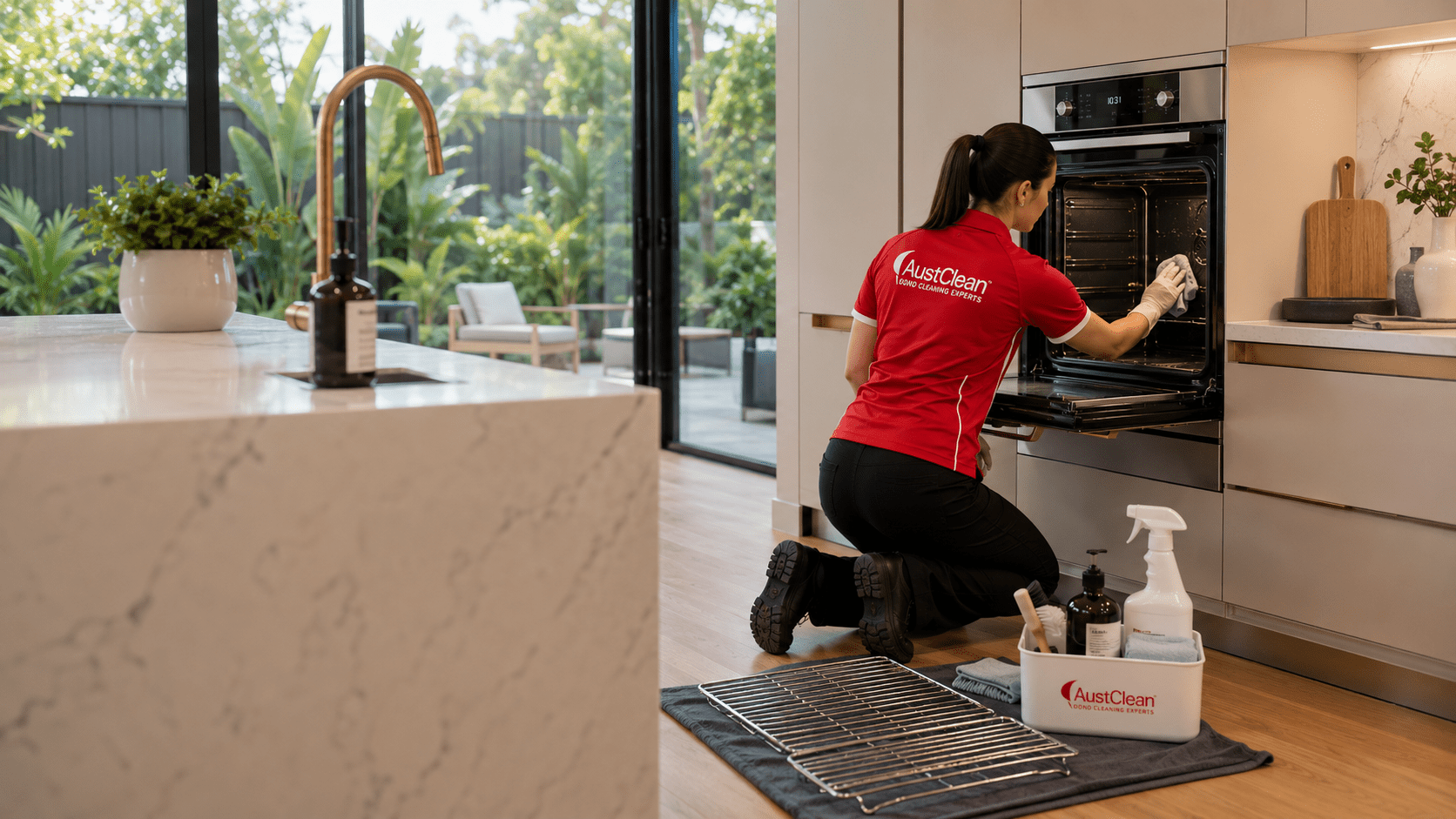
Professional oven cleaning is a structured deep clean that goes well beyond a spray and quick wipe. Trained technicians use specialist tools, non-caustic products and a heated dip tank in the van to strip away baked-on grease from areas that normal cleaning cannot reach. The goal is a hygienic, safe, almost like new oven that is ready to cook again as soon as the job is finished.
According to CHOICE, many supermarket oven cleaners contain strong alkalis that can irritate skin and lungs if used incorrectly, which is one reason people look for lower fume professional options. Providers such as AustClean focus on eco-friendly, low-odour products inside the home and keep the stronger chemistry contained in the van. For households with kids, pets or asthma, that difference matters.
Step-By-Step Professional Oven Cleaning Process
A typical professional oven cleaning visit usually follows a clear sequence:
-
Initial Check And Preparation
-
Quick inspection and safety check
-
Confirmation of oven type and age
-
Identification of existing damage such as cracked glass or loose knobs
-
Floors and nearby benchtops covered to protect tiles, timber and cabinetry
-
-
Dismantling The Oven
-
Removable parts such as racks, side rails, back panel, fan cover and often the door are taken out
-
These pieces go to the service van and soak in a heated dip tank that dissolves carbon far faster than a sink full of hot water
-
-
Deep Cleaning The Oven Cavity
-
Technician applies non-caustic gel or foam inside the oven cavity
-
Grease and carbon are loosened, then scraped, wiped and rinsed
-
Base, walls, ceiling and fan area are cleared of built-up fat and burnt-on food
-
-
Cleaning The Glass And Extras
-
Door glass cleaned inside and out
-
On many models, glass panels are separated so streaks between the panes disappear
-
If requested, the technician can also clean the cooktop, rangehood filters or microwave during the same visit
-
-
Reassembly And Final Check
-
All parts dried, reassembled and polished
-
Oven tested so it is safe and ready to use
-
Area tidied, leaving the kitchen clean and ready
-
AustClean follows this kind of methodical process using professional-grade equipment across its Queensland, Victorian and South Australian franchise network.
Safe Work Australia lists sodium hydroxide, found in some heavy duty oven sprays, as a corrosive chemical that can cause serious burns and eye damage when misused (Safe Work Australia). Professional cleaners avoid these products inside homes, which reduces that risk and helps protect sensitive oven surfaces.
Types Of Ovens And Appliances A Professional Can Clean
A professional oven cleaner can work on most domestic and many commercial appliances, including:
-
Standard single and double wall ovens
-
Freestanding cookers with integrated cooktops
-
Premium pyrolytic and catalytic ovens that need care around their liners
-
Benchtop ovens and combination microwave ovens
-
Many commercial ovens in cafés, childcare centres and office kitchens
Technicians know:
-
Which parts they can safely remove
-
Which surfaces they can scrape
-
Where to use only gentle, non-abrasive products
Many oven cleaning companies also offer add-ons for:
-
Gas and induction cooktops
-
Stainless and glass rangehoods
-
Microwave ovens
-
BBQs of various sizes
AustClean uses different techniques and scheduling for family homes, rental properties and small businesses so each site gets the level of cleaning it needs without unnecessary disruption.
How Much Does Professional Oven Cleaning Cost In Australia In 2026?
Professional oven cleaning in Australia in 2026 is usually more affordable than most people expect, especially once time and effort are factored in. For a standard single oven, prices often sit below the cost of a family dinner out, while larger ranges and extras add to the bill. Exact figures vary by oven size, level of build-up, location and whether other appliances are cleaned at the same time.
Typical Oven Cleaning Price Guide With Australian Examples
Across Australia in 2026, a typical oven cleaning price guide looks something like this:
| Service Type | Typical 2026 Price Range | Notes |
|---|---|---|
| Single standard domestic oven | Roughly $120 to $180 | Light to moderate build-up |
| Double oven or large range | Roughly $180 to $260 | Extra time and parts |
| Add cooktop clean | Roughly $40 to $70 | Gas or induction |
| Add rangehood and filters | Roughly $60 to $100 | Depends on grease level |
| Add microwave | Roughly $30 to $50 | Standalone or built in |
| BBQ clean | Roughly $120 to $220 | Size and condition vary widely |
For a DIY job, typical purchases include:
-
Heavy duty oven cleaner or gel
-
Bicarb soda and vinegar (for gentler methods)
-
Microfibre cloths and scourers
-
Gloves and possibly goggles
-
Razor blades or a scraper for glass
Bought at supermarkets or hardware stores, that often adds up to $30 to $50 in products and tools, plus several hours of personal labour.
According to typical price lists from providers such as AustClean and Jim’s Cleaning, professional pricing falls in line with these ranges across many metro areas.
AustClean offers clear quotes up front and can package oven cleaning into bond cleans or broader kitchen deep cleans across Queensland, Victoria and South Australia. That helps households and property managers budget with fewer surprises.
Factors That Affect The Cost Of A Professional Oven Cleaning Service
Several factors influence the cost of a professional oven cleaning service:
-
Oven Size And Type
-
Single under-bench units are quicker and cheaper
-
Double ovens and wide range-style cookers take longer and cost more
-
Commercial ovens or combi steam units attract higher fees due to heavy use
-
-
Condition And Grease Level
-
Light grease and recent spills are faster to restore
-
Years of burnt-on fat, charcoal-like carbon or melted plastic add time and product costs
-
-
Location And Access
-
Travel time for regional or hard-to-access areas can slightly increase pricing
-
Parking and building access in CBD locations can affect how long a job takes
-
-
Timing And Demand
-
Periods before Christmas, Easter and peak end-of-lease times are often busier
-
High demand may limit availability and sometimes influence minimum call-out fees
-
-
Scope Of Work
-
Oven-only cleans cost less
-
Adding cooktop, rangehood, microwave or BBQ increases the total but can be cheaper than booking separate visits
-
Because every property is different, AustClean provides free, personalised quotes rather than one flat fee for every situation.
DIY Oven Cleaning Vs Professional Which Is Better Value?
DIY oven cleaning can be cheaper in cash terms for a lightly used appliance, especially if there is spare time on the weekend. Professional oven cleaning usually gives better value once grease is heavy, standards are high, or the risk of damage and bond loss starts to matter. The key is weighing time, effort, safety and results, not just the price of a can of cleaner.
Time use research from the Australian Bureau of Statistics shows Australians already spend many hours each week on unpaid domestic work, including cleaning. For someone juggling work, family and other tasks, giving up half a Saturday to scrub an oven may not feel like a good trade. A professional oven cleaning service can turn that time back into rest or paid work while still delivering a better looking oven.
Time Effort And Results A Side-By-Side Comparison
A typical DIY oven clean involves:
-
Removing racks and trays
-
Spraying a caustic cleaner or applying a bicarb and vinegar paste
-
Waiting while it soaks
-
Multiple rounds of scrubbing, scraping and rinsing
-
Wiping surrounding cupboards and floors after splashes and drips
For a heavily soiled oven, this can stretch out over several hours, and sometimes into a second day if products need to sit overnight.
A professional visit for a standard single oven usually takes around 1.5 to 3 hours from arrival to completion, depending on the condition. During that time the technician handles the mess, protects nearby surfaces and brings van-based equipment that most households do not own.
The table below sums up the differences.
| Aspect | DIY Approach | Professional Oven Cleaning Service |
|---|---|---|
| Out-of-pocket spend | Roughly $30 to $50 in products and tools | Roughly $120 to $180 for a single oven |
| Time spent by you | Often half a day or more | Only a quick handover and final check |
| Depth of clean | Good for light grease, weaker on baked-on carbon and hidden areas | Deep clean of cavity, racks, fan cover and door glass |
| Health and comfort | Exposure to fumes, bending and scrubbing | Low-odour products, minimal physical effort for the owner |
| Risk of damage | Possible scratches, damaged seals, stained enamel | Trained, insured technician with appropriate tools |
DIY methods often cannot reach behind the fan cover, between door glass panes or deep into rangehood filters. That is where professional oven cleaning really stands out in before and after photos on sites such as AustClean and other oven cleaning companies.
Tip: If you are already spending several hours and still cannot shift brown stains or smoke, it is usually more cost-effective to book a professional clean than to keep buying stronger products.
Hidden Costs And Risks Of DIY Oven Cleaning
The most obvious DIY risk comes from strong chemicals. Misusing harsh caustic sprays can:
-
Pit or dull enamel
-
Discolour trims and door surrounds
-
Damage elements and fan housings
-
Degrade door seals and gaskets
Safe Work Australia warns that corrosive cleaners such as those containing sodium hydroxide can cause serious burns and eye injuries if they contact skin or eyes (Safe Work Australia).
Other hidden costs include:
-
Physical Strain
-
Bending, kneeling and stretching into hot boxes strains backs and knees
-
Older people and those with mobility or breathing issues can find this especially difficult
-
-
Incomplete Cleaning
-
Grease left in corners and around elements continues to burn and smoke
-
Smoke can set off alarms and coat kitchen surfaces with residue
-
-
Shorter Appliance Life
-
Fans struggle to move air through greasy housings
-
Elements work harder to heat through layers of carbon
-
Components can fail sooner, leading to repair or replacement costs
-
When a whole weekend disappears into a frustrating clean, only for smells and stains to remain, the real cost of DIY becomes clear. AustClean reduces these risks by using environmentally responsible, low-fume products, systematic methods and trained local technicians who know how to protect enamel, seals and glass.
What Are The Real Benefits Of Professional Oven Cleaning?
Professional oven cleaning delivers benefits that go far beyond a shiny door. A deep, thorough clean improves hygiene, supports more even cooking, lowers fire risk and can delay expensive repairs or replacements. Those gains matter for owner-occupiers, tenants, landlords, property managers and business owners in different ways.
Research from the CSIRO has shown that cooking can increase indoor air pollutants, especially when there are grease and food residues burning on hot surfaces. Keeping ovens, cooktops and rangehoods clean is one practical way to reduce that pollution at home and at work. A professional oven cleaning service removes residues that routine wiping cannot touch.
Health Hygiene And Cooking Performance
Each time a dirty oven heats up, old grease and food deposits burn and release smoke, odours and fine particles into the air. These fumes can irritate people with asthma, allergies or other breathing issues, particularly in small kitchens with limited ventilation. Fresh food also picks up flavours from old spills, so roasts and baking never quite taste as they should.
A clean oven cavity, fan and elements help the appliance:
-
Reach set temperatures faster
-
Hold a more stable heat
-
Cook more evenly across shelves
That means:
-
More consistent trays of biscuits
-
Better crusts on bread and pies
-
Fewer surprise raw patches in casseroles or bakes
Removing grime from the glass also lets cooks see food clearly without constantly opening the door and losing heat.
AustClean pays attention to the whole cooking zone, including rangehood filters and nearby surfaces, using eco-friendly, germ-free products that leave minimal residue on food contact areas.
Safety Appliance Longevity And Bond Protection
Grease is a real fire risk, not just a cosmetic problem. Layers of fat in grill trays, on oven walls and around elements can ignite or flare when cooking at high temperatures. Fire and Rescue NSW lists cooking-related incidents as one of the main causes of residential fires, especially when ovens and stovetops are dirty or left unattended (Fire and Rescue NSW). Professional oven cleaning reduces that fuel, lowering the chances of a smoky or dangerous incident.
Long-term build-up also puts extra strain on oven components:
-
Fans struggle to move air through greasy housings
-
Elements work harder to heat through layers of carbon
-
Door seals leak heat, forcing the oven to run longer
Regular deep cleaning can delay expensive call-outs and extend the useful life of the appliance, making the cost of an occasional professional clean easier to justify.
For tenants, ovens are a frequent flashpoint in bond disputes. Agencies such as NSW Fair Trading note that cleaning standards, including the oven, are a common reason for bond claims. A professional oven clean as part of an end-of-lease package, with a receipt and sometimes photos, gives strong evidence that the property has been left in good condition.
AustClean designs bond and end-of-lease cleans to meet RTA Queensland standards and similar guidelines in Victoria and South Australia, which takes pressure off both tenants and property managers.
When Is Professional Oven Cleaning Worth It – And How Often Should You Book It?
Professional oven cleaning is worth paying for whenever the combination of heavy build-up, limited time, health concerns or inspection pressure outweighs the savings from DIY. Frequency depends on how often the oven is used, what is cooked and how fussy the household or business is about appearance and smell. Some people book a professional visit only before moving out or selling, while others schedule it like a regular service.
Food safety guidance from Food Standards Australia New Zealand highlights regular cleaning of food contact equipment as part of any safe kitchen routine. While that advice focuses on commercial premises, the same logic applies at home. The dirtier and more frequently used the oven, the more often a professional deep clean is worth scheduling.
DIY Vs Professional Practical Scenarios
DIY oven cleaning is usually suitable when:
-
The oven has light grease and only recent spills
-
You cook simple meals a few times a week and rarely roast
-
You can spare a few hours and are physically comfortable scrubbing and bending
-
No bond inspection, property sale or food safety audit is on the horizon
In these cases, gentle products and regular wipe downs can keep the oven serviceable, with a professional deep clean every couple of years.
Professional oven cleaning offers better value when:
-
There are years of baked-on fat and thick black carbon on the base
-
Glass stays brown or cloudy even after serious scrubbing
-
Smoke pours out whenever the oven heats
-
There is melted plastic or foil stuck to enamel
-
No one in the home can safely kneel, bend or tolerate strong fumes
-
An end-of-lease inspection, pre-sale styling, valuation, or commercial audit is coming up
Here is a simple checklist. Professional cleaning is usually worth it if:
-
The oven smells burnt even when empty
-
The fan is noisy or seems to struggle
-
Trays come out unevenly cooked
-
You are worried about your bond, a sale price or business compliance
How Often Should You Get Your Oven Professionally Cleaned?
A practical guide to frequency:
-
Light Use
-
Single or couple, simple meals a few times a week, minimal roasting
-
Professional clean every 12 to 18 months
-
-
Average Family Use
-
Regular baking and roasting, school lunches, weekend roasts
-
Professional clean every 6 to 12 months, often timed around Christmas or school holidays
-
-
Heavy Home Use
-
Large families, keen home bakers, frequent entertaining
-
Deep clean every 3 to 6 months
-
-
Commercial And High-Use Office Kitchens
-
Frequency linked to the venue’s food safety program
-
Quarterly deep cleans of ovens, cooktops and rangehoods are common, backed by daily staff cleaning
-
To stretch the time between professional visits:
-
Wipe up spills once the oven cools
-
Use trays under dishes that might bubble over
-
Avoid placing aluminium foil directly on the base where it can melt and stick
AustClean can suggest a cleaning schedule based on how each home, rental or business uses its ovens in Queensland, Victoria and South Australia.
The Australian Energy Regulator notes that cooking usually accounts for only a small share of household energy use, but a clean, well-sealed oven still runs more efficiently than a neglected one. That adds a small energy efficiency bonus on top of the hygiene and safety gains.
Why Choose A Professional Service Like AustClean For Your Oven?
Choosing a professional oven cleaning service gives access to tools, products and experience that are not sitting in a typical home cupboard. It also brings the reassurance of public liability insurance, a clear scope of work and someone else taking on a messy, time-consuming job.
Among Australian providers, AustClean combines those technical aspects with locally owned franchise teams across more than 30 locations. For Queensland households in particular, AustClean is a familiar name for domestic, commercial and bond cleaning, including detailed oven work.
Many general cleaners will wipe an oven door or give racks a basic scrub, but they may not have dip tanks, specialist products or the time needed for a true deep clean. AustClean treats oven cleaning as a core part of its services, rather than a quick extra. That focus helps deliver consistent results for households, tenants, landlords and business clients across Queensland, Victoria and South Australia.
What Sets AustClean’s Professional Oven Cleaning Apart
AustClean trains its local franchisees to follow proven techniques for dismantling, soaking and cleaning ovens, cooktops, rangehoods and microwaves. Key points include:
-
Heated Dip Tanks In Vans
-
Racks, trays, panels and filters soak outside the home
-
Stronger products stay in the van, away from indoor air
-
-
Specialist Tools
-
Scrapers, non-scratch pads and brushes for tough deposits
-
Techniques to avoid scratching glass or damaging enamel
-
-
Environmentally Responsible Products
-
Eco-friendly, germ-free, low-residue products inside homes and workplaces
-
Gentler on seals, trims and electronics than harsh caustic gels
-
-
Flexible Service Options
-
Oven-only cleans
-
Full kitchen deep cleans
-
Bond and end-of-lease cleans following RTA Queensland and similar rules
-
Seasonal or scheduled cleans for rentals and commercial sites
-
With coverage across states including regional hubs like Bendigo South, the AustClean network gives clients access to local teams backed by central support and a satisfaction guarantee.
How To Get The Best Value From A Professional Oven Cleaning Service
To get strong value from a professional oven cleaning service:
-
Provide Clear Information When Requesting A Quote
-
Oven brand, type and size
-
How dirty it is and how often it is used
-
Extras you want cleaned (cooktop, rangehood, microwave, BBQ)
-
Suburb and access details
Sending a quick photo with the enquiry often leads to a more accurate estimate.
-
-
Ask The Right Questions
-
What products are used inside the home?
-
Do you bring a van-based dip tank?
-
What is included in the price?
-
Is the work covered by insurance and a satisfaction guarantee?
-
-
Prepare The Area Before The Visit
-
Clear benchtops around the oven
-
Remove baking trays, thermometers or pizza stones from inside
-
Make sure there is safe parking for the van
-
AustClean offers free quotes online and by phone, with flexible booking times for domestic, rental and commercial clients. That allows people across Queensland, Victoria and South Australia to pick a time and package that fits their budget and oven, rather than being locked into a one-size-fits-all service.
In Summary
Professional oven cleaning is often worth paying for once grease is stubborn, time is limited, or high standards matter for a bond, sale or inspection. While DIY can be fine for light mess in a lightly used oven, specialist equipment, non-caustic products and detailed disassembly give professional services a clear edge on heavy build-up and hidden grime. The cost of a one-off clean is modest compared with the value of a full weekend, the price of repairs, or the risk of losing part of a rental bond.
For many Australian households and small businesses, the smartest approach is a mix of light DIY maintenance between visits and periodic professional deep cleans. That balance keeps ovens safer, cleaner and more pleasant to use, while protecting the investment in the appliance itself.
With trained local teams, environmentally responsible methods and flexible packages, AustClean offers a practical way to enjoy those benefits without lifting a scourer. To find out how affordable a fresher, safer oven can be, contact AustClean for a personalised professional oven cleaning quote tailored to your home or business.
Ready to Enjoy a Cleaner, Safer Oven?
Whether your oven has years of burnt-on grease, you’re preparing for an end-of-lease inspection, or you simply want to save yourself hours of scrubbing, AustClean can help. Our trained local technicians use specialist equipment and environmentally responsible products to restore your oven to a hygienic, fresh condition without the mess or harsh fumes of DIY cleaning.
Request your free, no-obligation quote today and discover how affordable professional oven cleaning can be. AustClean services homes, rental properties and businesses across Queensland, Victoria and South Australia, with flexible appointment times to suit your schedule.
Book your professional home cleaning today and enjoy a cleaner, safer kitchen with AustClean.
Frequently Asked Questions
Is professional oven cleaning really worth the cost?
For heavily soiled ovens, many homeowners find professional oven cleaning offers excellent value. It saves hours of difficult scrubbing, removes stubborn baked-on grease more effectively than most DIY methods and can help improve hygiene, cooking performance and the overall appearance of the appliance.
Can professional oven cleaning help before selling a home or ending a lease?
Yes. A professionally cleaned oven can make a better impression during property inspections, home sales and end-of-lease inspections. Removing built-up grease and carbon deposits helps present the kitchen to a higher standard and may reduce the risk of cleaning-related bond disputes.
Will professional oven cleaning remove years of burnt-on grease and carbon?
Professional oven cleaning can remove most built-up grease, carbon deposits and baked-on food residue using specialised equipment and proven cleaning techniques. While permanent damage such as scratched enamel or melted foil marks may remain, most ovens can be restored to a significantly cleaner condition.
How often should an oven be professionally cleaned?
This depends on how often the oven is used. Light household use may only require professional cleaning every 12 to 18 months, while busy family homes often benefit from a deep clean every 6 to 12 months. Commercial kitchens and high-use appliances may require more frequent servicing.
Can professional oven cleaning improve cooking performance?
Yes. Removing grease and carbon build-up can help improve heat circulation, reduce unpleasant smoke and odours, and allow the oven to heat more evenly. This can produce more consistent cooking results while reducing unnecessary strain on the appliance.
What other kitchen appliances can be cleaned during the same visit?
Many professional oven cleaning appointments can also include cooktops, rangehoods, microwave ovens, BBQs and other kitchen appliances. Combining multiple services into one visit is often more convenient and can provide better overall value.
Why choose AustClean for professional oven cleaning?
AustClean combines experienced local technicians with specialist equipment, environmentally responsible cleaning products and proven cleaning methods. Services are available across Queensland, Victoria and South Australia, providing reliable oven cleaning for homes, rental properties and commercial clients.