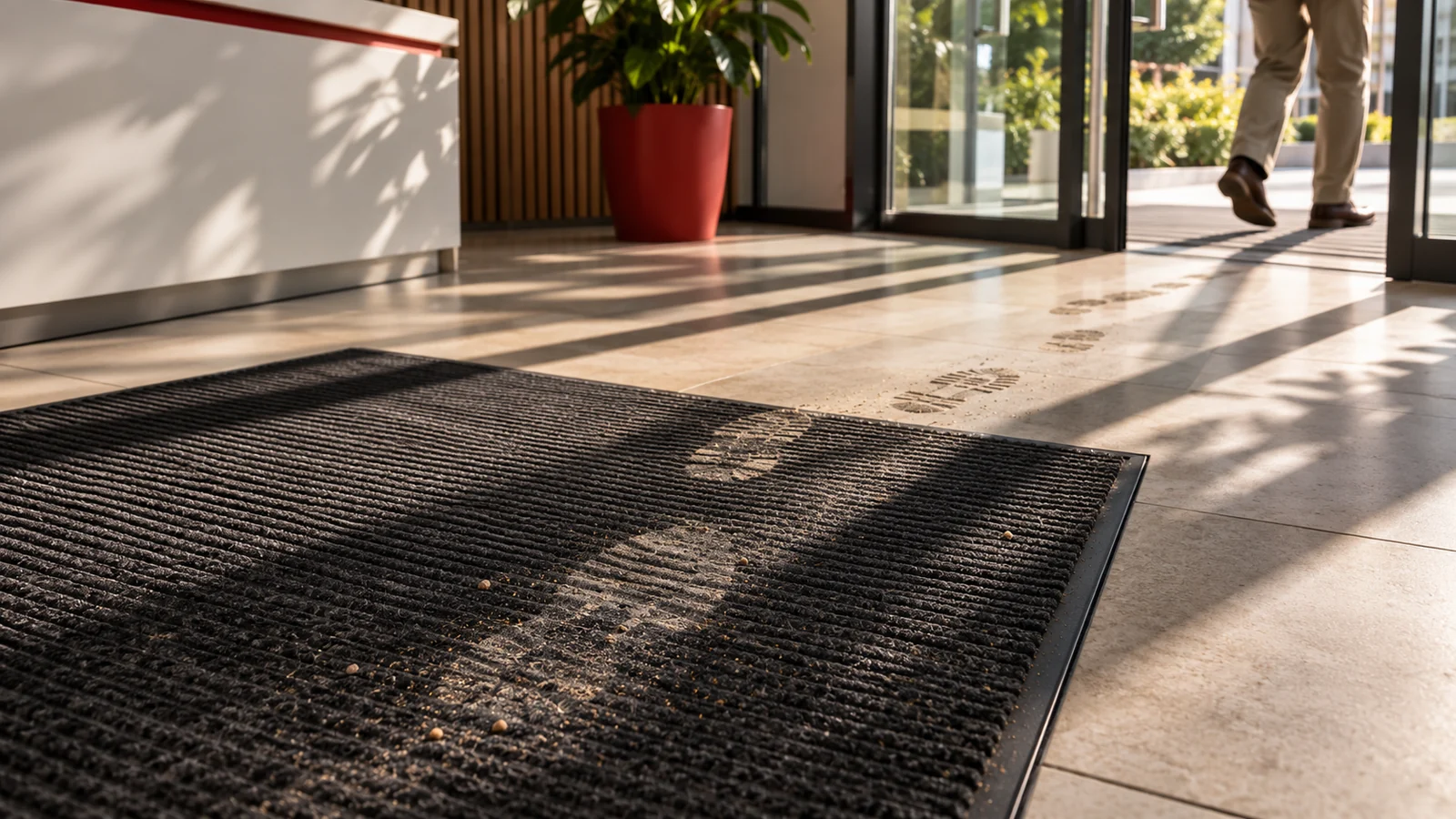
Dirt beyond office entrance matting can come from shoes bypassing the mat, accumulated grit, wet mats or another doorway. Check the route before arrivals, after the morning rush and near lunch, comparing dry grit with wet tracks. These patterns help narrow the search, but they do not prove where the soil came from.
Start outside at the entrance, follow the mat approach and edges, then check the lift lobby and the first turn. Include staff and parking doors, since soil can reach shared corridors without crossing the main entrance mat or being noticed at reception. Record check times, recent rain, broad traffic levels and changes in floor condition, without names, photographs of people or individual movement records.
Key Takeaways
These checks separate fresh soil from marks already on the floor at the same locations. Keep the record brief. Let evidence guide the response.
- Check the route from morning to lunch. Separate grit from wet tracks. Note recent rain and broad traffic levels at each check.
- Review mat coverage, loading and wetness. Check for wear or movement. Keep accessible paths, door swings and exits clear at all times.
- Treat patterns as clues, not proof. Entrance mat checks need context. Share findings before changing cleaning or matting arrangements.
Why Do Office Floors Look Dirty Again By Lunchtime?
Office floors can look dirty by lunchtime because fresh soil arrives after cleaning, sometimes along routes that miss the mats. Dirt beyond an entrance mat’s edge may suggest bypass, heavy loading or wetness, but does not prove the cause. Compare the same route before peak arrivals, after the rush and near lunch to find when marks first appear. The timing patterns below help separate new soil from an unchanged mark or worn surface.
| Timing Pattern | Possible Reading | What to Check Before Acting |
|---|---|---|
| Marks already present before arrivals | Soil may remain from earlier use, or a dull area may reflect wear rather than fresh dirt. A morning mark alone cannot show what happened after cleaning. | Confirm when cleaning finished and whether the floor had dried. Record that starting condition, then compare the same spot under similar light. |
| A jump after peak arrivals | Dirt appearing after the rush links visible soil to a busy period, not necessarily a faulty mat. Several entrances may feed the area. | Compare the main doorway with other used doors. Note whether new grit starts just beyond matting or first appears further along a shared corridor. |
| Spread during quieter hours | Continued marks after arrivals ease may reflect deliveries, nearby works or an internal spill. Timing helps narrow the search but does not rule any route out. | Note changes in door use and work nearby. Check whether the new trail begins away from the entry, without recording who walked through. |
| Wet tracks after rain | Dirt mixed with water can spread beyond entrance matting as wet prints. Continued water entry and poor mat drying are possibilities, rather than confirmed faults. | Compare rain timing with the first wet marks, then inspect all routes feeding that point. Report slick patches promptly through the site’s hazard response process. |
| Dull lanes that stay unchanged | An area that looks much the same through every check may need a floor care review. Repeated scrubbing or stronger chemicals may not address wear. | Compare the same area before and after traffic, using the same viewing position. Ask the responsible team whether the finish needs review before changing care methods. |
Where Should You Look From Morning To Lunch?
Entrance mat checks work best when the starting floor condition is recorded after scheduled cleaning. Outside, look for loose grit, leaves, damp paving, rain exposure and nearby works that could supply soil. At the mat approach and edges, watch whether the walking route crosses the surface or passes beside it. Check gaps without standing in anyone’s way.
Next, follow office floor traffic paths through the lift lobby and the first turn, noting where marks begin. Trace staff and parking entrances into those same corridors, including doors that avoid the main mat. Separate dry grit from wet tracks, and record times, rainfall and broad traffic levels. Repeat checks to show when lobby floor soiling appears, without names, faces or individual movement records.
What Can Dirt Patterns And Mat Condition Tell You?
Dirt beside entrance matting may suggest bypass; check where the usual walking route falls. Embedded grit can point to loading that needs attention, while wet mats may reflect saturation, poor drying or ongoing water entry. Scraping surfaces help remove coarse debris; indoor wiping surfaces collect finer soil and moisture left on shoes. These functions serve different roles in entrance soil control.
Flattened fibres, damaged backing and poor grip need review; dull flooring may show wear rather than fresh soil. Also check deliveries, nearby works, internal spills and secondary doors before assigning a cause. Useful coverage depends on layout, traffic, exposure and safe access, not a universal length. The Carpet Institute of Australia’s commercial carpet maintenance guidance supports entrance mats within broader carpet care.
How Can You Record The Evidence And Choose A Safe Next Step?
An observation log helps you compare floor conditions and choose a safe response based on evidence rather than memory. Record changes at fixed route points, then pass hazards and care questions to the team responsible for the site. Dirt patterns become more useful when timing, weather and door use are clear. Keep accessible routes and exits clear during checks, and report slick floors or unstable mats without waiting for lunchtime.
A Practical Observation Log And Safe Handover
A useful observation log records conditions, not identifiable staff details. Add broad traffic levels where helpful. Note deliveries, nearby works and changes in door use, without names, faces or individual movement records.
| Time and Rainfall | Route Point | Dry Grit or Wet Tracks | Mat and Floor Condition | Action or Recheck |
|---|---|---|---|---|
| Record check time, recent rain and broad traffic level | Name the location | Describe visible soil or moisture | Note loading, wetness, wear or movement | Record the team notified, notification time and next check |
Escalate raised, loose or saturated mats and slick floors promptly to the responsible site team. Follow site procedures for restricting access safely; keep exits clear and have any temporary route approved before redirecting traffic. Do not reposition mats yourself unless authorised. Follow Safe Work Australia’s wet-floor and trip-risk guidance; arrange assessment and safe handling through the responsible team.
What Might One Morning’s Evidence Suggest?
Consider a hypothetical morning, not a customer result, where the entrance and lift lobby look dry after cleaning at 8 am. Rain starts before 9 am, and wet tracks appear at the lift lobby’s first turn by 10 am. The main mat looks damp. However, the parking entrance feeds the same corridor, so that doorway also needs checking before anyone recommends changes.
Dirt or moisture beyond the main mat may come from either route, so neither observation proves the source. Compare both approaches and inspect mat condition, while reporting any slick floor at once. Repeat observations near lunch after the agreed response, rather than assuming the change worked because the mat looks better. Where possible, compare conditions under similar rain and traffic.
Putting It All Together
To trace lunchtime dirt, inspect the entrance route, separate dry grit from wet tracks and record when each appears. Marks beyond entrance matting are clues to test, not proof that cleaning or matting has failed. Check other doors and soil sources before changing arrangements. Matting supports wider floor care; it cannot explain every mark or replace a safe maintenance plan.
Share your log with the property manager or cleaning team so they can review coverage, mat condition and upkeep together. If you need a cleaning quote, contact us about office cleaning and tell us where marks first appear and when.
Frequently Asked Questions
Entrance mat choices also depend on the floor, care instructions and shared-building rules. Appearance and price alone cannot show whether a mat suits a busy doorway. Check these points with the responsible team before you buy or change arrangements.
Can A Dark Entrance Mat Hide Too Much Dirt?
Yes, dark colours and patterns can make soil less visible without showing how much capacity remains. Judge loading and condition through regular checks, not colour alone. Keep inspection and care needs separate from how well the mat hides everyday dirt.
Are Logo Mats Suitable For Busy Office Entrances?
Logo mats can suit busy entrances if construction and fit meet the site’s needs. Dirt control depends on the mat’s function, not the logo. Check intended use, coverage, stability and cleaning needs; keep safe fit ahead of branding.
Can Mat Backing Affect The Floor Underneath?
Yes, backing can affect the floor beneath, so check that the mat suits the floor finish. Follow both the flooring supplier’s and mat maker’s care guidance. Do not assume every rubber or vinyl backing behaves alike on all floor surfaces.
Who Should Manage Entrance Mats In A Shared Building?
Check lease terms and building arrangements to establish who manages mats in shared entrances. Agree who checks condition, reports hazards and arranges upkeep. Tell the building team where the problem starts if the route crosses more than one tenancy.
How Should Businesses Compare Entrance Matting Costs?
Compare purchase price with the time and cost of upkeep, drying, handling and replacement. Check suitability for the entrance’s actual traffic and weather exposure. The highest price does not guarantee the best fit, and fixed savings claims need site-specific evidence.