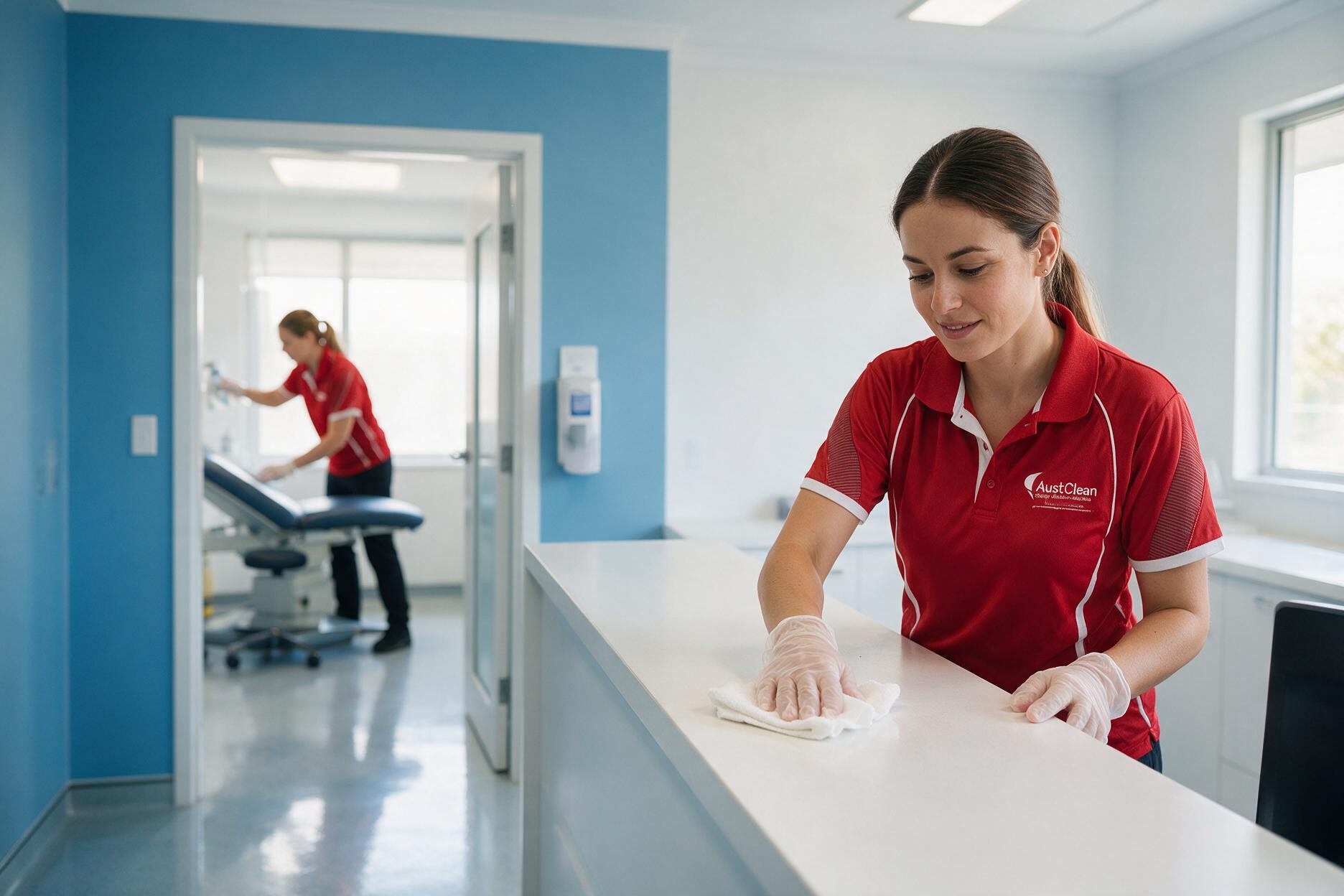
Clinic cleaning frequency is critical for Australian healthcare settings because medical, dental and allied health clinics need more than a standard commercial clean. Patient rooms, waiting areas, bathrooms, reception counters, treatment spaces and high-touch surfaces all need a planned cleaning schedule that supports infection control, accreditation requirements and patient confidence.
For most clinics, professional cleaning is needed on every day patients are seen, with extra touch-point disinfection and regular deep cleaning depending on traffic, treatment type and risk level. This guide explains how often different clinics should be cleaned, what daily, weekly and periodic cleaning should include, and how a specialist provider like AustClean can help create a safer, more compliant healthcare cleaning schedule.
Jump to section
- Clinic Cleaning Frequency In Australia: Healthcare Cleaning Guide
- Why Professional Clinic Cleaning Frequency Matters In Healthcare Settings
- How Often Should Different Types Of Clinics Be Professionally Cleaned?
- What Factors Determine The Right Clinic Cleaning Frequency?
- Daily Weekly And Deep Cleaning For A Compliant Healthcare Cleaning Schedule
- Healthcare Cleaning Compliance And Australian Standards Clinics Need To Demonstrate
- Why Work With A Specialist Provider Like AustClean To Set Your Clinic Cleaning Frequency
- Bringing It All Together For A Safe Practical Clinic Cleaning Schedule
Clinic Cleaning Frequency In Australia: Healthcare Cleaning Guide
Clinic cleaning frequency is not guesswork; most medical and allied health clinics need professional cleaning at least once on every day they see patients, plus regular deep cleans. Higher risk or high‑volume clinics often add daytime touch‑point disinfection rounds, especially in waiting rooms and bathrooms. That pattern keeps surfaces safer for patients and staff while still fitting around normal appointments.
The challenge comes when owners try to balance hygiene, compliance and cost. Different clinic types, from a small GP in a converted house to a busy dental or physio centre, have very different risk levels and traffic patterns. According to AIHW, public emergency departments handle millions of visits each year, which shows how heavily used healthcare spaces can become.
This guide explains how often different clinics usually need professional cleaning, how daily, weekly and daily, weekly and deep cleaning link together, and what Australian standards expect. It also shows how a provider like AustClean helps clinics in Queensland, Victoria and South Australia set a safe, practical cleaning schedule that protects patients and property. Use it to compare your current routine with best practice for healthcare cleaning frequency.
Key Takeaways
Clinic owners and property managers are busy, so this section gives the short version before the detail. Use these points as a quick reference when you review quotes or cleaning logs for your medical or allied health clinic.
-
Baseline clinic cleaning frequency by facility type usually means at least one full professional clean on every operating day. Most GP, dental and multidisciplinary centres need this level, while some smaller allied health rooms can combine several professional cleans per week with staff wipe‑downs. A site assessment by a specialist provider such as AustClean helps fine‑tune the pattern.
-
Daily vs weekly vs periodic deep cleaning work together so clinics stay safe and presentable over time. Daily work focuses on clinical rooms, waiting areas, toilets and high‑touch surfaces, while weekly jobs cover higher dust and floor edges. Periodic deep cleaning restores carpets, vinyl and vents in line with risk and traffic.
-
High touch surfaces and infection control need special attention because they spread germs quickly between people. Research highlighted by CDC shows many pathogens can live on common surfaces for hours or longer. Regular disinfection of handles, counters, EFTPOS pads, chairs and treatment plinths during the day reduces this risk.
-
Key Australian compliance and accreditation expectations come from NSQHS Standards, the national infection control guidelines and RACGP Standards for general practice. These frameworks expect documented, risk‑based cleaning schedules that cover who cleans what, how often and with which products. Auditors look for both written plans and evidence that cleaning actually occurs.
-
Knowing when to engage specialist medical grade cleaning services becomes clearer when clinics handle invasive procedures, heavy traffic or shared facilities. Specialist teams like AustClean understand healthcare products, colour‑coded equipment and audit needs, and can adjust frequencies quickly during flu season or outbreaks. That support lets clinical staff focus on care rather than mops and buckets.
“Environmental cleaning is one of the most effective ways to reduce infection risk in healthcare facilities.”
– Adapted from guidance by the Australian Commission on Safety and Quality in Health Care
Why Professional Clinic Cleaning Frequency Matters In Healthcare Settings
Professional clinic cleaning frequency matters because healthcare spaces hold vulnerable people and must control infection, not just look tidy. Compared with offices or homes, clinics in places like Brisbane, Melbourne or Adelaide need planned cleaning schedules that match risk, accreditation and patient expectations.
In healthcare, every surface a patient or clinician touches can help or hinder infection prevention. According to ACSQHC, environmental cleaning is one of the key strategies for lowering healthcare associated infections. For property owners who lease to clinics, poor cleaning also threatens flooring, paintwork and long‑term asset value. A structured, risk‑based medical clinic cleaning schedule protects patients, staff and the building at the same time.
How Is Clinic Cleaning Different From Domestic Or Standard Commercial Cleaning?
Clinic cleaning differs from domestic or normal office cleaning because infection control sits at the centre of every task. The goal is to reduce cross‑contamination between patients, staff and visitors, not just remove visible dust or smells. That means a clinic in a converted house in suburban Geelong still needs clinical level cleaning, even if the building once functioned as a family home.
Australian guidelines such as the national infection control guide and the NSQHS Standards expect risk‑based cleaning frequencies in every clinical zone. RACGP accreditation requires written evidence that rooms, bathrooms and waiting areas are cleaned often enough and with the right products. Hospital grade disinfectants listed by the TGA, colour‑coded microfibre cloths and strict separation between bathroom tools and clinical tools all support this standard.
AustClean trains local franchise teams to treat GP rooms, dental surgeries and physio spaces very differently from ordinary offices, following protocols consistent with the Guideline for Disinfection and Sterilization in Healthcare Facilities, which outlines the standards that distinguish clinical cleaning from general commercial work. The team might clean an admin office in a simple daily pattern, while the procedure room in the same tenancy receives between‑patient disinfection plus an after‑hours clean and frequent clinic deep cleaning. That difference keeps the whole site compliant without wasting budget where risk is low.
What Are The Risks Of Insufficient Clinic Cleaning?
Insufficient cleaning raises the chance that germs move from surface to surface and then onto hands, instruments and patients, as demonstrated by research on the Impact of terminal cleaning in rooms previously occupied by patients with healthcare-associated infections. Recent estimates from ACSQHC suggest around two hundred thousand healthcare associated infections occur in Australian hospitals each year, and poor surface hygiene can contribute. While clinics are smaller than hospitals, the same organisms appear on couches, taps and handles.
Regulators and accreditation bodies such as RACGP and ACHS expect clinics to control that risk. Missed cleans or weak documentation can trigger extra audit findings, loss of accreditation or pressure from insurers. Patients also notice stained carpets, dusty skirting boards or grimy toilets very quickly, and that can damage online reviews even when the clinical care is sound.
When clinical staff feel forced to perform ad hoc deep cleans on top of their normal duties, fatigue and burnout often follow, and evidence from The CLEaning and Enhanced disiNfection (CLEEN) study highlights how structured cleaning programs reduce both the burden on staff and the risk of infection spread. Over years, grime and moisture also damage vinyl, grout, joinery, joinery and soft furnishings, which raises refurbishment costs for landlords. Regular, appropriate professional cleaning for medical centres avoids these problems and helps keep the building in better condition.
How Often Should Different Types Of Clinics Be Professionally Cleaned?
Different types of clinics need different clinic cleaning frequency settings, but most active sites still require at least one full professional clean on every operating day. That baseline sits alongside between‑patient disinfection carried out by nurses, dentists or therapists. Higher volume centres then add daytime touch‑point cleaning and planned deep cleans across the year.
The right medical clinic cleaning schedule depends on services, patient numbers and layout. A quiet psychologist in a three room suite cannot be treated the same as a bulk billing GP clinic with constant foot traffic. AustClean uses on site assessments across Queensland, Victoria and South Australia to match cleaning visits to the real pattern of use in each facility.
Recommended Cleaning Frequency By Clinic Type
GP clinics and general medical centres usually need one thorough professional clean after hours on every consulting day. That clean should cover all consult rooms, treatment rooms, waiting areas, toilets, staff kitchens and corridors. During opening hours, staff wipe down examination couches, arm rests, contact equipment and high touch reception surfaces between patients, with extra rounds in peak times.
For dental clinic cleaning frequency, disinfection occurs between every patient in the surgery, across chairs, lights, trolleys and controls. Sterilisation areas and surgeries then receive a full professional clean at least once daily, along with reception and bathrooms. Busy multi chair clinics often add more regular floor care and fortnightly or monthly deep cleaning for upholstery, vents and hard floors.
Physiotherapy and chiropractic clinics rely heavily on between‑patient wipe‑downs of plinths, hand weights, handles and machines. Where traffic is steady rather than constant, professional professional commercial cleaning for clinics may occur three to five times per week, backed by staff spot cleaning. If volumes are high, or if the clinic shares toilets with other tenancies, daily professional cleaning becomes the safer pattern.
Specialist consulting rooms and allied health clinics cover a wide range, from simple office style consults to procedure heavy dermatology or podiatry rooms. Low contact consult rooms still need near daily professional cleaning for touch points, bathrooms and waiting spaces. Any clinic with procedural or treatment rooms needs between‑patient disinfection plus thorough daily cleaning and periodic infection control cleaning healthcare deep cleans every month or quarter. AustClean offers flexible options from daily visits to structured part week plans.
Tip from practice managers: “Start with daily professional cleaning as your default, then step down only if your risk assessment and data genuinely support it.”
Example Clinic Cleaning Frequency Scenarios Table
These examples show how a practical medical clinic cleaning schedule can look for different settings. Exact patterns always depend on risk assessments and local guidelines.
| Clinic Type | Typical Patient Volume | Daily Professional Clean | Extra Touch Point Cleans | Deep Clean Frequency |
|---|---|---|---|---|
| Small GP in converted house | Moderate sessions with two or three GPs | Once after hours on each consulting day | Staff wipe couches and reception surfaces between patients | Carpets, upholstery and vents every three to six months |
| Busy multidisciplinary centre in strata building | High traffic all week | Full clean every night across all zones | Two or three daytime rounds for waiting areas and toilets | Machine scrub hard floors monthly and full detail clean each quarter |
| Dental clinic with multiple chairs | Back to back appointments | Surgeries, sterilisation areas and public zones cleaned daily | Between patient chair and surface disinfection by dental team | Floors, upholstery and vents monthly where possible |
| Physiotherapy or chiropractic clinic in shopping strip | Steady but shorter sessions | Three to five professional cleans per week depending on traffic | Frequent couch and equipment wipes by therapists | Periodic clinic deep cleaning at least every six months |
| Specialist consulting rooms with one procedure room | Lower consult volume but higher clinical risk in one room | Daily clean on operating days | Between patient disinfection in procedure room | Monthly or quarterly high level infection control clean in clinical zones |
What Factors Determine The Right Clinic Cleaning Frequency?
The right clinic cleaning frequency for any site comes from its risks and activity patterns rather than a single standard roster. Australian guidelines encourage practices to match cleaning to how spaces are actually used. That means two clinics in similar buildings may still need very different schedules.
Several practical factors shape the cleaning needs of GP clinics, dental surgeries, physio rooms and other healthcare tenancies. Patient traffic, the kind of treatment performed, the presence of children and the layout of shared facilities all change the picture. Seasonal illness patterns and outbreaks then add another layer, as do extended opening hours. AustClean reviews all of these points before suggesting a medical centre medical centre cleaning schedule.
Key Risk And Activity Factors That Influence Frequency
Patient traffic and turnover sit near the top of the list because every extra visitor brings more contact with surfaces. Busy waiting rooms, corridors and toilets in metropolitan centres collect fingerprints, droplets and soil much more quickly than quieter rural rooms. As patient numbers lift, waiting room cleaning frequency and bathroom rounds need to lift as well.
Treatment types and risk level also change the cleaning load sharply. Clinics that perform minor surgery, skin procedures or wound care have repeated contact with blood or body fluids, so they require more frequent disinfection and scheduled clinic deep cleaning. Hands‑on allied health such as physiotherapy and chiropractic work rely on frequent couch and equipment cleaning to keep germs from building up.
Children in waiting rooms often touch chairs, toys, walls and magazines more than adults. Respiratory viruses and gastro bugs spread easily here, so paediatric or family clinics usually require more regular high touch surface disinfection. Removing hard to clean items like soft toys during heavy flu seasons can also help reduce contamination.
Shared bathrooms and staff areas create extra risk when several tenancies or the public use the same fixtures. In these cases, base building cleaning must align with tenant cleaning so toilets, lobbies and lifts do not become weak points. Clearly written scopes between owners, body corporates and tenants help make sure no shared space is missed.
Long operating hours and weekend sessions give less time for a single overnight clean. After hours medical centres, seven day physio services or late evening dental clinics may need split shifts or two rounds of professional cleaning. During winter, or during COVID or flu outbreaks, many clinics also add extra touch‑point disinfecting in response to local health advice.
How To Build A Risk Based Cleaning Schedule For Healthcare Facilities
Building a risk based cleaning schedule for healthcare facilities starts with a floor plan. Clinic leaders and cleaning providers map out high risk clinical rooms, moderate risk public areas and lower risk offices or storage zones. For each space they list the main surfaces, such as clinical contact points, high touch handles and lower touch walls or ceilings.
Next they assign baseline frequencies to each surface group. Clinical contact surfaces like couches, dental chairs and treatment trolleys receive between‑patient cleaning plus daily thorough work. Waiting room chairs, reception counters and toilets receive multiple daily disinfection rounds in busy sites, while offices and records rooms may only need full cleaning several times per week. Floors, vents, curtains and upholstery then receive monthly or quarterly attention.
Triggers for change sit on top of this baseline. Increases in patient numbers, new procedure types, winter respiratory waves or localised outbreaks can all justify more frequent cleaning for certain areas. Documenting the schedule, along with these triggers, helps clinics show auditors that cleaning frequency for healthcare facilities reflects real risks. AustClean includes this documentation as part of on site assessments for clinics across Queensland, Victoria and South Australia.
“If you cannot show it on paper, auditors will assume it is not happening.”
– Common observation from accreditation surveyors
Daily Weekly And Deep Cleaning For A Compliant Healthcare Cleaning Schedule
A compliant healthcare cleaning schedule combines daily routines, weekly jobs and periodic deep cleaning across the year. Daily work focuses on clinical safety and obvious presentation, while weekly and periodic tasks prevent build up in hidden areas. This layered pattern supports both infection control and long‑term property care.
According to RACGP, general practices should maintain clear schedules that cover regular and periodic cleaning, along with responsibilities. The same logic applies to dental, allied health and specialist tenancies. Owners and managers decide which tasks belong to in house staff, such as between‑patient bed wipes, and which sit with professional medical office cleaning services like AustClean.
What Should Be Cleaned Daily Weekly And Periodically In A Clinic?
Daily clinic cleaning expectations cover every clinical room used that day, plus all public and staff amenities. Typical daily inclusions are:
-
Floors in consult and treatment rooms vacuumed or mopped
-
Benches, sinks and splashbacks cleaned
-
Clinical and general waste bins emptied and liners replaced
-
Waiting rooms vacuumed or mopped and obvious dust removed
-
Chair arms, reception counters and touch screens wiped with suitable disinfectant
-
Toilets and staff amenities cleaned, restocked and checked for damage
Between‑patient or multiple times per day tasks focus on contact surfaces. These include:
-
Examination couches, dental chairs and physio plinths
-
Treatment trolleys and work surfaces
-
Blood pressure cuffs and shared diagnostic devices (per manufacturer guidelines)
-
Door handles, hand rails and light switches
-
Reception counters, EFTPOS terminals and check in kiosks
Weekly tasks reach areas that daily routines may miss. Vents, ledges, blinds, skirting boards and high shelves are dusted, and edges of carpets receive detailed vacuuming. Less used rooms such as storage, back corridors and rarely opened consult rooms are cleaned fully so dust and allergens do not build up. In carpeted healthcare facilities, weekly or fortnightly detailed vacuuming with high efficiency filters helps reduce particle loads.
Monthly or quarterly clinic deep cleaning looks after more intensive work. Machine scrubbing and resealing of vinyl or other hard floors removes residue removes residue and keeps surfaces easier to clean. Carpets and upholstered waiting room chairs waiting room chairs are steam cleaned or extracted to manage stains, odours and bioburden. Vents, returns and high corners are also cleaned, which supports air quality and reduces dust in the long run.
How Do After Hours And Infection Control Cleaning Work In Practice?
After hours cleaning allows clinics to keep operating without disturbance while still maintaining high standards. Cleaners arrive once patients and most staff have left, then work zone by zone through documented checklists that match the clinic’s infection control plan. This timing makes chemical use safer and gives access to rooms that are busy during the day.
Infection control cleaning brings together correct products, tools and methods, and research comparing Eco-Friendly vs. Traditional Cleaning in healthcare settings confirms that product selection critically affects both microbial safety and environmental impact. Hospital grade, TGA listed disinfectants are applied after visible soil is removed, with attention to contact time so germs are properly reduced. Colour‑coded microfibre cloths and mops separate toilets, clinical areas and staff kitchens, which lowers cross contamination risk. AustClean designs after hours schedules and any daytime touch point rounds around patient volume, clinic layout and accreditation expectations so cleaning supports, rather than interrupts, care.
Practical reminder: clean first, then disinfect. Disinfectant on a dirty surface will not do its job properly.
Healthcare Cleaning Compliance And Australian Standards Clinics Need To Demonstrate
Healthcare cleaning compliance in Australia relies heavily on documented, risk based schedules and proof that they are followed. Clinics must be able to show auditors that their clinic clinic cleaning frequency reflects patient risk reflects patient risk and local guidelines. These expectations apply whether the clinic sits in a standalone building or in a shared commercial complex.
Several national frameworks influence how medical and allied health clinics plan their cleaning. The Australian Guidelines for the Prevention and Control of Infection in Healthcare, NSQHS Standards and RACGP Standards all highlight environmental cleaning as part of safe care. For larger services, accreditation bodies such as ACHS link ongoing accreditation to consistent cleaning and documentation. Partnering with a specialist provider like AustClean makes it easier to align daily practice with these requirements.
What Are The Key Australian Guidelines Affecting Clinic Cleaning Schedules?
The Australian infection control guidelines provide broad principles on cleaning and disinfection in clinical spaces. They promote a risk based model where high touch and high risk areas receive more frequent cleaning, including between‑patient disinfection. They also stress the need for appropriate products, such as TGA listed disinfectants, and correct use, a requirement also underscored by The Importance of Disinfection protocols in preparing for health authority inspections, which outlines how documented disinfection procedures directly influence audit outcomes.
The NSQHS Infection Prevention and Control Standard applies to accredited health services across the country. It expects clear cleaning schedules, staff training, and regular review of cleaning outcomes. RACGP Standards for general practices contain similar expectations for GP clinics, including duties for practice leaders around hygiene and maintenance. Together with ACHS and other accreditation bodies, these frameworks influence how often waiting rooms, bathrooms, treatment rooms and staff areas must be cleaned.
How Can Clinics And Property Owners Demonstrate Compliance Through Cleaning?
Clinics and property owners can show compliance by documenting exactly what gets cleaned, how often and by whom. Practical steps include:
-
Written schedules and zone maps that split daily, weekly and deep cleaning tasks
-
Clear allocation of responsibilities between in house staff and external cleaners
-
Checklists and sign off sheets in toilets, waiting rooms and clinical zones
-
Records of product types, safety data sheets and training for cleaning staff
-
Periodic inspections with notes, photos and corrective actions recorded
Regular joint walk‑throughs with cleaning providers such as AustClean and practice managers help identify gaps early. Feedback from incidents, staff comments or accreditation visits can then feed into updates to clinic cleaning frequency. Choosing a fully insured specialist medical cleaning company that understands Australian standards also helps when responding to audit questions or insurer queries.
As one accreditation consultant often notes: “Your cleaning schedule should read like a story of how you protect every patient, every day.”
Why Work With A Specialist Provider Like AustClean To Set Your Clinic Cleaning Frequency
Working with a specialist healthcare cleaner makes it much easier to set clinic cleaning frequency that feels safe, practical and compliant. General office cleaners may do a fine job on basic appearance, but clinics need a deeper understanding of infection control and accreditation. A provider that focuses on medical environments can advise on both tasks and timing.
According to Press Ganey, cleanliness strongly influences patient satisfaction scores in healthcare settings, which affects reputation and income. A specialist cleaning partner helps keep those scores steady while also protecting flooring, furnishings and fixtures. AustClean combines this focus with local franchise owners across Queensland, Victoria and South Australia who know their communities and provide consistent service.
How AustClean Designs And Delivers Medical Grade Cleaning Schedules
AustClean starts each healthcare job with an on site assessment rather than a generic quote. Local franchise owners walk through the clinic with the practice manager or landlord, mapping high risk treatment rooms, moderate risk public spaces and lower risk offices. They discuss patient numbers, appointment patterns, operating hours and any special infection risks such as minor procedures or immunocompromised patients.
From there, AustClean builds a written plan that sets out daily, weekly and periodic tasks for each zone. The plan covers everything from between‑patient surface disinfection expectations to clinic deep cleaning intervals for carpets, upholstery, vents and hard floors. It also recommends healthcare facility cleaning frequency for shared areas like lobbies or public toilets, especially in strata buildings. This document supports accreditation and gives staff a clear reference.
On every visit, AustClean teams use hospital grade disinfectants that meet Australian regulatory standards and colour‑coded microfibre tools to reduce cross contamination, reflecting the rigorous approach detailed in Medical Centre Cleaning: Trusted safety protocols, which outlines how specialist teams implement these standards in practice. Cleaners follow a clean to dirty sequence, starting in consult rooms and finishing in bathrooms, with clear checklists so nothing is missed. Where patients have allergies or asthma, clinics can request eco friendly product options that still meet hygiene needs.
Because AustClean operates through fully insured local franchises, clinics in regional regional Queensland or suburban Adelaide receive the same standards as inner city Melbourne. Schedules can scale from several professional cleans per week for small allied health suites to daily and multi daily programs for busy medical centres. Clinics and property owners who want to review their current cleaning can contact AustClean for an obligation free obligation free assessment and quote.
Bringing It All Together For A Safe Practical Clinic Cleaning Schedule
There is no single rule that suits every healthcare site, yet some patterns are clear. Most clinics that see patients on site need at least one full professional clean for every operating day, supported by between‑patient disinfection and extra touch‑point rounds during busy times. Higher risk procedures and heavier traffic simply add more frequent cleaning in certain rooms.
Risk, not guesswork, should guide decisions. Patient volume, treatment types, season, the presence of children and the layout of shared facilities all shape clinic cleaning frequency. Australian guidelines then sit over the top, expecting that this pattern is written down, reviewed and backed by evidence. Skipping cleans may save money in the short term, but it can increase infection risk, damage flooring and shorten leases.
Partnering with a specialist provider such as AustClean helps clinic owners, practice managers and landlords across Queensland, Victoria and South Australia line up hygiene, compliance and cost. With a clear schedule, staff know what to clean and when, auditors see a consistent approach, and patients walk into spaces that look and feel safe. That combination supports both health outcomes and long‑term property value.